Tell us about the job
Takes about a minute. No obligation.
A contractor quoting a furnace repair in Boulder County has to account for what the burner and heat exchanger have already been through. Homes in Boulder County, CO run heat about ten months a year, from September through June. That kind of cycling loads the ignition system and the heat exchanger far more than a calendar year alone suggests. Cracks in the exchanger and worn igniter contacts are the parts a contractor checks first, because those are exactly what gives out under sustained cycling. A furnace that has been starting and stopping through a near-year-round season shows its wear in those components before anything else.
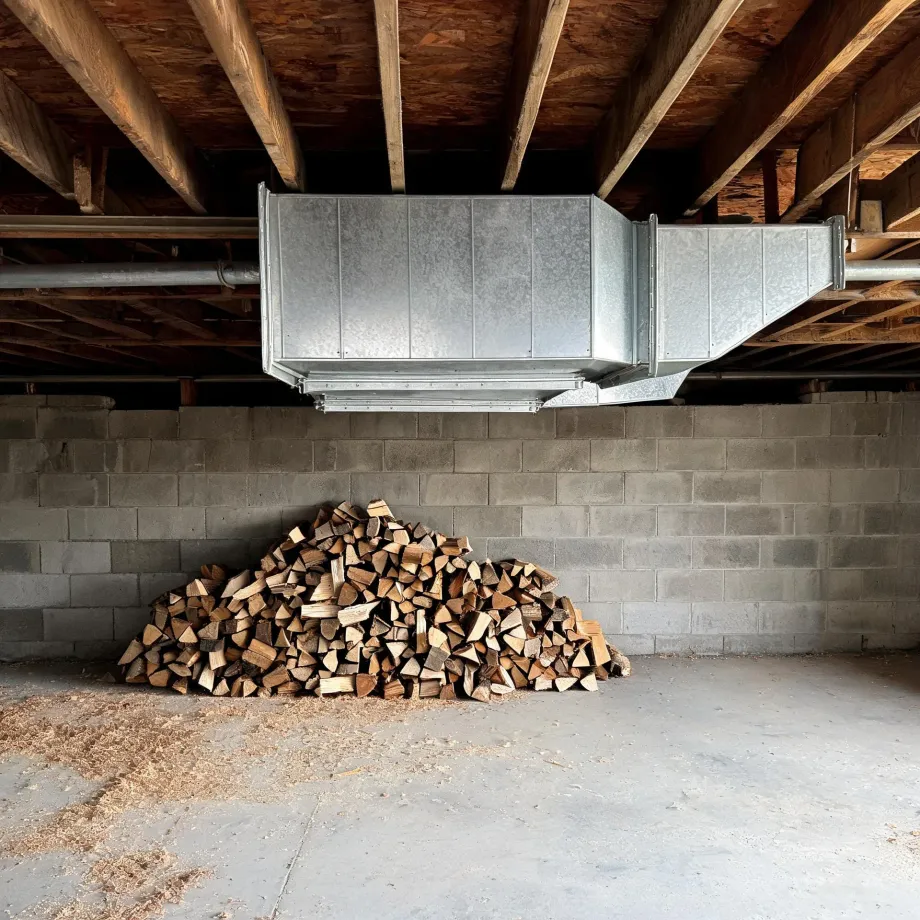
Older ductwork and a furnace that has already been swapped out once are the variables a repair contractor actually works around in a large share of Boulder County houses. Half the homes in Boulder County, Colorado were built in 1986 or earlier (2020-2024 ACS 5-year). A furnace sitting in a house that age has usually outlasted whatever replaced the original system, and when something fails, the question a technician has to answer is whether the part it takes is still in production or has to be sourced from a shrinking secondary market. That answer changes what the repair costs and how long it takes.
The Parts of a Furnace a Contractor Checks First
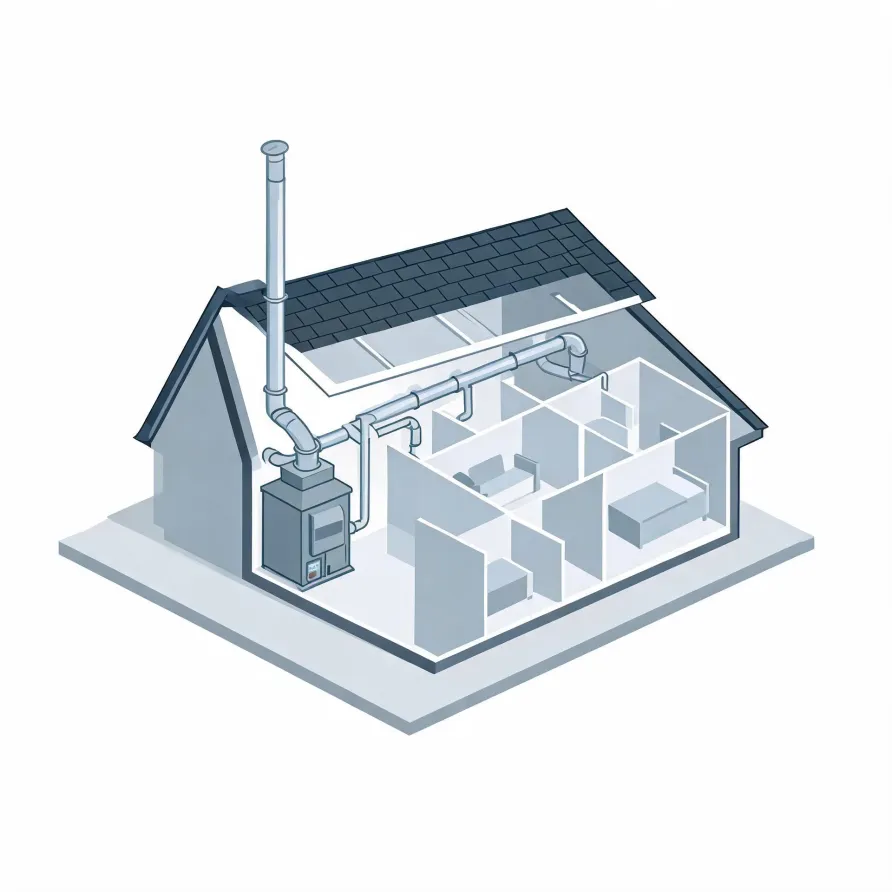
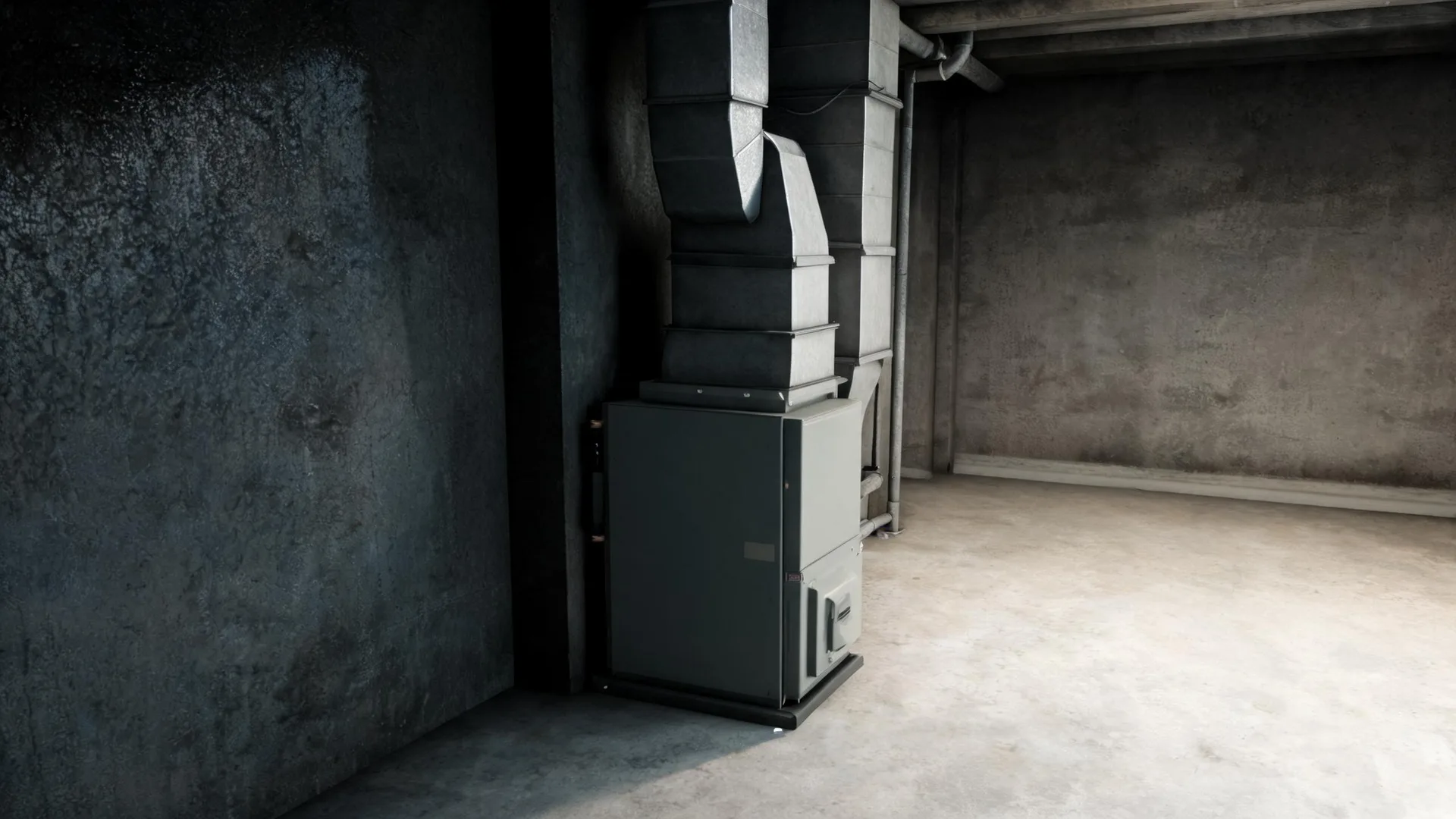
The furnace itself sits in a basement, utility closet, or mechanical room and is the piece a contractor opens first. Inside it, the heat exchanger is the part that takes the most abuse and is the most common source of a no-heat call. The burners, the igniter, and the flame sensor all live inside that cabinet as well, and any one of them can stop a furnace cold.
The blower motor sits in the lower half of the furnace cabinet and pushes conditioned air into the duct system. Outside the cabinet but close to it, the flue pipe carries combustion gases out of the house, and the air filter sits at the return-air opening where the contractor will pull it to read what it has been catching.
The drawing shows a typical furnace layout, and a licensed contractor determines which components apply to your specific system and what work each one actually needs.
Get matched in Boulder CountyBoulder County, by the numbers
408 severe weather events were recorded in Boulder County, Colorado between 2015 and 2024.
NOAA National Centers for Environmental Information, Storm Events Database, bulk CSV export, events 2015-01-01 through 2024-12-31.Half the homes in Boulder County, Colorado were built in 1986 or earlier (2020-2024 ACS 5-year).
U.S. Census Bureau, 2020-2024 American Community Survey 5-Year EstimatesBoulder County, Colorado holds 144,729 housing units (2020-2024 ACS 5-year).
U.S. Census Bureau, 2020-2024 American Community Survey 5-Year EstimatesOwners occupy 62.0% of the occupied homes in Boulder County, Colorado (2020-2024 ACS 5-year).
U.S. Census Bureau, 2020-2024 American Community Survey 5-Year EstimatesFurnace Repair Rules & Codes for Boulder County, Colorado4 sourced standards and regulations
What Happens When a Contractor Comes Out
Non-weatherized gas furnaces manufactured on or after November 19, 2015 must reach 80.0 percent AFUE.
Non-weatherized oil-fired furnaces manufactured on or after November 19, 2015 must reach 83.0 percent AFUE.
Mobile home gas furnaces manufactured on or after November 19, 2015 must reach 80.0 percent AFUE.
Non-weatherized gas furnaces manufactured on or after December 18, 2028 must reach 95.0 percent AFUE, up from the 80.0 percent minimum that applies to units manufactured before that date.
Severe Weather Events in Boulder County
Boulder County's climate puts real stress on furnace equipment, and that stress compounds over time. How often the weather turns severe is a local fact that shapes how hard heating systems work and how often they need repair.
408 severe weather events, 2015–2024. Source: NOAA National Centers for Environmental Information, Storm Events Database.