Tell us about the job
Takes about a minute. No obligation.
A contractor quoting a furnace repair in Gilpin County has to account for what the equipment has already been asked to carry. Homes in Gilpin County, CO run heat in every month of the year. Burners and heat exchangers cycle through every one of those months, and the wear that builds on ignition components and on the exchanger itself does not reset. A fault that looks minor on inspection often traces back to cumulative fatigue in those parts. A contractor who skips that history and prices only the presenting failure risks missing what actually drove it.
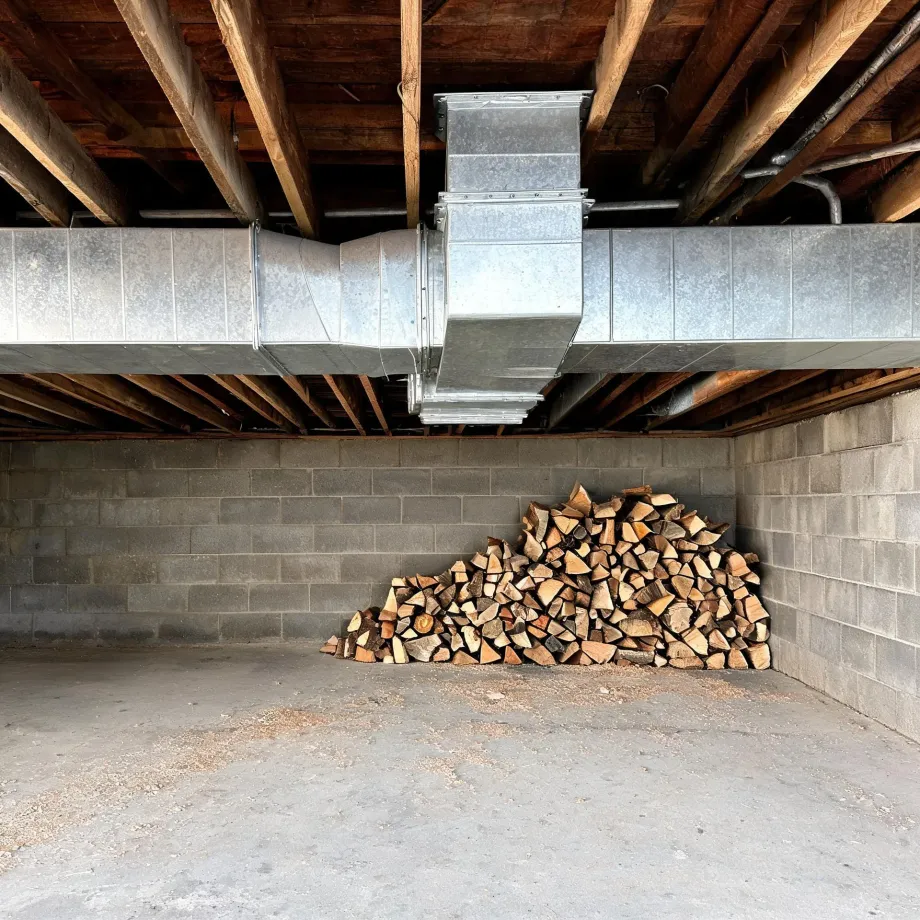
Ductwork in this county's older homes was laid out for furnaces that have since been replaced, sometimes more than once, and what a contractor finds once a unit is open depends heavily on what those earlier systems asked of the surrounding infrastructure. Half the homes in Gilpin County, Colorado were built in 1984 or earlier (2020-2024 ACS 5-year). That history means heat distribution problems a homeowner notices at the registers often trace back to duct sizing or branch routing, not to the furnace itself, and a repair quote that ignores those runs can miss the real cause. Parts availability for equipment running in houses of this age is the other variable a contractor checks early.
The Parts of a Furnace a Contractor Checks First
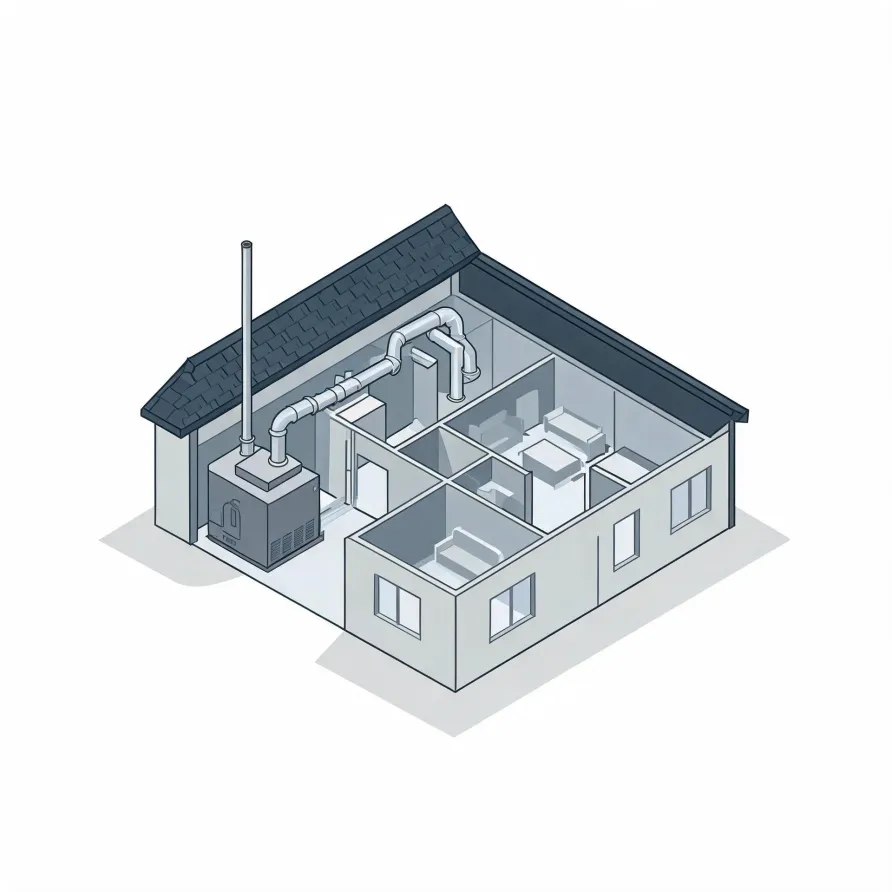
The furnace itself sits in a basement, utility closet, or mechanical room and is the piece a contractor goes to first. Inside it, the heat exchanger is the part that takes the most abuse and is one of the first places a contractor looks when something is wrong. A cracked exchanger changes how the unit burns and how air moves through it.
The burner assembly and the igniter sit at the base of the heat exchanger and handle the start of every heating cycle. The blower motor sits below or behind the heat exchanger and pushes conditioned air out through the house. The flue pipe runs from the top of the furnace to an exterior wall or roof and carries combustion gases out. When any of these stops doing its job cleanly, the rest of the system feels it.
The drawing shows the general layout of a furnace system, and a licensed contractor determines what applies to the specific equipment and configuration in your home.
Get matched in Gilpin CountyGilpin County, by the numbers
145 severe weather events were recorded in Gilpin County, Colorado between 2015 and 2024.
NOAA National Centers for Environmental Information, Storm Events Database, bulk CSV export, events 2015-01-01 through 2024-12-31.Half the homes in Gilpin County, Colorado were built in 1984 or earlier (2020-2024 ACS 5-year).
U.S. Census Bureau, 2020-2024 American Community Survey 5-Year EstimatesGilpin County, Colorado holds 3,746 housing units (2020-2024 ACS 5-year).
U.S. Census Bureau, 2020-2024 American Community Survey 5-Year EstimatesOwners occupy 87.5% of the occupied homes in Gilpin County, Colorado (2020-2024 ACS 5-year).
U.S. Census Bureau, 2020-2024 American Community Survey 5-Year EstimatesCodes & Standards Covering Furnace Repair in Gilpin County, Colorado4 sourced rules and standards
What Happens When the Contractor Arrives
Non-weatherized gas furnaces manufactured on or after November 19, 2015 must reach 80.0 percent AFUE.
Non-weatherized oil-fired furnaces manufactured on or after November 19, 2015 must reach 83.0 percent AFUE.
Mobile home gas furnaces manufactured on or after November 19, 2015 must reach 80.0 percent AFUE.
Non-weatherized gas furnaces manufactured on or after December 18, 2028 must reach 95.0 percent AFUE, up from the 80.0 percent minimum that applies to units manufactured before that date.
Severe Weather Events in Gilpin County
Gilpin County's climate puts real stress on furnace components over time. How often that stress hits shapes how hard local equipment works and how often it needs attention.
145 severe weather events, 2015–2024. Source: NOAA National Centers for Environmental Information, Storm Events Database.