Tell us about the job
Takes about a minute. No obligation.
A contractor quoting a furnace repair in Washington County has to account for what the equipment has already been through before they can price the job. Homes in Washington County, CO run heat about eight months a year, from October through May. The burner cycles through that stretch repeatedly, and the heat exchanger and ignition system absorb the load of every start. By the time a furnace throws a fault, those parts have been working since October, and that history shows up in the condition of the heat exchanger, the igniter, and the flame sensor. A contractor looks at those components before anything else.
Half the homes in Washington County, Colorado were built in 1958 or earlier (2020-2024 ACS 5-year). A furnace installed into housing that old has likely been replaced at least once, which means the unit a contractor opens today sits inside a shell the original builders never designed around it. What that produces on a repair call is a mismatch between the system's components and what suppliers currently stock. Certain heat exchangers, limit switches, and gas valve assemblies for older furnace models are no longer in regular production, and a contractor who finds one of them failed has to weigh sourcing a legacy part against recommending a different path entirely.
The Parts of a Furnace a Contractor Checks First
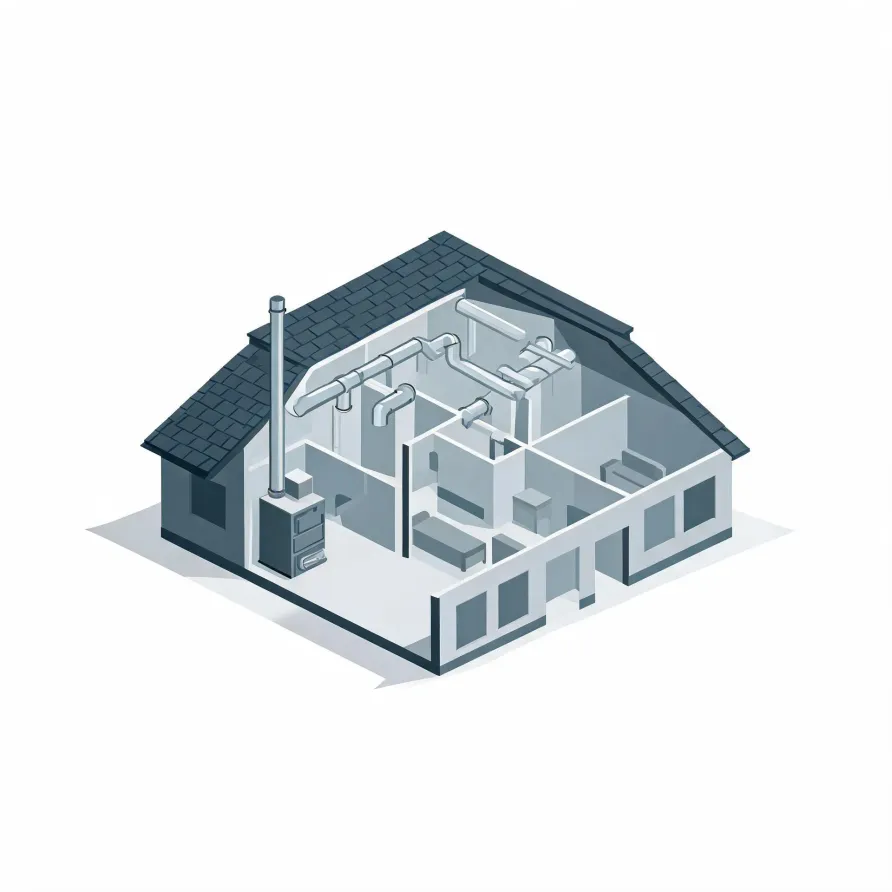
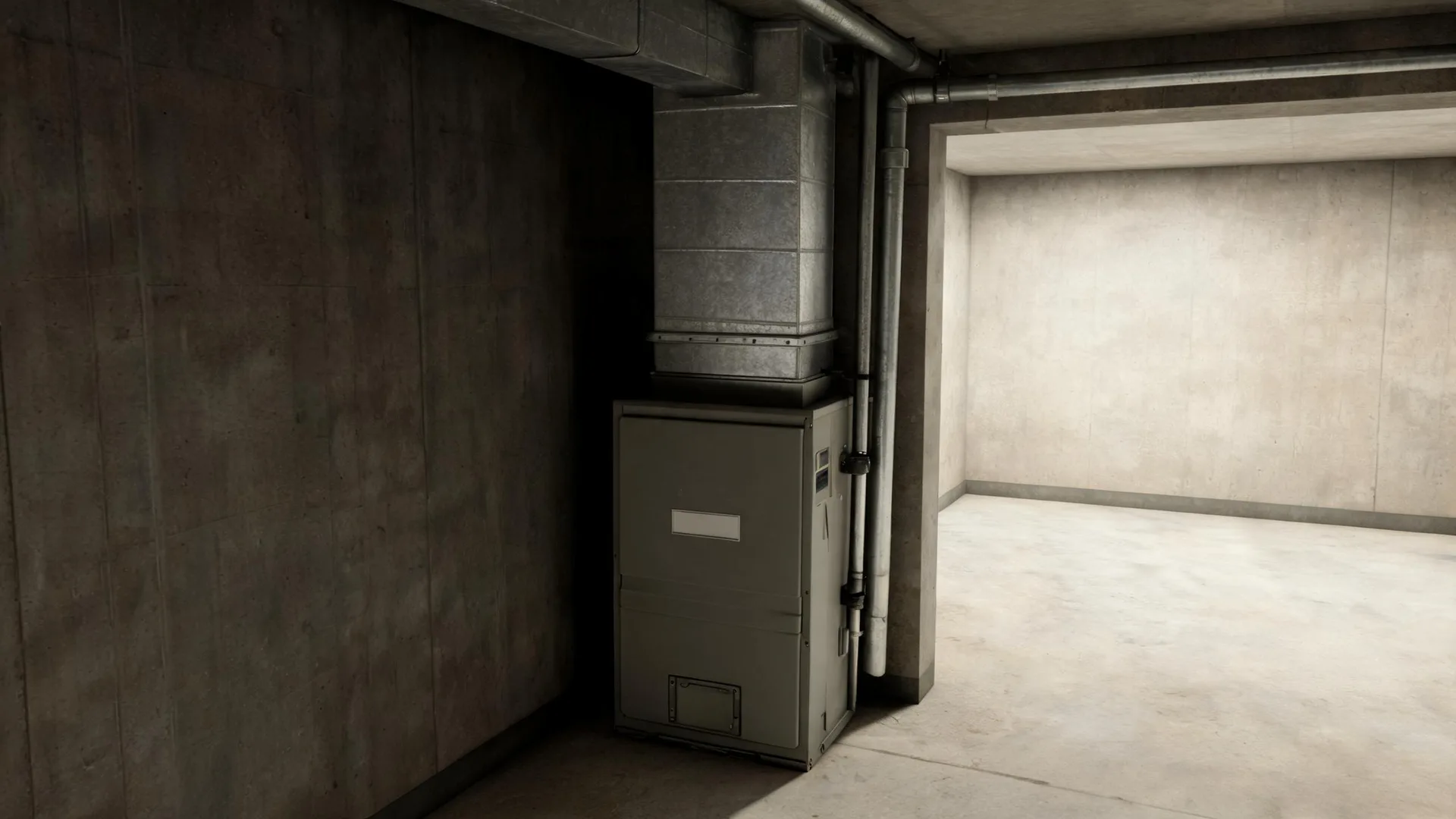
The heat exchanger sits at the core of the furnace cabinet in your basement or utility closet, and it is where combustion heat crosses into the airstream. When it cracks or warps, you may notice odd smells or the unit cycling off early. The burner assembly fires just below it, and a dirty or failing burner shows up as rough startup, uneven flame, or no ignition at all.
The blower motor and its wheel sit below the heat exchanger and push conditioned air out through the supply side of your home. A failing motor is a common reason a furnace runs but delivers little warmth. The control board, mounted inside the cabinet, coordinates every other component, and when a contractor finds erratic behavior that does not point clearly to one part, the board is where they look next.
The drawing shows a typical furnace layout, and a licensed contractor determines which components apply to the specific equipment and setup in your home.
Get matched in Washington CountyWashington County, Colorado, by the numbers
350 severe weather events were recorded in Washington County, Colorado between 2015 and 2024.
NOAA National Centers for Environmental Information, Storm Events Database, bulk CSV export, events 2015-01-01 through 2024-12-31.Half the homes in Washington County, Colorado were built in 1958 or earlier (2020-2024 ACS 5-year).
U.S. Census Bureau, 2020-2024 American Community Survey 5-Year EstimatesWashington County, Colorado holds 2,287 housing units (2020-2024 ACS 5-year).
U.S. Census Bureau, 2020-2024 American Community Survey 5-Year EstimatesOwners occupy 73.6% of the occupied homes in Washington County, Colorado (2020-2024 ACS 5-year).
U.S. Census Bureau, 2020-2024 American Community Survey 5-Year EstimatesCodes & Standards Covering Furnace Repair in Washington County, Colorado4 sourced rules and standards
What Happens When a Contractor Comes Out
Non-weatherized gas furnaces manufactured on or after November 19, 2015 must reach 80.0 percent AFUE.
Non-weatherized oil-fired furnaces manufactured on or after November 19, 2015 must reach 83.0 percent AFUE.
Mobile home gas furnaces manufactured on or after November 19, 2015 must reach 80.0 percent AFUE.
Non-weatherized gas furnaces manufactured on or after December 18, 2028 must reach 95.0 percent AFUE, up from the 80.0 percent minimum that applies to units manufactured before that date.
Severe Weather Events in Washington County
Weather puts real load on heating equipment. Hard conditions accelerate wear, and in Washington County that wear is a local reality a furnace repair contractor has to account for.
350 severe weather events, 2015–2024. Source: NOAA National Centers for Environmental Information, Storm Events Database.