Tell us about the job
Takes about a minute. No obligation.
Sizing and installation quality are local questions in Washington County, not generic ones. Homes in Washington County, CO run heat about eight months a year, from October through May. The burner, the heat exchanger, and the ignition system cycle through that load with almost no off-season to buffer a poor install. A contractor quoting a new furnace here has to establish correct capacity for this specific house before anything else, because an undersized unit runs longer cycles, and longer cycles accelerate wear on the parts that light and sustain combustion. What a bad fit costs shows up in components, not in the bill of sale.
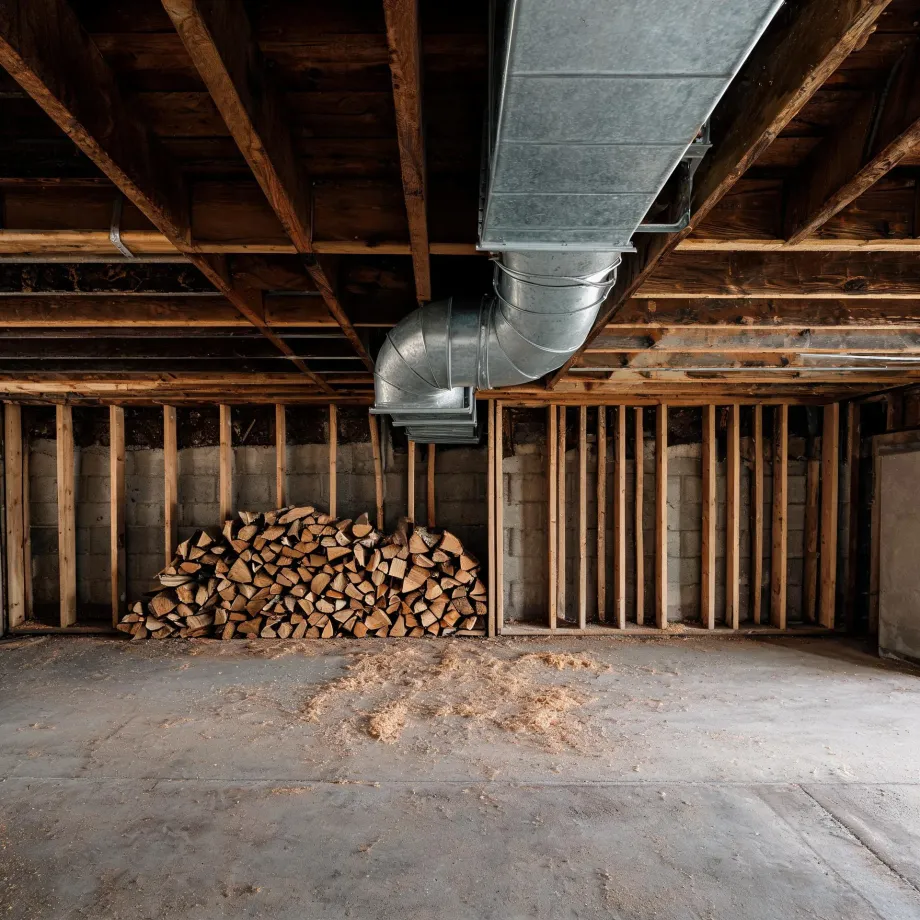
Ductwork sized for a previous generation of equipment does not quietly adapt to a new furnace. Half the homes in Washington County, Colorado were built in 1958 or earlier (2020-2024 ACS 5-year). When a contractor prices a furnace installation here, the sheet metal already in the walls sets the terms: whether it moves enough air for the new unit, whether the runs are laid out to match its output, and whether the electrical service handles what a modern furnace draws. Get both right and the install proceeds cleanly. Miss either and the scope widens before the equipment is ever set.
What Gets Installed With a New Furnace
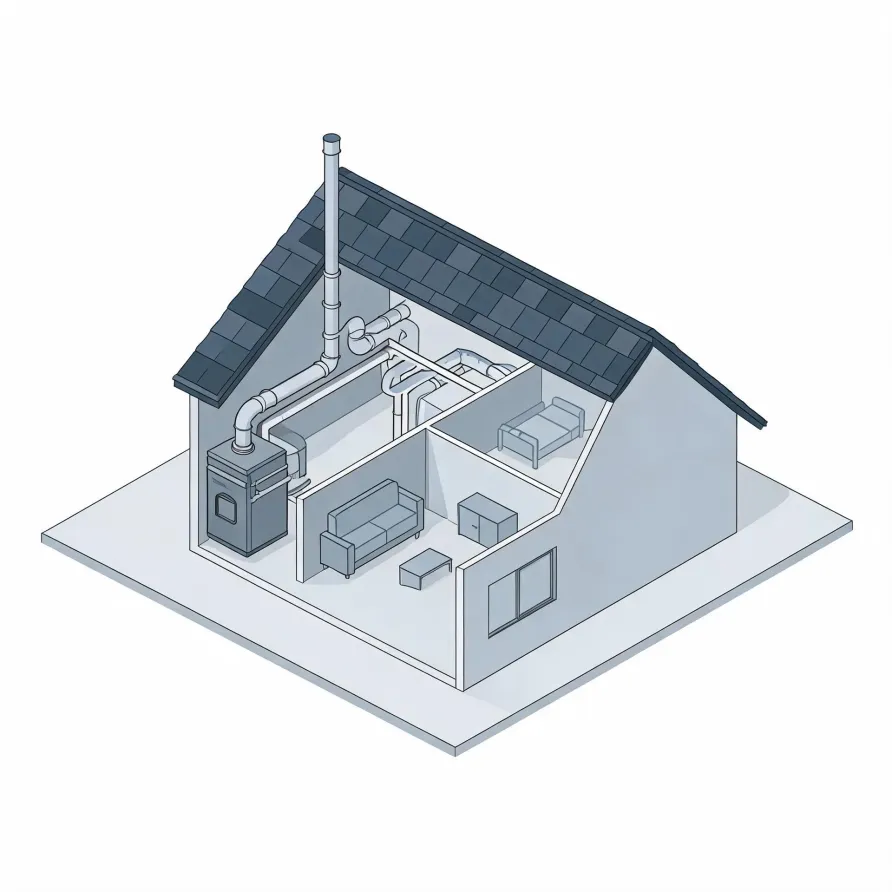
The furnace itself sits inside the home, almost always in a basement, utility room, or closet. It is the box that produces the heat. Attached to it is the flue pipe, which runs up through the house and exits at the roof, carrying combustion gases out.
The air handler components built into the furnace cabinet include the blower, which pushes conditioned air into the supply side of your duct system, and the heat exchanger, which sits just above the burners inside that same cabinet. The thermostat mounts on an interior wall and is the control point the homeowner actually touches.
The drawing beside this text shows a typical layout, and a licensed contractor determines what applies to your specific home.
Get matched in Washington CountyWashington County, Colorado, by the numbers
350 severe weather events were recorded in Washington County, Colorado between 2015 and 2024.
NOAA National Centers for Environmental Information, Storm Events Database, bulk CSV export, events 2015-01-01 through 2024-12-31.Half the homes in Washington County, Colorado were built in 1958 or earlier (2020-2024 ACS 5-year).
U.S. Census Bureau, 2020-2024 American Community Survey 5-Year EstimatesWashington County, Colorado holds 2,287 housing units (2020-2024 ACS 5-year).
U.S. Census Bureau, 2020-2024 American Community Survey 5-Year EstimatesOwners occupy 73.6% of the occupied homes in Washington County, Colorado (2020-2024 ACS 5-year).
U.S. Census Bureau, 2020-2024 American Community Survey 5-Year EstimatesCodes & Standards Covering Furnace Installation in Washington County, Colorado4 sourced rules and standards
What the Installation Actually Looks Like
Non-weatherized gas furnaces manufactured on or after November 19, 2015 must reach 80.0 percent AFUE.
Non-weatherized oil-fired furnaces manufactured on or after November 19, 2015 must reach 83.0 percent AFUE.
Mobile home gas furnaces manufactured on or after November 19, 2015 must reach 80.0 percent AFUE.
Non-weatherized gas furnaces manufactured on or after December 18, 2028 must reach 95.0 percent AFUE, up from the 80.0 percent minimum that applies to units manufactured before that date.
Severe Weather History in Washington County
Heating equipment in Colorado works against whatever the climate throws at a building, and Washington County has its own weather profile that shapes how hard that equipment runs. A furnace sized and installed for local conditions lasts longer and performs more reliably than one spec'd without that context.
350 severe weather events, 2015–2024. Source: NOAA National Centers for Environmental Information, Storm Events Database.