Tell us about the job
Takes about a minute. No obligation.
A furnace repair call in Yuma County starts at the burner and heat exchanger, not at the thermostat or the filter. Homes in Yuma County, CO run heat about eight months a year, from October through May. That kind of cycling adds up in the ignition system and across every weld and seam in the heat exchanger. A crack that stayed small through a mild stretch will open further under sustained load, and a burner that is misfiring slightly will not hide it for long. Contractors who work this area price the combustion side first because that is where the wear lands.
Furnace repairs in older housing stock put a contractor inside equipment whose replacement parts occupy a shrinking corner of the supply chain. Half the homes in Yuma County, Colorado were built in 1968 or earlier (2020-2024 ACS 5-year). A heat exchanger or control board from a unit installed in a house that age may carry a part number a distributor no longer stocks, which changes the repair from a straightforward swap to a sourcing question. That gap between what the furnace needs and what is available on a current order sheet is what decides whether a repair is a same-week fix or something longer.
The Parts of a Furnace a Contractor Checks First
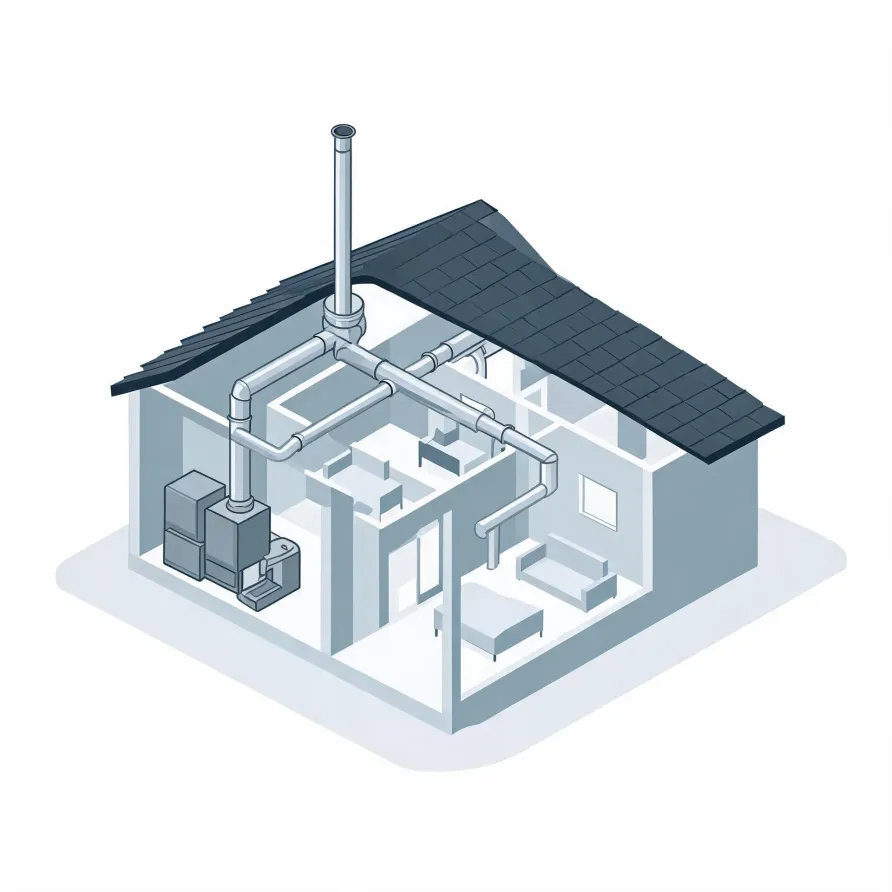
The furnace cabinet sits in the basement, utility room, or closet and houses the burners, heat exchanger, and blower. The burners ignite the fuel; the heat exchanger transfers that heat to the air moving through; the blower pushes that air out. When any of those pieces fails, the furnace either stops producing heat or produces it poorly.
The flue pipe runs from the cabinet up through the wall or roof and carries combustion gases out of the house. Alongside it, the draft inducer pulls those gases through before the blower runs. The igniter and flame sensor sit inside the cabinet near the burners, and both are common starting points when the furnace fails to light or shuts off early.
The drawing shows a typical furnace layout, and a licensed contractor determines which components apply and what condition they are in for the specific system in your home.
Get matched in Yuma CountyYuma County, by the numbers
560 severe weather events were recorded in Yuma County, Colorado between 2015 and 2024.
NOAA National Centers for Environmental Information, Storm Events Database, bulk CSV export, events 2015-01-01 through 2024-12-31.Half the homes in Yuma County, Colorado were built in 1968 or earlier (2020-2024 ACS 5-year).
U.S. Census Bureau, 2020-2024 American Community Survey 5-Year EstimatesYuma County, Colorado holds 4,336 housing units (2020-2024 ACS 5-year).
U.S. Census Bureau, 2020-2024 American Community Survey 5-Year EstimatesOwners occupy 68.9% of the occupied homes in Yuma County, Colorado (2020-2024 ACS 5-year).
U.S. Census Bureau, 2020-2024 American Community Survey 5-Year EstimatesCodes & Standards Covering Furnace Repair in Yuma County, Colorado4 sourced rules and standards
What HVAC Repair Looks Like in Yuma County
Non-weatherized gas furnaces manufactured on or after November 19, 2015 must reach 80.0 percent AFUE.
Non-weatherized oil-fired furnaces manufactured on or after November 19, 2015 must reach 83.0 percent AFUE.
Mobile home gas furnaces manufactured on or after November 19, 2015 must reach 80.0 percent AFUE.
Non-weatherized gas furnaces manufactured on or after December 18, 2028 must reach 95.0 percent AFUE, up from the 80.0 percent minimum that applies to units manufactured before that date.
Severe Weather Events in Yuma County
Extreme weather puts real strain on furnace components, from heat exchangers to ignition systems, because the equipment runs harder and longer when conditions outside are punishing. How much stress a furnace accumulates over time is a local question, and the record below shows what Yuma County weather has looked like.
560 severe weather events, 2015–2024. Source: NOAA National Centers for Environmental Information, Storm Events Database.