Tell us about the job
Takes about a minute. No obligation.
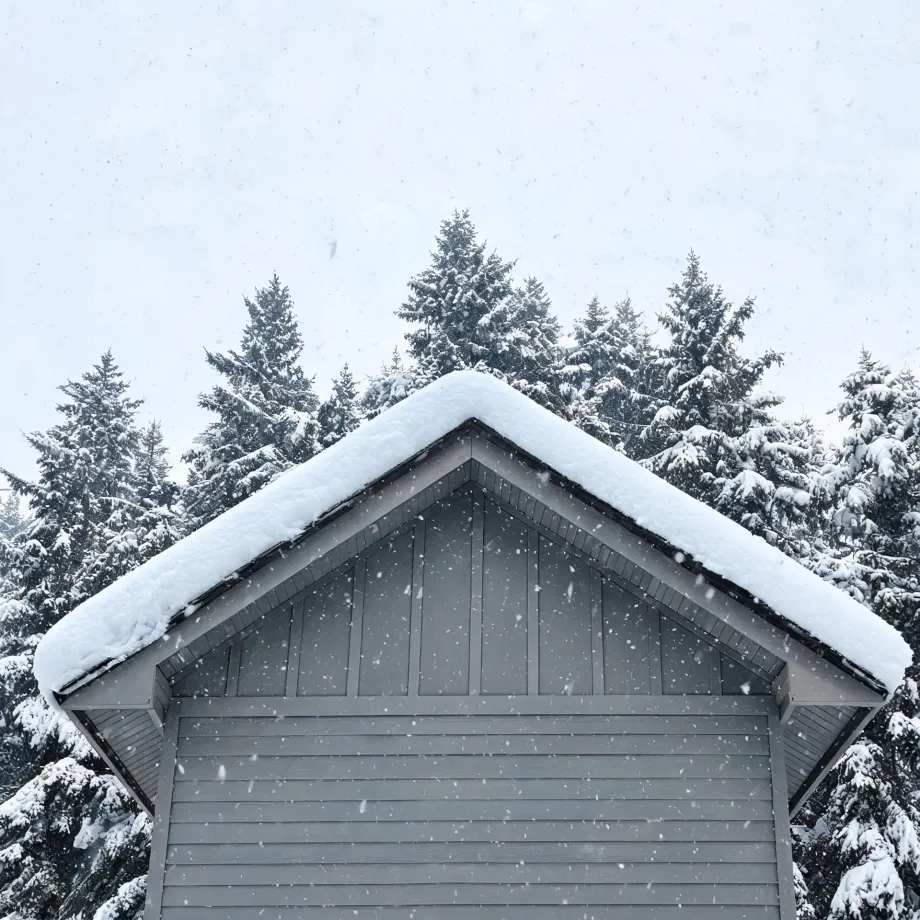
Sizing a furnace for Teller County starts with the heating load this county actually places on equipment, not a catalog default. Homes in Teller County, CO run heat about eleven months a year, from August through June. A burner and heat exchanger cycling through that calendar take on wear that a correctly sized, well-sealed installation spreads across its full mechanical life. Undersized equipment runs longer per cycle chasing a setpoint it cannot reliably reach. A contractor quoting a replacement here has to run a proper load calculation for the house, not borrow one from a milder region, because the installation decision locks in how hard the system works from day one.
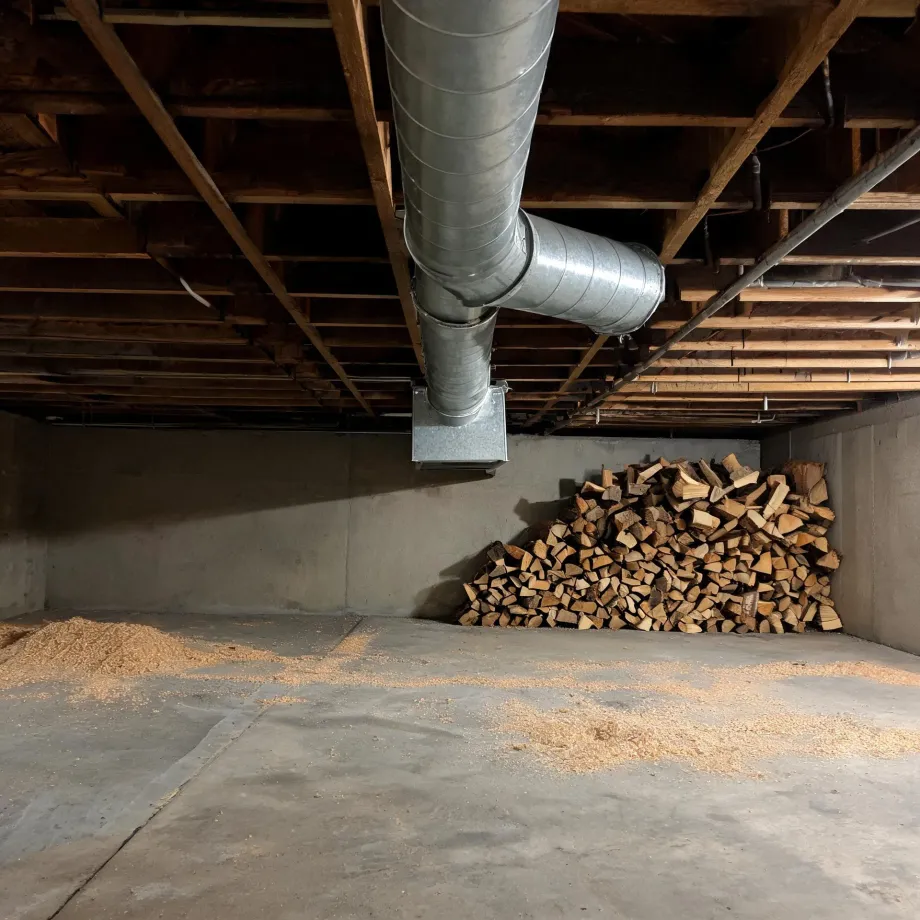
Ductwork laid out for a furnace generation that has long since been replaced does not automatically carry what a contractor installs today. Half the homes in Teller County, Colorado were built in 1990 or earlier (2020-2024 ACS 5-year). That spread across the housing stock means a new furnace's airflow requirements, its static pressure tolerances, and the runs feeding each room all have to be verified against what is actually in the walls before the equipment choice is settled. The electrical service gets the same look. A panel wired for a smaller load may need an upgrade before a new unit can run on it safely. What a contractor finds in the crawlspace and the mechanical room shapes the job more than the unit itself does.
What Gets Installed With a New Furnace
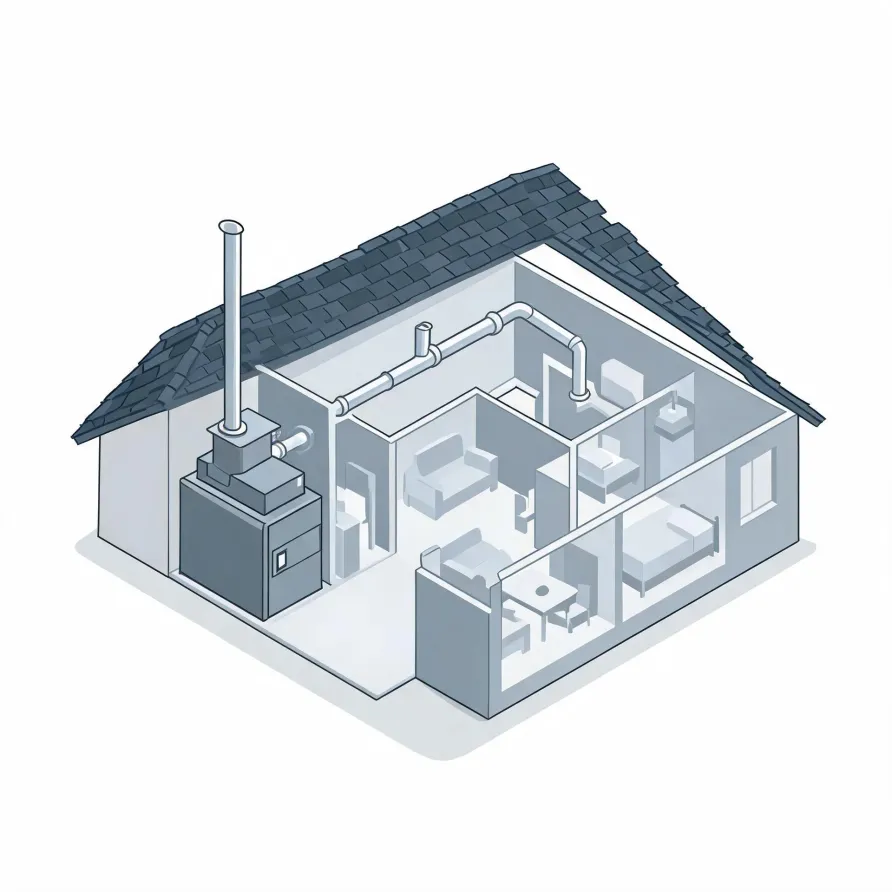
The furnace itself sits in a utility room, basement, or closet and is the central unit a contractor installs. Inside it, the heat exchanger and burner assembly do the work of producing warm air, while the blower motor pushes that air out into the home.
The flue pipe runs from the furnace to an exterior wall or roof, carrying combustion gases out of the house. Alongside the furnace, a contractor also installs the thermostat on an interior wall and connects the system to the existing supply and return air openings.
The drawing shows the general layout of these components, and a licensed contractor determines exactly what applies to this particular house.
Get matched in Teller CountyTeller County by the Numbers
249 severe weather events were recorded in Teller County, Colorado between 2015 and 2024.
NOAA National Centers for Environmental Information, Storm Events Database, bulk CSV export, events 2015-01-01 through 2024-12-31.Half the homes in Teller County, Colorado were built in 1990 or earlier (2020-2024 ACS 5-year).
U.S. Census Bureau, 2020-2024 American Community Survey 5-Year EstimatesTeller County, Colorado holds 13,674 housing units (2020-2024 ACS 5-year).
U.S. Census Bureau, 2020-2024 American Community Survey 5-Year EstimatesOwners occupy 81.0% of the occupied homes in Teller County, Colorado (2020-2024 ACS 5-year).
U.S. Census Bureau, 2020-2024 American Community Survey 5-Year EstimatesCodes & Standards Covering Furnace Installation in Teller County, Colorado4 sourced rules and standards
What the installation actually looks like
Non-weatherized gas furnaces manufactured on or after November 19, 2015 must reach 80.0 percent AFUE.
Non-weatherized oil-fired furnaces manufactured on or after November 19, 2015 must reach 83.0 percent AFUE.
Mobile home gas furnaces manufactured on or after November 19, 2015 must reach 80.0 percent AFUE.
Non-weatherized gas furnaces manufactured on or after December 18, 2028 must reach 95.0 percent AFUE, up from the 80.0 percent minimum that applies to units manufactured before that date.
Severe Weather History in Teller County
Teller County's climate puts real load on residential heating equipment, and that load shapes what a furnace installation here needs to handle. Sizing and equipment decisions are local decisions, and the weather record is part of the reason why.
249 severe weather events, 2015–2024. Source: NOAA National Centers for Environmental Information, Storm Events Database.