Tell us about the job
Takes about a minute. No obligation.
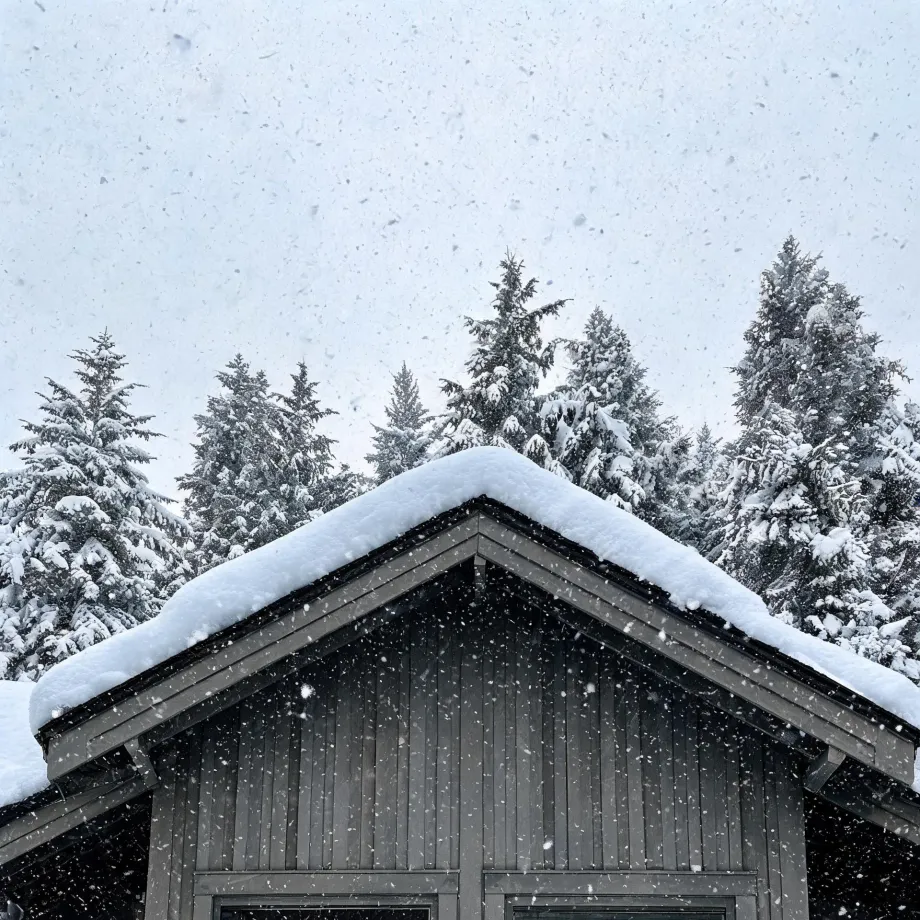
A contractor quoting a furnace installation in Fremont County has to size the system around what the burner, heat exchanger, and ignition system are actually asked to carry here. Homes in Fremont County, CO run heat about nine months a year, from September through May. That kind of continuous cycling accumulates wear on the ignition system and the heat exchanger faster than a system with long idle stretches would ever see. An undersized furnace does not fail all at once; it degrades across repeated short-cycling events until a cold morning in February exposes what the install got wrong. Proper load calculations and a clean commissioning are not optional extras on a job like this.
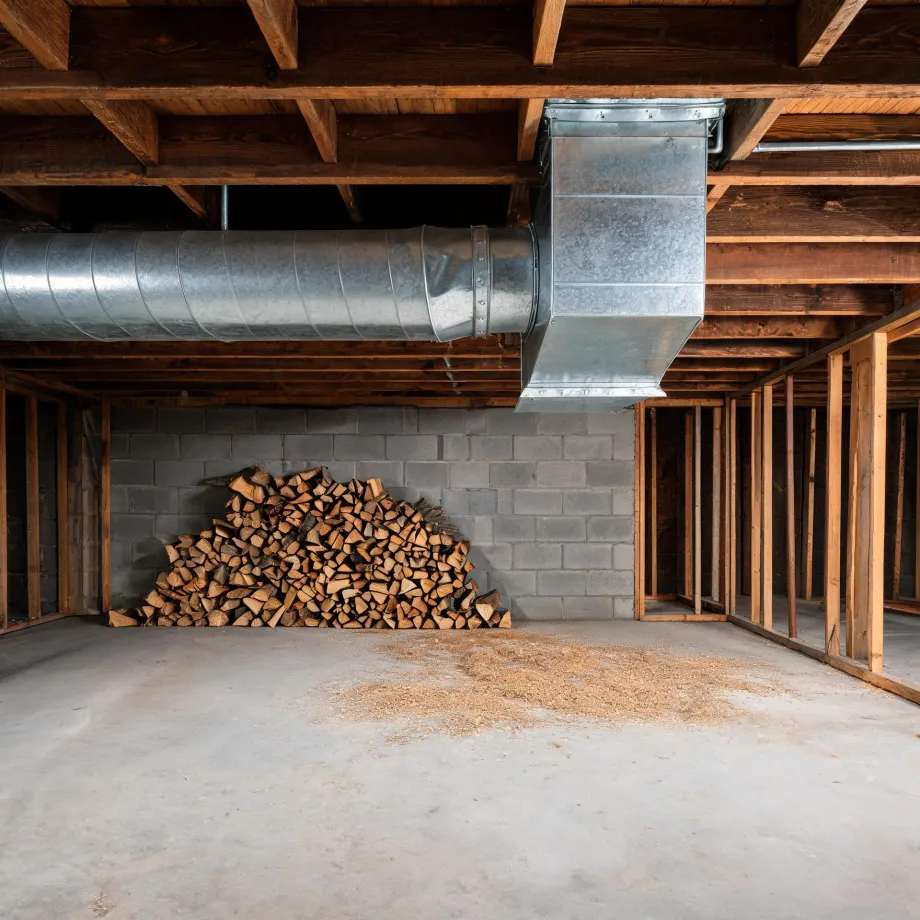
Ductwork sized for a previous generation of equipment is what a contractor opens the job around, not a question they answer at the end. Half the homes in Fremont County, Colorado were built in 1981 or earlier (2020-2024 ACS 5-year). That means the ducts running through a typical house here were built for a system that is probably not in the house anymore, and a new furnace drawing different airflow through those runs can expose gaps the old unit never made visible. The electrical service gets the same look: a panel that was adequate then may be carrying more than it was designed for by now. Both get measured before anything is quoted.
What Gets Installed With a New Furnace
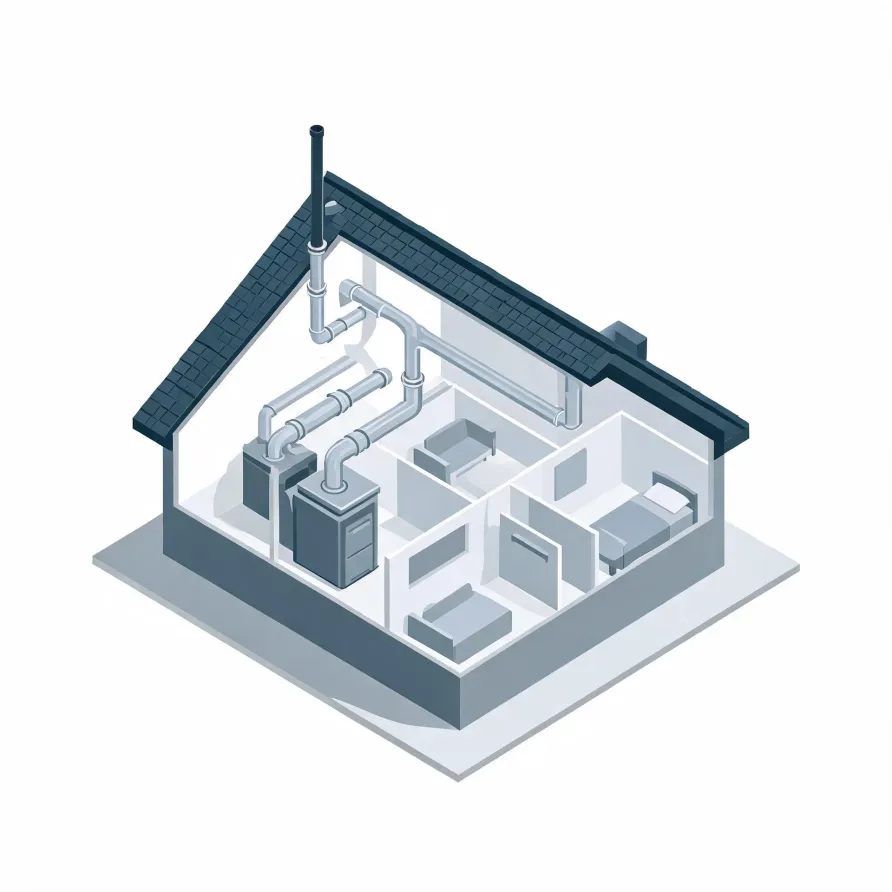
The furnace itself sits in a mechanical room, basement, or utility closet and is the central piece of the installation. A contractor mounts the cabinet there, connects it to the gas supply line, and ties it into the home's existing duct openings. The flue pipe runs from the furnace out through a wall or roof to carry combustion gases outside.
The thermostat goes on an interior wall, usually in a main living area, and gives the homeowner control over the system. A contractor also installs or replaces the filter housing where the return air enters the furnace, and fits a condensate drain line if the unit is a high-efficiency model that produces moisture during operation.
The drawing shows a typical layout, and a licensed contractor determines exactly what applies to your house based on its configuration.
Get matched in Fremont CountyFremont County, by the numbers
487 severe weather events were recorded in Fremont County, Colorado between 2015 and 2024.
NOAA National Centers for Environmental Information, Storm Events Database, bulk CSV export, events 2015-01-01 through 2024-12-31.Half the homes in Fremont County, Colorado were built in 1981 or earlier (2020-2024 ACS 5-year).
U.S. Census Bureau, 2020-2024 American Community Survey 5-Year EstimatesFremont County, Colorado holds 20,605 housing units (2020-2024 ACS 5-year).
U.S. Census Bureau, 2020-2024 American Community Survey 5-Year EstimatesOwners occupy 75.6% of the occupied homes in Fremont County, Colorado (2020-2024 ACS 5-year).
U.S. Census Bureau, 2020-2024 American Community Survey 5-Year EstimatesCodes & Standards for Furnace Installation in Fremont County, Colorado4 sourced rules and standards
What happens on installation day
Non-weatherized gas furnaces manufactured on or after November 19, 2015 must reach 80.0 percent AFUE.
Non-weatherized oil-fired furnaces manufactured on or after November 19, 2015 must reach 83.0 percent AFUE.
Mobile home gas furnaces manufactured on or after November 19, 2015 must reach 80.0 percent AFUE.
Non-weatherized gas furnaces manufactured on or after December 18, 2028 must reach 95.0 percent AFUE, up from the 80.0 percent minimum that applies to units manufactured before that date.
Severe Weather Events in Fremont County
Fremont County's climate puts real demands on heating equipment, and how hard a furnace works over its life is a local question, not a national one. Weather records show what the equipment here is actually up against.
487 severe weather events, 2015–2024. Source: NOAA National Centers for Environmental Information, Storm Events Database.