Tell us about the job
Takes about a minute. No obligation.
Sizing a furnace for Saguache County means accounting for a burner and ignition system that barely stops cycling from late summer through early summer. Homes in Saguache County, CO run heat about eleven months a year, from August through June. A heat exchanger running that deep into the calendar accumulates stress on every weld and seal that a unit in a shorter season simply does not. Contractors quoting a replacement here factor that wear rate into what they specify, because an undersized unit will run longer at higher output, and the ignition system pays the price first.
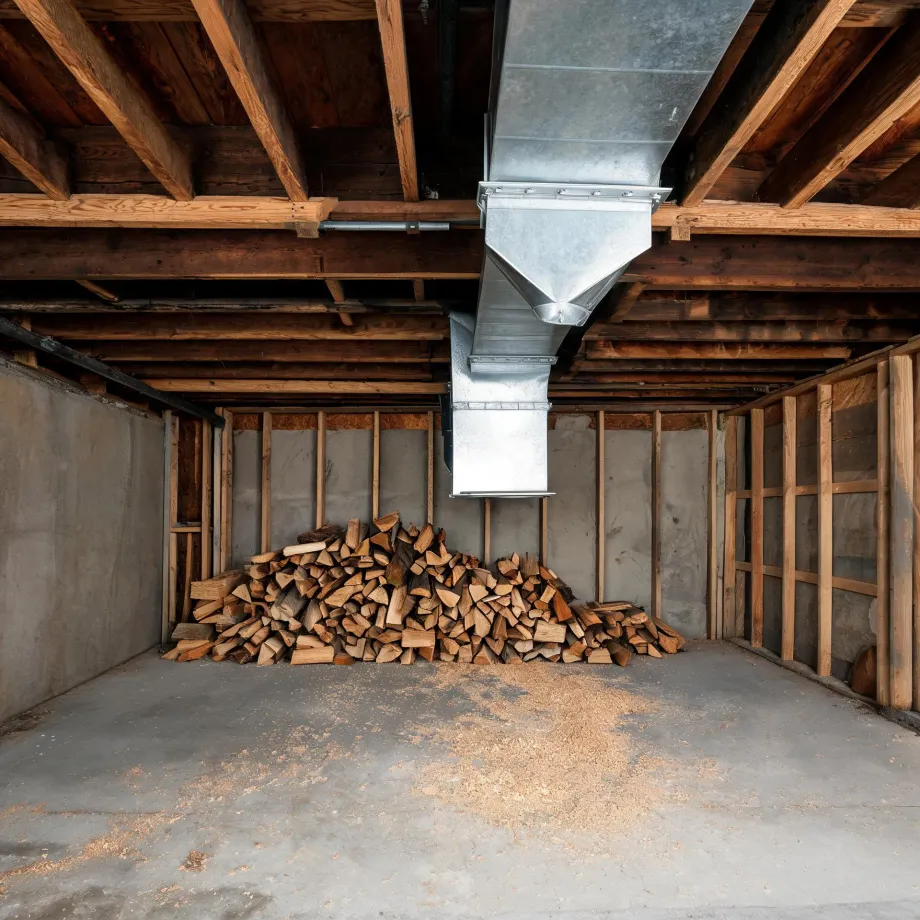
Ductwork laid in for an earlier generation of equipment is the thing a contractor has to read before a furnace installation can be quoted accurately. Half the homes in Saguache County, Colorado were built in 1987 or earlier (2020-2024 ACS 5-year). That spread across the county's housing means a significant share of the homes a contractor walks into carry ducts that were sized and routed for a system with a different output profile than what is being installed now. If those ducts cannot move the air a new furnace produces, the installation answer changes: resizing, rerouting, or working around what is there. The electrical service gets the same check, because the draw on a modern unit does not always match what the panel was built to handle.
What Gets Installed With a New Furnace
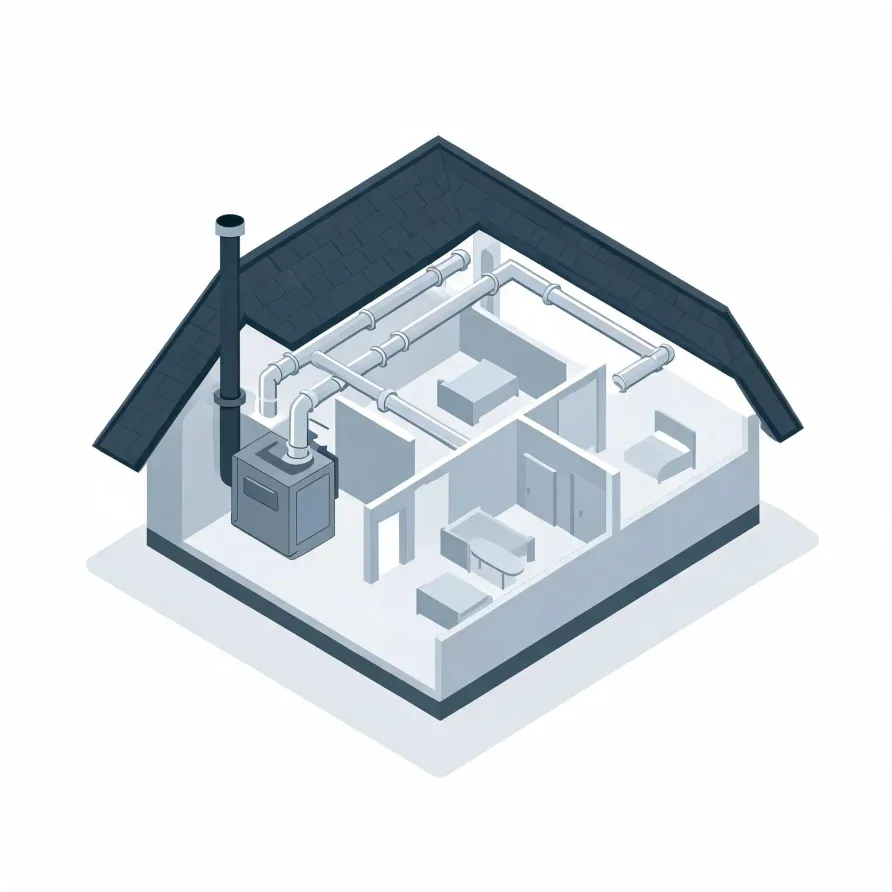
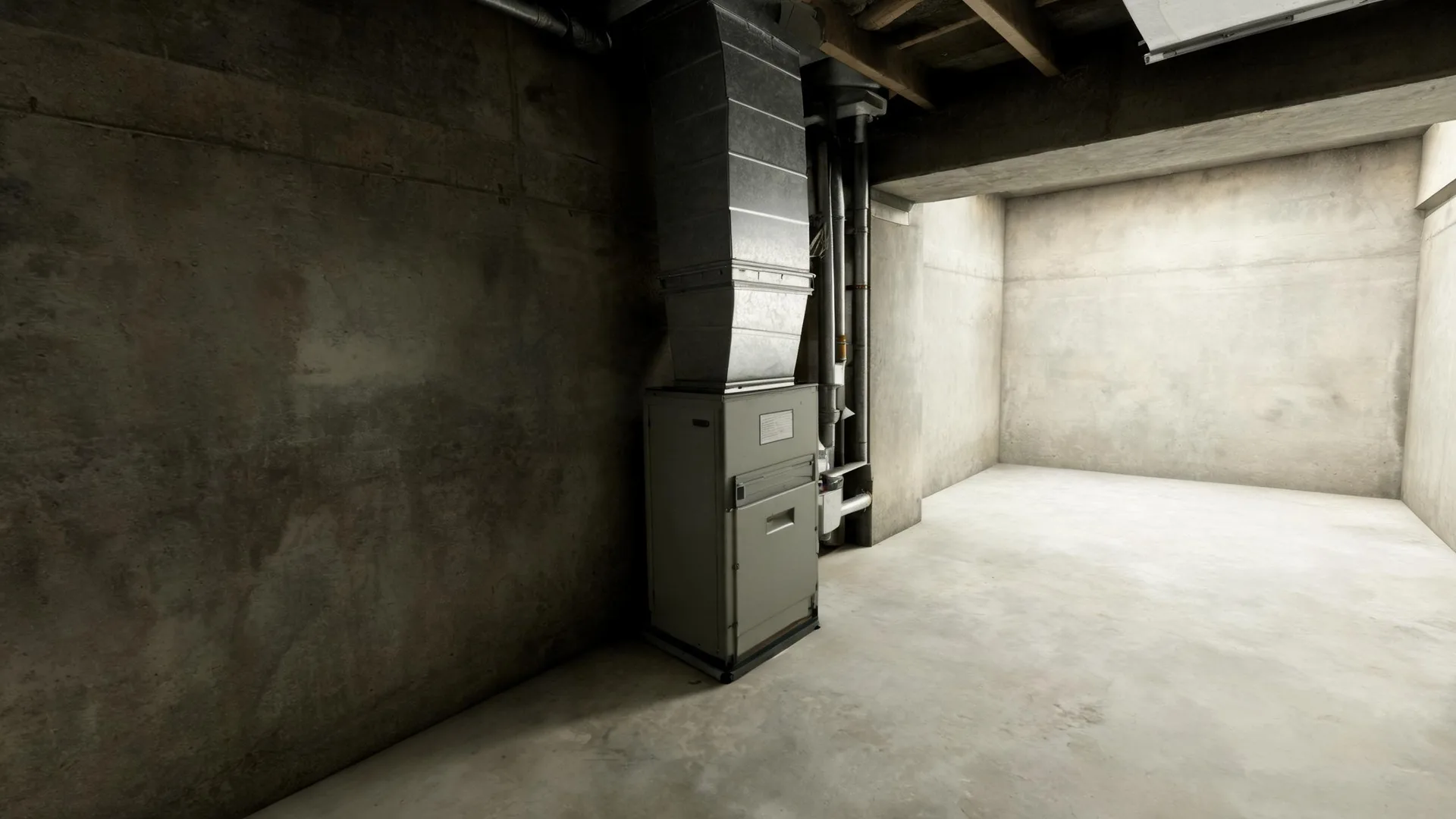
The furnace itself sits in a utility room, basement, or closet and is the unit that produces heat for the house. A burner assembly inside it ignites the fuel, and a heat exchanger transfers that heat to the air moving through the system. The blower motor, housed inside the same cabinet, pushes that warmed air into the supply side of the duct system.
The flue pipe runs from the furnace cabinet to the outside of the house and carries combustion gases out. Alongside it, a gas line connects to the burner, and a condensate drain line runs from high-efficiency units to a floor drain or utility sink. The thermostat mounts on an interior wall and is the control point a homeowner touches to call for heat.
The drawing shows a typical layout, and a licensed contractor determines exactly what applies to this house.
Get matched in Saguache CountySaguache County by the Numbers
246 severe weather events were recorded in Saguache County, Colorado between 2015 and 2024.
NOAA National Centers for Environmental Information, Storm Events Database, bulk CSV export, events 2015-01-01 through 2024-12-31.Half the homes in Saguache County, Colorado were built in 1987 or earlier (2020-2024 ACS 5-year).
U.S. Census Bureau, 2020-2024 American Community Survey 5-Year EstimatesSaguache County, Colorado holds 3,902 housing units (2020-2024 ACS 5-year).
U.S. Census Bureau, 2020-2024 American Community Survey 5-Year EstimatesOwners occupy 76.9% of the occupied homes in Saguache County, Colorado (2020-2024 ACS 5-year).
U.S. Census Bureau, 2020-2024 American Community Survey 5-Year EstimatesCodes & Standards Governing Furnace Installation in Saguache County, Colorado4 sourced rules and standards
What the installation actually looks like
Non-weatherized gas furnaces manufactured on or after November 19, 2015 must reach 80.0 percent AFUE.
Non-weatherized oil-fired furnaces manufactured on or after November 19, 2015 must reach 83.0 percent AFUE.
Mobile home gas furnaces manufactured on or after November 19, 2015 must reach 80.0 percent AFUE.
Non-weatherized gas furnaces manufactured on or after December 18, 2028 must reach 95.0 percent AFUE, up from the 80.0 percent minimum that applies to units manufactured before that date.
Severe Weather Events in Saguache County
Extreme weather puts a direct load on heating equipment: harder conditions demand more run time, more recovery, and more from every component. How often that pressure arrives in Saguache County shapes what a furnace here needs to handle.
246 severe weather events, 2015–2024. Source: NOAA National Centers for Environmental Information, Storm Events Database.