Tell us about the job
Takes about a minute. No obligation.
Sizing and installation quality matter more in a county where the furnace never really gets to rest. Homes in Rio Grande County, CO run heat in every month of the year. The burner, the heat exchanger, and the ignition system accumulate cycling hours across every month, so a unit that was undersized at install degrades faster than its rated service life suggests it should. A contractor quoting a replacement here has to run a proper load calculation before specifying equipment, because the margin for error is small when the system runs this hard, this long.
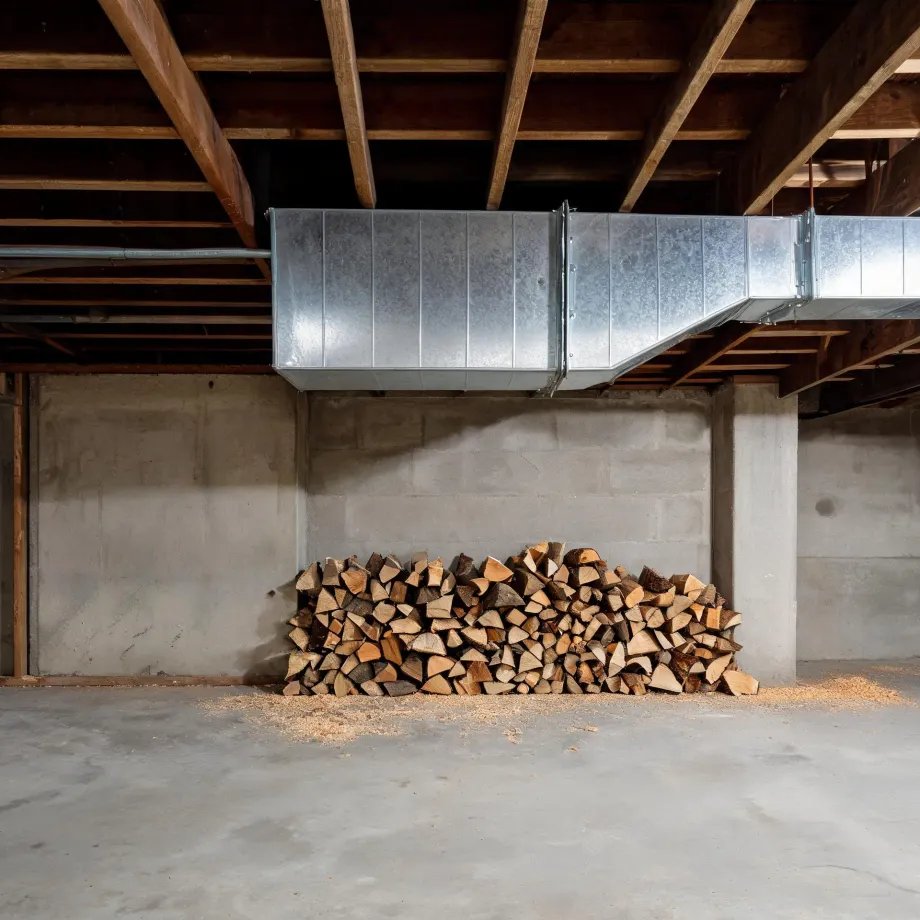
Ductwork laid for a furnace that has since been replaced at least once rarely matches what a new unit needs in airflow, branch sizing, or return capacity. Half the homes in Rio Grande County, Colorado were built in 1978 or earlier (2020-2024 ACS 5-year). A contractor pricing a furnace installation here measures and inspects that ductwork before anything else, because what it can carry determines the system that will actually work in the house. Electrical service gets the same look: a panel sized for a lighter original load sometimes has to be addressed before the new furnace can run at all. The box itself is straightforward to price; the existing infrastructure is where the job gets its shape.
What Gets Installed With a New Furnace
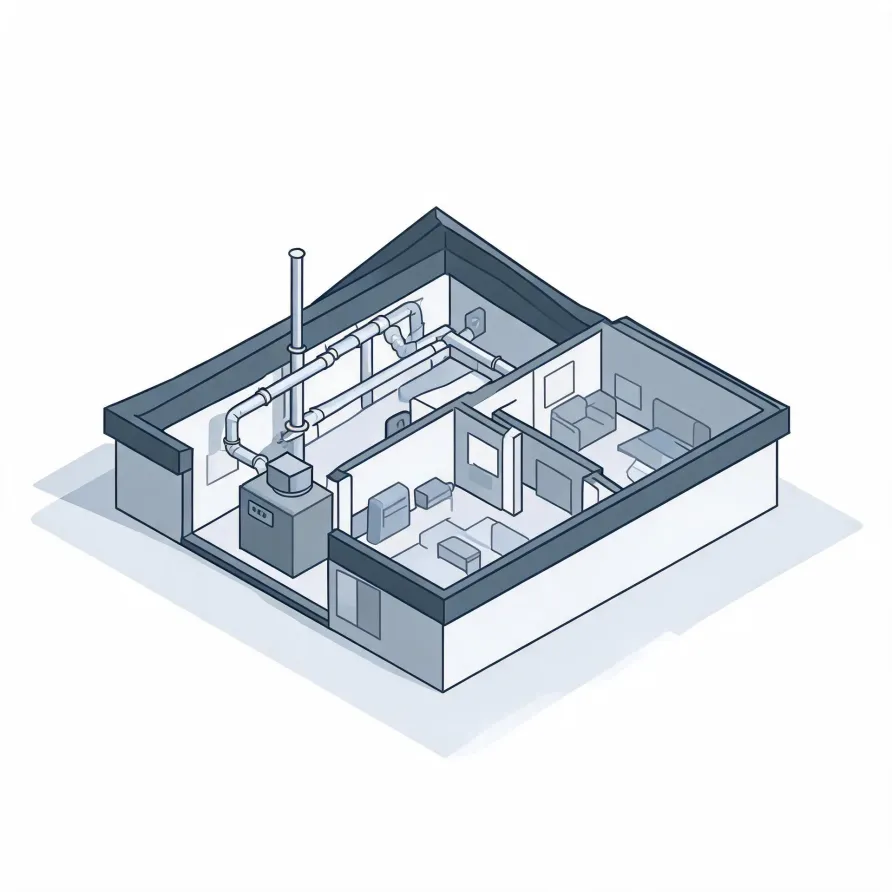
The furnace itself sits in a mechanical room, basement, or utility closet and is the central piece a contractor brings in. Inside it, a burner assembly and heat exchanger handle combustion, while a blower motor pushes conditioned air outward into the home. The flue pipe exits the unit and runs to an outside wall or up through the roof to vent combustion gases out.
The thermostat mounts on an interior wall and is the control point the homeowner interacts with directly. Alongside it, a contractor connects the gas supply line to the furnace and fits the filter housing where the return air enters the unit before it reaches the heat exchanger.
The drawing shows a typical layout, and a licensed contractor determines exactly what applies to your home.
Get matched in Rio Grande CountyRio Grande County, by the record
253 severe weather events were recorded in Rio Grande County, Colorado between 2015 and 2024.
NOAA National Centers for Environmental Information, Storm Events Database, bulk CSV export, events 2015-01-01 through 2024-12-31.Half the homes in Rio Grande County, Colorado were built in 1978 or earlier (2020-2024 ACS 5-year).
U.S. Census Bureau, 2020-2024 American Community Survey 5-Year EstimatesRio Grande County, Colorado holds 6,616 housing units (2020-2024 ACS 5-year).
U.S. Census Bureau, 2020-2024 American Community Survey 5-Year EstimatesOwners occupy 67.1% of the occupied homes in Rio Grande County, Colorado (2020-2024 ACS 5-year).
U.S. Census Bureau, 2020-2024 American Community Survey 5-Year EstimatesFurnace Installation Rules That Apply in Rio Grande County, Colorado4 sourced standards and codes
What the Installation Actually Looks Like
Non-weatherized gas furnaces manufactured on or after November 19, 2015 must reach 80.0 percent AFUE.
Non-weatherized oil-fired furnaces manufactured on or after November 19, 2015 must reach 83.0 percent AFUE.
Mobile home gas furnaces manufactured on or after November 19, 2015 must reach 80.0 percent AFUE.
Non-weatherized gas furnaces manufactured on or after December 18, 2028 must reach 95.0 percent AFUE, up from the 80.0 percent minimum that applies to units manufactured before that date.
Severe Weather in Rio Grande County
Weather puts a load on heating equipment that mild-climate specs never account for. What happens outside in Rio Grande County directly shapes how hard a furnace has to work and how long it lasts before it needs replacing.
253 severe weather events, 2015–2024. Source: NOAA National Centers for Environmental Information, Storm Events Database.