Tell us about the job
Takes about a minute. No obligation.
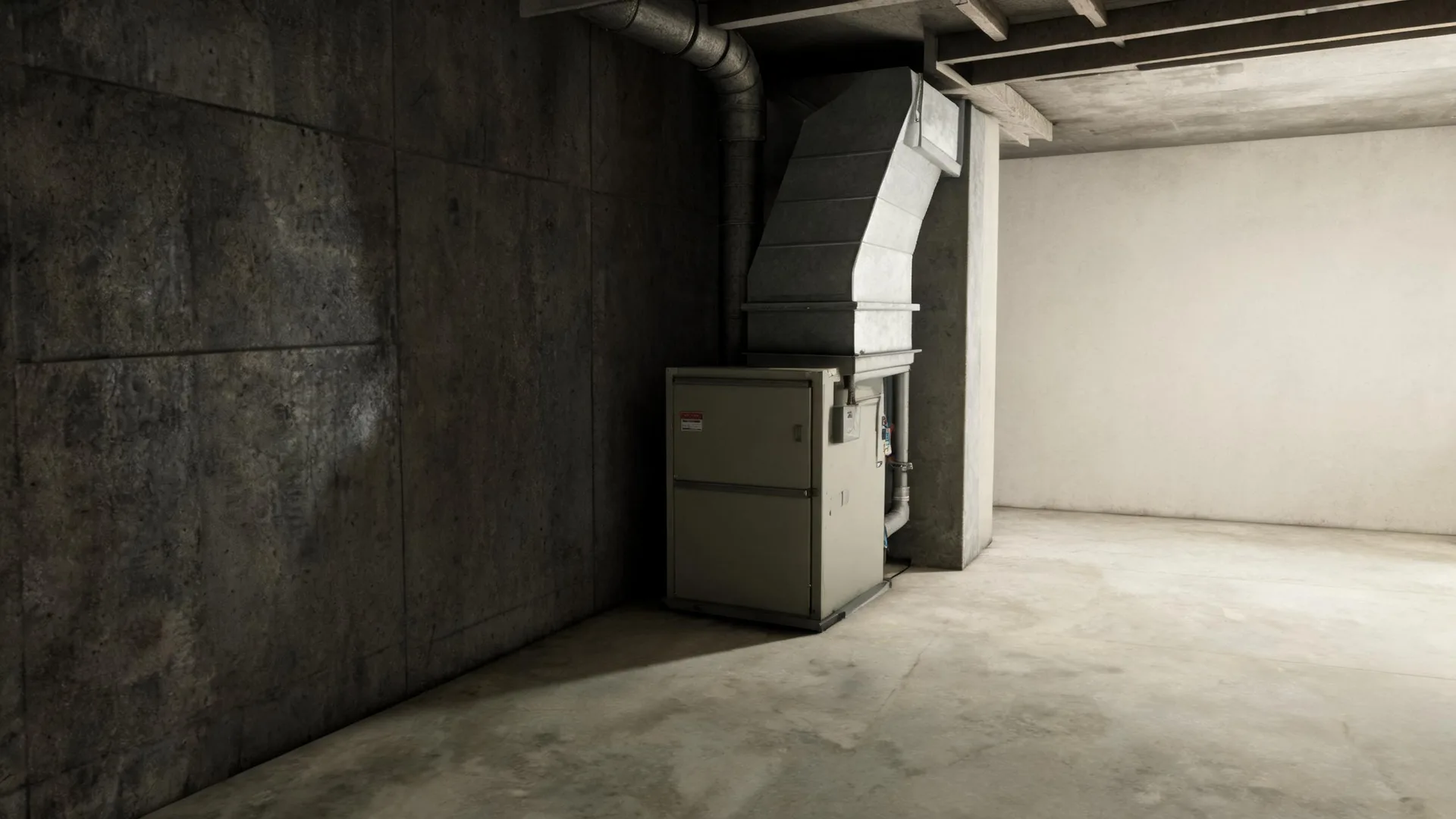
Sizing a furnace for Alamosa County starts with what the burner and heat exchanger are actually asked to carry. Homes in Alamosa County, CO run heat about nine months a year, from September through May. A contractor working out load here has to account for a system that cycles repeatedly through cold months, with the ignition system lighting and relighting across a long stretch before it ever gets a rest. Heat exchangers that are undersized for the load crack earlier; ignition components that are marginal at installation fail before a homeowner expects them to. A contractor who skips a proper load calculation leaves the next failure baked into the install.
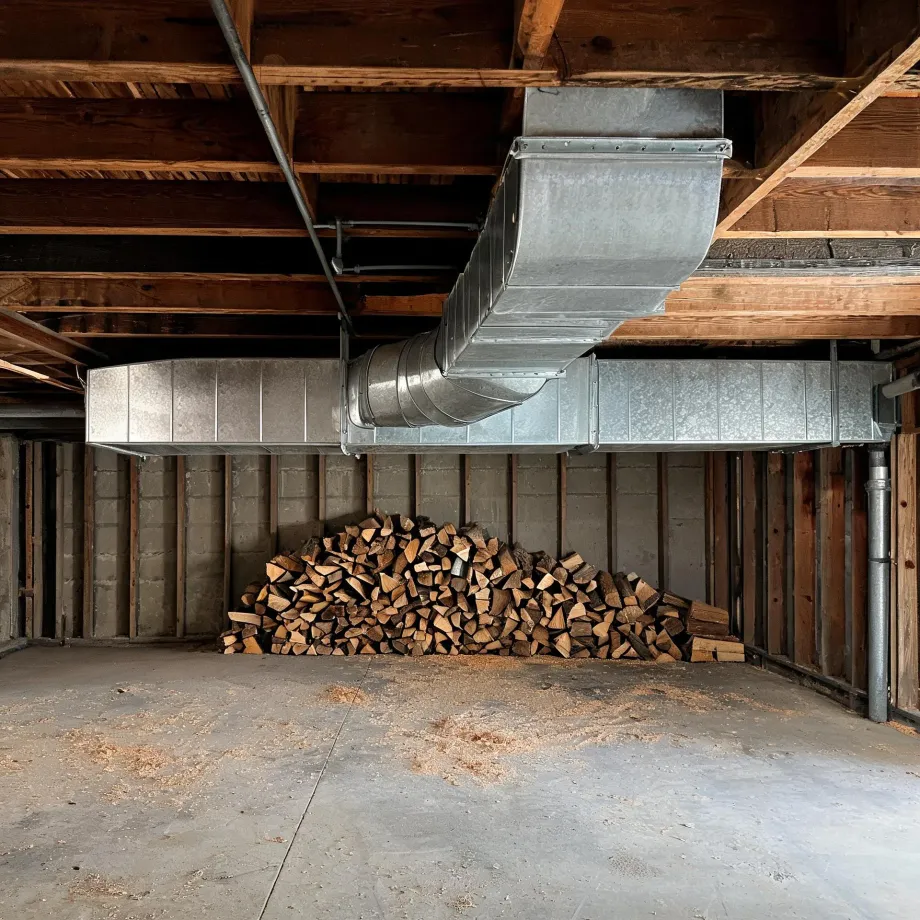
Existing ductwork is where a furnace installation in Alamosa County either works or stalls. Half the homes in Alamosa County, Colorado were built in 1982 or earlier (2020-2024 ACS 5-year). A house built then was ducted for whatever system ran in it at the time, and the odds that those runs match what a new furnace needs are slim. A contractor checks the trunk lines, the branch runs, and the returns before settling on a unit. What the ducts can carry sets the job's scope. The electrical service gets the same look, because a new furnace draw may not match what the panel was wired for.
What Gets Installed With a New Furnace
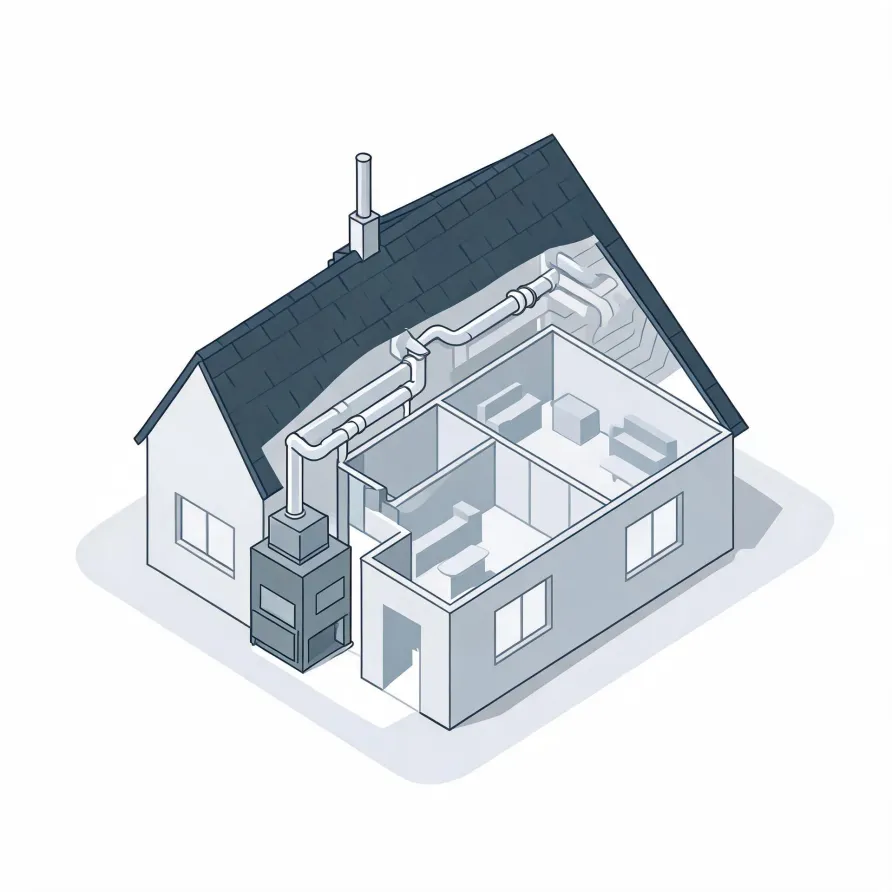
The furnace itself sits in a mechanical room, basement, or utility closet and is the piece doing the heating work. A heat exchanger inside it warms the air that moves through your home, and a burner assembly below that is where the gas ignites. The flue pipe runs from the unit up and out of the house, carrying exhaust gases away.
The blower motor and fan sit inside the furnace cabinet and push conditioned air into your duct system. At the other end of that loop, the return air filter housing pulls air back in before it reaches the heat exchanger. A thermostat on a wall in the living space ties the whole system together, signaling the furnace when to fire and when to stop.
The drawing shows a typical layout, and a licensed contractor determines exactly what applies to your house and its configuration.
Get matched in Alamosa CountyAlamosa County by the Numbers
178 severe weather events were recorded in Alamosa County, Colorado between 2015 and 2024.
NOAA National Centers for Environmental Information, Storm Events Database, bulk CSV export, events 2015-01-01 through 2024-12-31.Half the homes in Alamosa County, Colorado were built in 1982 or earlier (2020-2024 ACS 5-year).
U.S. Census Bureau, 2020-2024 American Community Survey 5-Year EstimatesAlamosa County, Colorado holds 7,241 housing units (2020-2024 ACS 5-year).
U.S. Census Bureau, 2020-2024 American Community Survey 5-Year EstimatesOwners occupy 55.9% of the occupied homes in Alamosa County, Colorado (2020-2024 ACS 5-year).
U.S. Census Bureau, 2020-2024 American Community Survey 5-Year EstimatesFurnace Installation Rules for Alamosa County, Colorado4 codes, standards & laws
What happens when the contractor shows up
Non-weatherized gas furnaces manufactured on or after November 19, 2015 must reach 80.0 percent AFUE.
Non-weatherized oil-fired furnaces manufactured on or after November 19, 2015 must reach 83.0 percent AFUE.
Mobile home gas furnaces manufactured on or after November 19, 2015 must reach 80.0 percent AFUE.
Non-weatherized gas furnaces manufactured on or after December 18, 2028 must reach 95.0 percent AFUE, up from the 80.0 percent minimum that applies to units manufactured before that date.
Severe Weather Events in Alamosa County
Alamosa County's climate puts real demands on heating equipment, and those demands shift with how hard the weather runs in a given year. A furnace sized and installed for local conditions holds up better because the contractor accounting for that history is solving the right problem.
178 severe weather events, 2015–2024. Source: NOAA National Centers for Environmental Information, Storm Events Database.