Tell us about the job
Takes about a minute. No obligation.
Sizing a furnace for a Jefferson County home is not a generic calculation. Homes in Jefferson County, CO run heat about nine months a year, from September through May. The burner, heat exchanger, and ignition system carry that load through most of the calendar, cycling daily while outdoor temperatures stay well below the threshold where equipment can coast. A system undersized at installation runs longer each cycle to meet setpoint, and the heat exchanger takes the punishment first. A contractor quoting a replacement here establishes the true heating load before selecting equipment, because a box that fits the house on paper but underperforms in practice will show it in the components that cycle hardest.
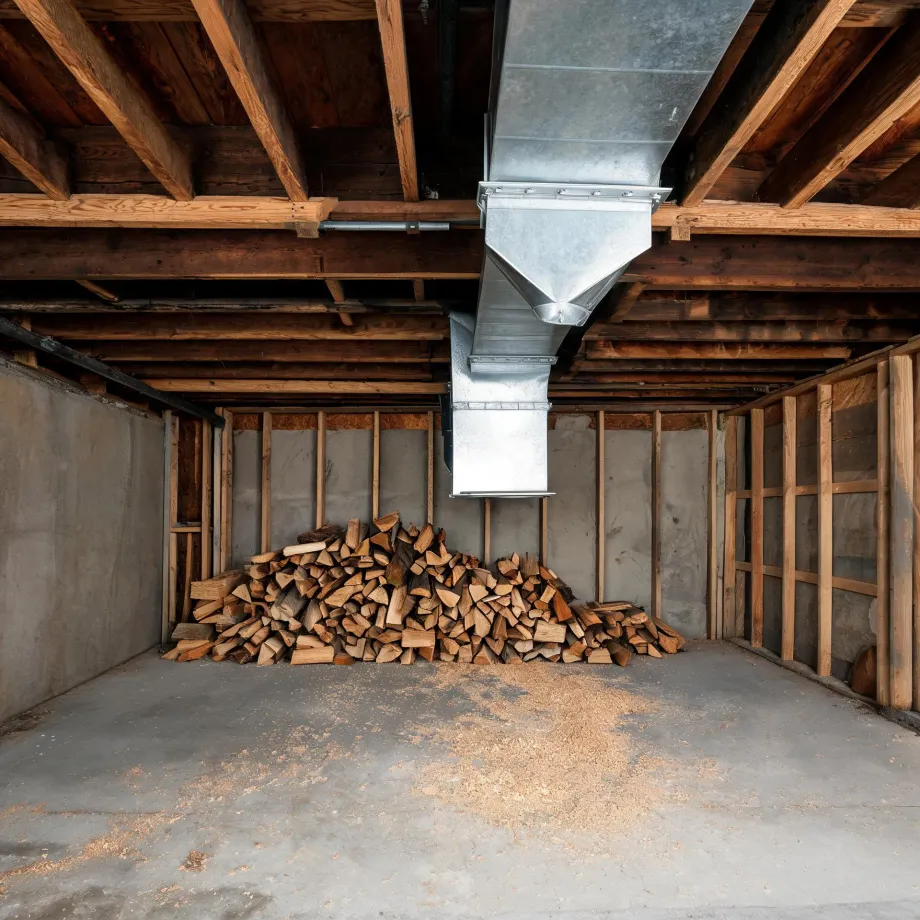
Existing ductwork is what a Jefferson County furnace installation turns on. Half the homes in Jefferson County, Colorado were built in 1980 or earlier (2020-2024 ACS 5-year). A house that old was ducted for whatever heated it first, and that original layout was sized, routed, and sealed for a different load than a modern furnace pulls. A contractor will measure what is there before any equipment gets priced, because ductwork that cannot carry the new system's airflow changes the scope of the job before the unit itself is ever chosen.
What Gets Installed With a New Furnace
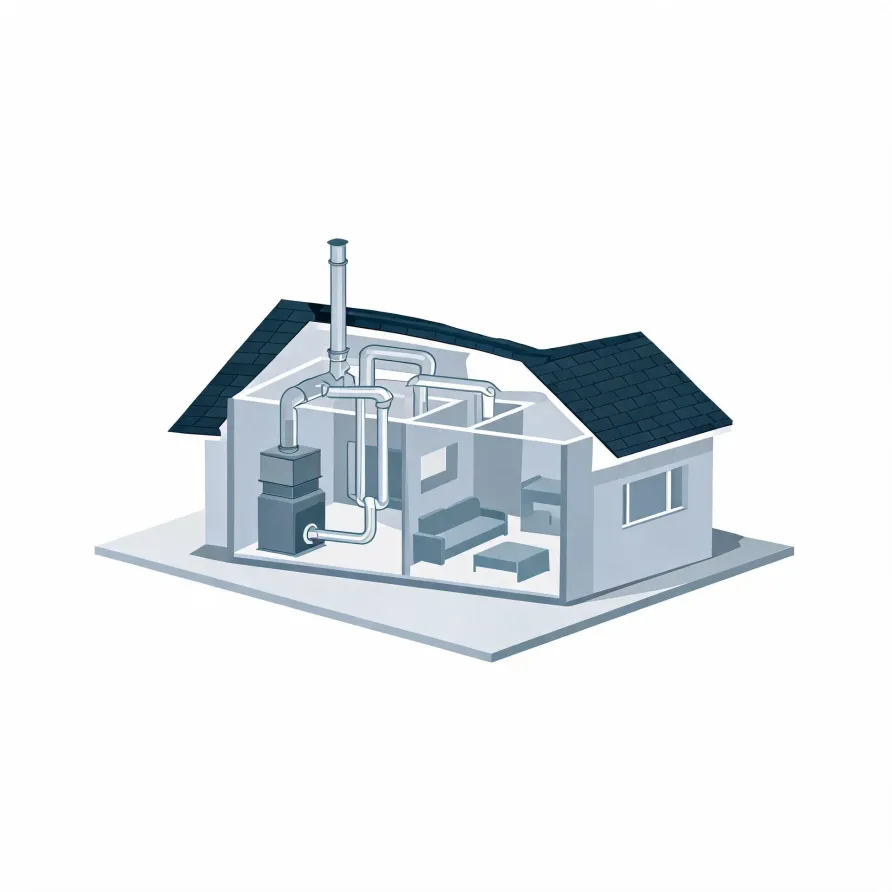
The furnace itself sits in the basement, utility room, or closet and is the unit a homeowner sees when they look at their heating system. Inside it, a heat exchanger warms the air that moves through the house, and a blower fan pushes that air out into the supply side of the home.
The flue pipe runs from the furnace to an exterior wall or up through the roof, carrying combustion exhaust out of the living space. A thermostat mounts on an interior wall and serves as the control point, telling the furnace when to fire and when to stop.
The drawing shows a typical layout, and a licensed contractor determines which components apply to your specific home.
Get matched in Jefferson CountyJefferson County, by the numbers
381 severe weather events were recorded in Jefferson County, Colorado between 2015 and 2024.
NOAA National Centers for Environmental Information, Storm Events Database, bulk CSV export, events 2015-01-01 through 2024-12-31.Half the homes in Jefferson County, Colorado were built in 1980 or earlier (2020-2024 ACS 5-year).
U.S. Census Bureau, 2020-2024 American Community Survey 5-Year EstimatesJefferson County, Colorado holds 253,574 housing units (2020-2024 ACS 5-year).
U.S. Census Bureau, 2020-2024 American Community Survey 5-Year EstimatesOwners occupy 70.7% of the occupied homes in Jefferson County, Colorado (2020-2024 ACS 5-year).
U.S. Census Bureau, 2020-2024 American Community Survey 5-Year EstimatesCodes & Standards Governing Furnace Installation in Jefferson County, Colorado4 sourced rules & standards
What the Installation Actually Looks Like
Non-weatherized gas furnaces manufactured on or after November 19, 2015 must reach 80.0 percent AFUE.
Non-weatherized oil-fired furnaces manufactured on or after November 19, 2015 must reach 83.0 percent AFUE.
Mobile home gas furnaces manufactured on or after November 19, 2015 must reach 80.0 percent AFUE.
Non-weatherized gas furnaces manufactured on or after December 18, 2028 must reach 95.0 percent AFUE, up from the 80.0 percent minimum that applies to units manufactured before that date.
Severe Weather in Jefferson County
Heating equipment works hardest when outdoor conditions are most demanding, and how often those conditions arrive shapes what a furnace in Jefferson County is asked to do over its lifetime. That workload is a local fact, and it is part of what a contractor here accounts for when sizing and installing equipment.
381 severe weather events, 2015–2024. Source: NOAA National Centers for Environmental Information, Storm Events Database.