Tell us about the job
Takes about a minute. No obligation.
A furnace repair in Custer County starts with the burner assembly and heat exchanger, because those are the parts that have been cycling hard. Homes in Custer County, CO run heat about eleven months a year, from August through June. The ignition system fires at the start of each heating cycle, and in a county where the furnace runs through most of the calendar, that component logs an extraordinary number of starts before a homeowner ever calls for service. Cracks in the heat exchanger and igniter failures are what contractors find most, not because the equipment is poor but because it has been working.
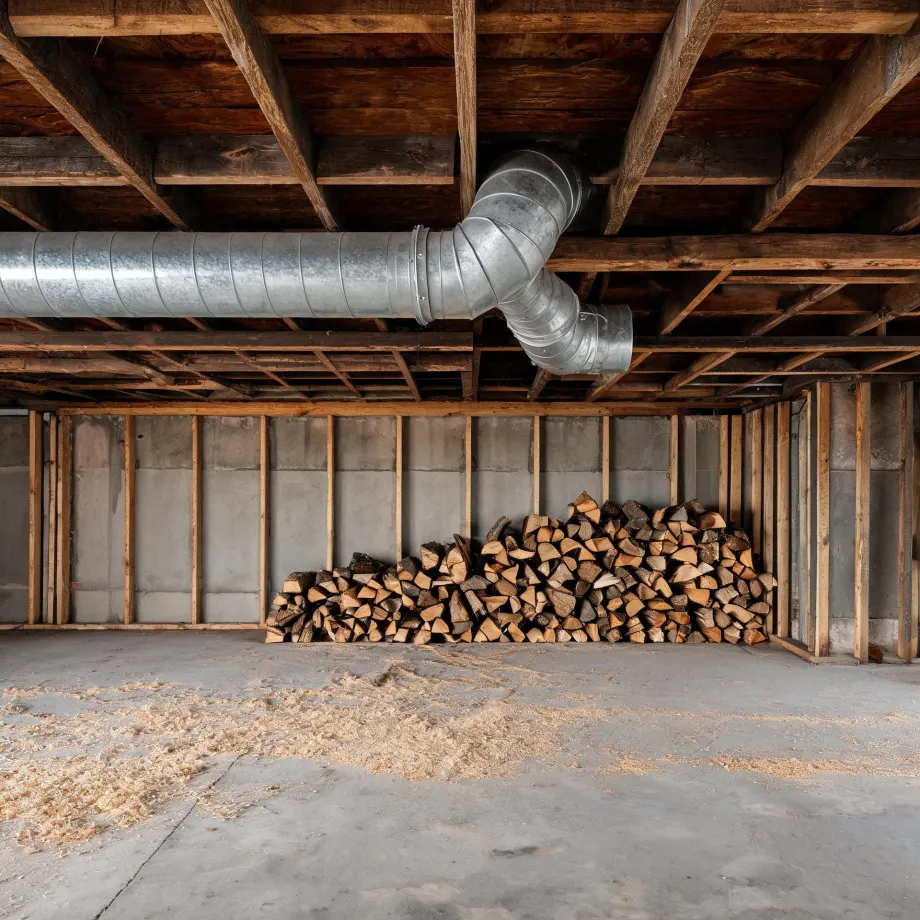
Furnace repair in an older housing stock runs into a specific obstacle once the unit is open: the parts a system takes. Half the homes in Custer County, Colorado were built in 1992 or earlier (2020-2024 ACS 5-year). A contractor who pulls a cracked heat exchanger or a failed inducer motor out of a furnace in this county may find that the component is no longer in regular production, which changes what the repair actually costs and whether a like-for-like replacement is still possible. That is not a paperwork problem; it is something the opened system either has available or does not.
The Parts of a Furnace a Contractor Checks First
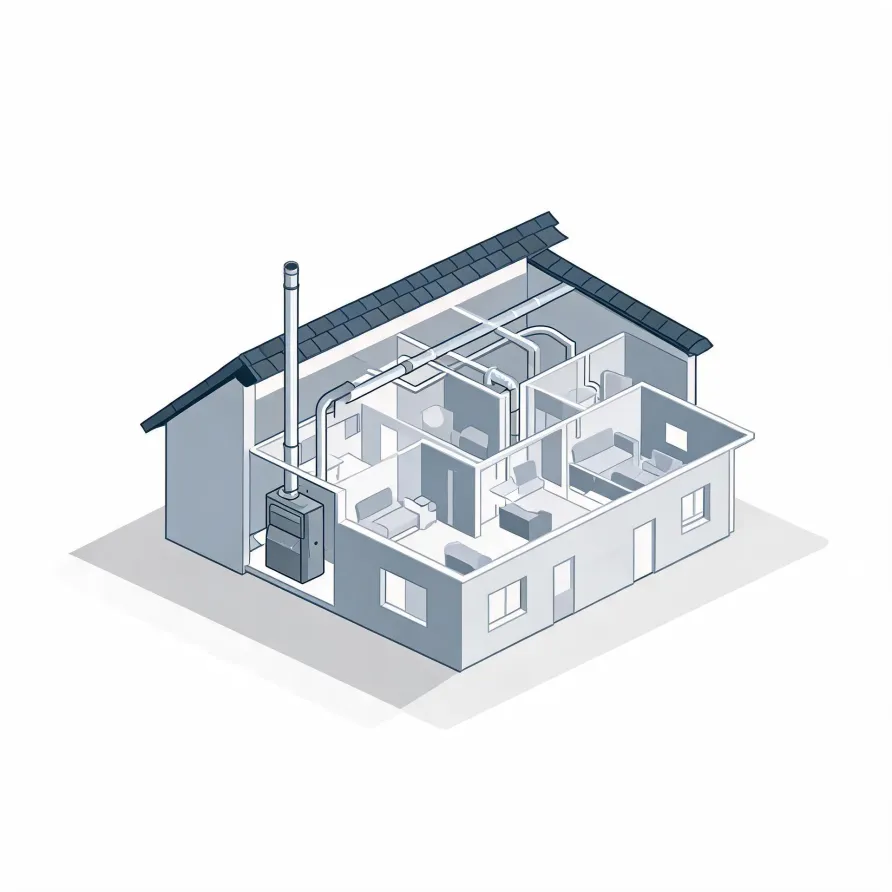
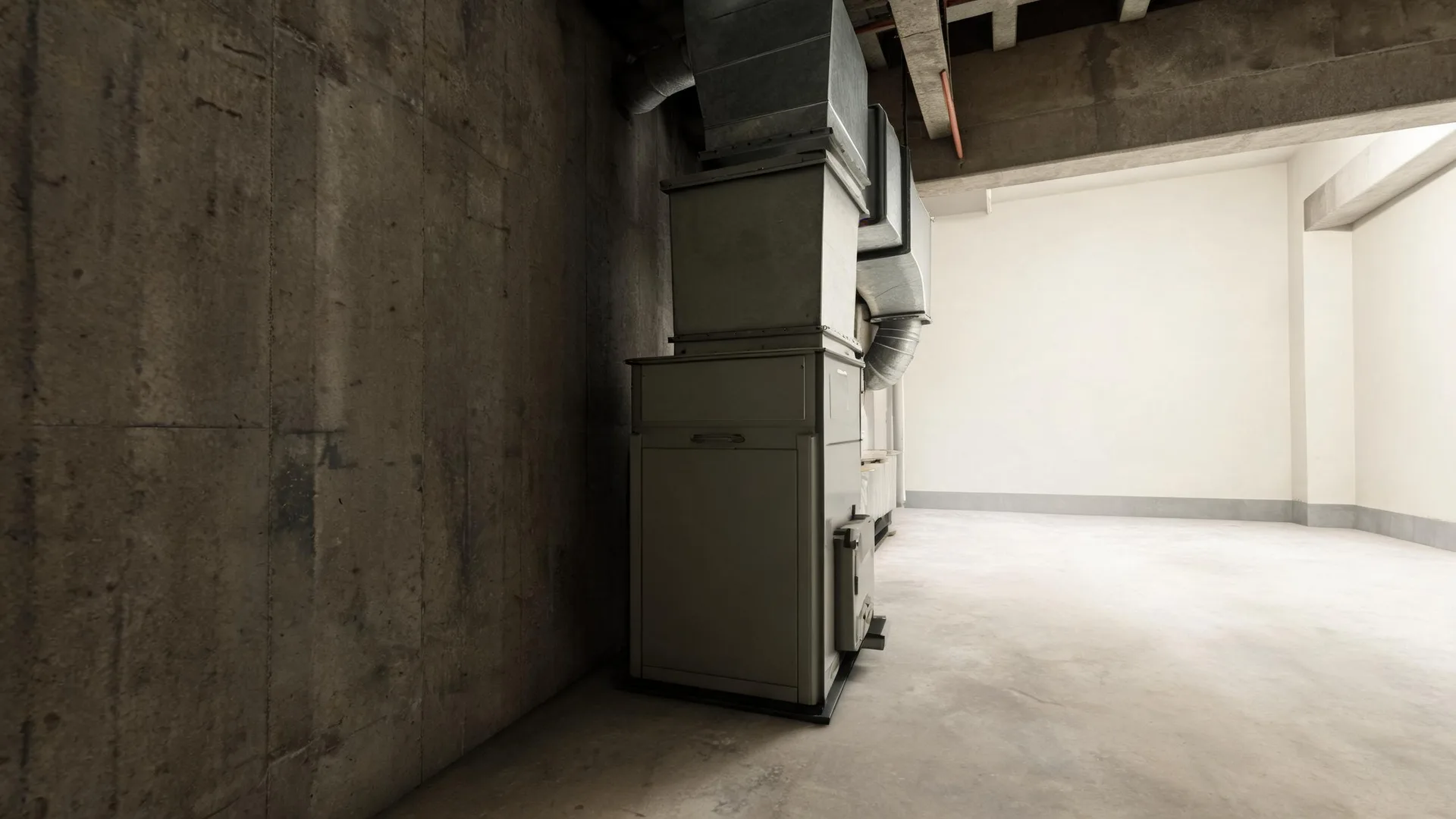
The furnace itself sits in a utility space, basement, or closet and is the piece a contractor goes to first. Inside it, the heat exchanger is the part that warms air without mixing combustion gases into it, and a crack or failure there is one of the more serious findings a repair visit can turn up. The burners, igniter, and flame sensor work together to start and sustain combustion, and when a furnace won't light or keeps shutting off, those components are where the diagnosis begins.
The blower motor and its fan wheel sit in the lower section of the unit and push conditioned air out into the house. The flue pipe runs from the furnace to an exterior exhaust point and carries combustion gases out. The control board ties everything together, and erratic behavior across multiple components often points back to it.
The drawing shows a typical furnace layout, and a licensed contractor determines which components and conditions apply to the specific system in your home.
Get matched in Custer CountyCuster County, by the numbers
427 severe weather events were recorded in Custer County, Colorado between 2015 and 2024.
NOAA National Centers for Environmental Information, Storm Events Database, bulk CSV export, events 2015-01-01 through 2024-12-31.Half the homes in Custer County, Colorado were built in 1992 or earlier (2020-2024 ACS 5-year).
U.S. Census Bureau, 2020-2024 American Community Survey 5-Year EstimatesCuster County, Colorado holds 4,631 housing units (2020-2024 ACS 5-year).
U.S. Census Bureau, 2020-2024 American Community Survey 5-Year EstimatesOwners occupy 85.3% of the occupied homes in Custer County, Colorado (2020-2024 ACS 5-year).
U.S. Census Bureau, 2020-2024 American Community Survey 5-Year EstimatesCodes & Standards Covering Furnace Repair in Custer County, Colorado4 sourced rules and standards
What the repair visit looks like
Non-weatherized gas furnaces manufactured on or after November 19, 2015 must reach 80.0 percent AFUE.
Non-weatherized oil-fired furnaces manufactured on or after November 19, 2015 must reach 83.0 percent AFUE.
Mobile home gas furnaces manufactured on or after November 19, 2015 must reach 80.0 percent AFUE.
Non-weatherized gas furnaces manufactured on or after December 18, 2028 must reach 95.0 percent AFUE, up from the 80.0 percent minimum that applies to units manufactured before that date.
Severe Weather Events in Custer County
Extreme weather puts real stress on furnace systems, pushing them to run harder and longer than ordinary conditions demand. How much of that load a furnace in Custer County carries shapes when parts wear, when repairs come due, and what a local contractor will find when they open the unit.
427 severe weather events, 2015–2024. Source: NOAA National Centers for Environmental Information, Storm Events Database.