Tell us about the job
Takes about a minute. No obligation.
Sizing a furnace for Larimer County means sizing it for work, not for occasional use. Homes in Larimer County, CO run heat about ten months a year, from September through June. The burner, the heat exchanger, and the ignition system cycle through that stretch every year, accumulating wear that a lightly used system in a shorter season simply does not. A contractor quoting an installation here has to match the equipment's rated capacity to the actual load the house puts on it, because an undersized unit running long cycles degrades faster than one properly spec'd from the start. Ductwork condition and home envelope losses factor into that calculation too.
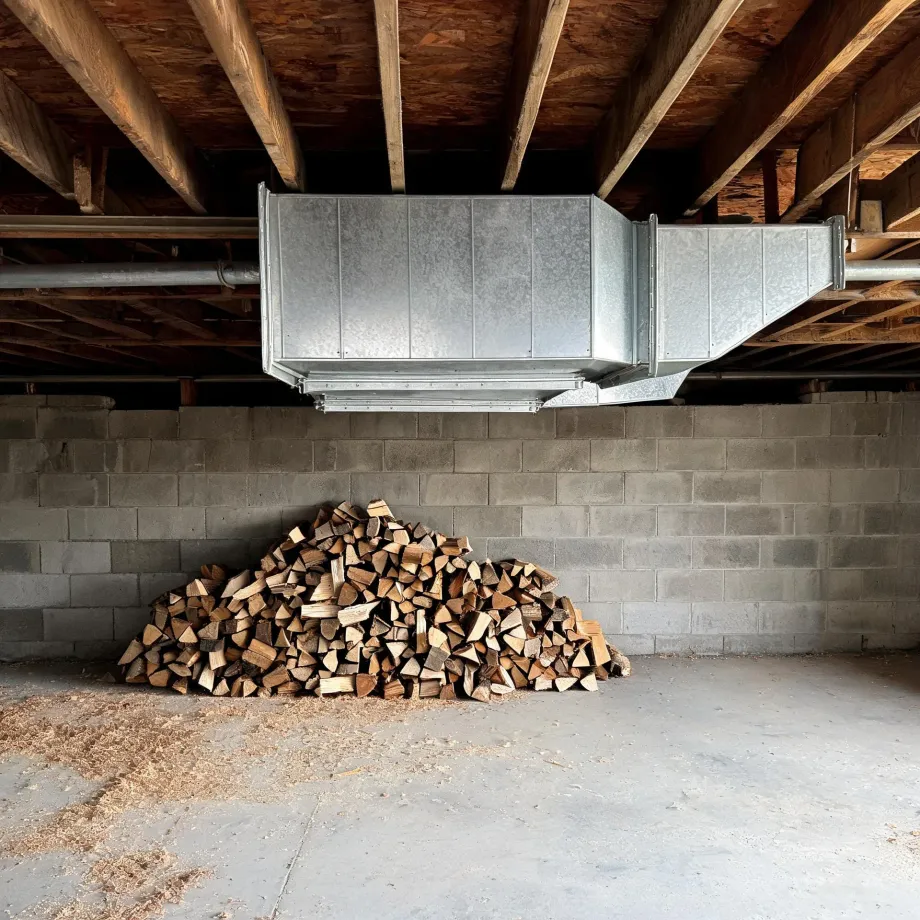
Existing ductwork is where a furnace installation in Larimer County either works or stalls. Half the homes in Larimer County, Colorado were built in 1993 or earlier (2020-2024 ACS 5-year). That means the ducts a contractor finds behind the walls were laid out for whatever system was original to the house, and a new furnace draws differently, distributes differently, and in some configurations needs a different path entirely. What the electrical service will support is the second question, and it follows the same logic. The unit itself gets specified once those two are settled.
What Gets Installed With a New Furnace
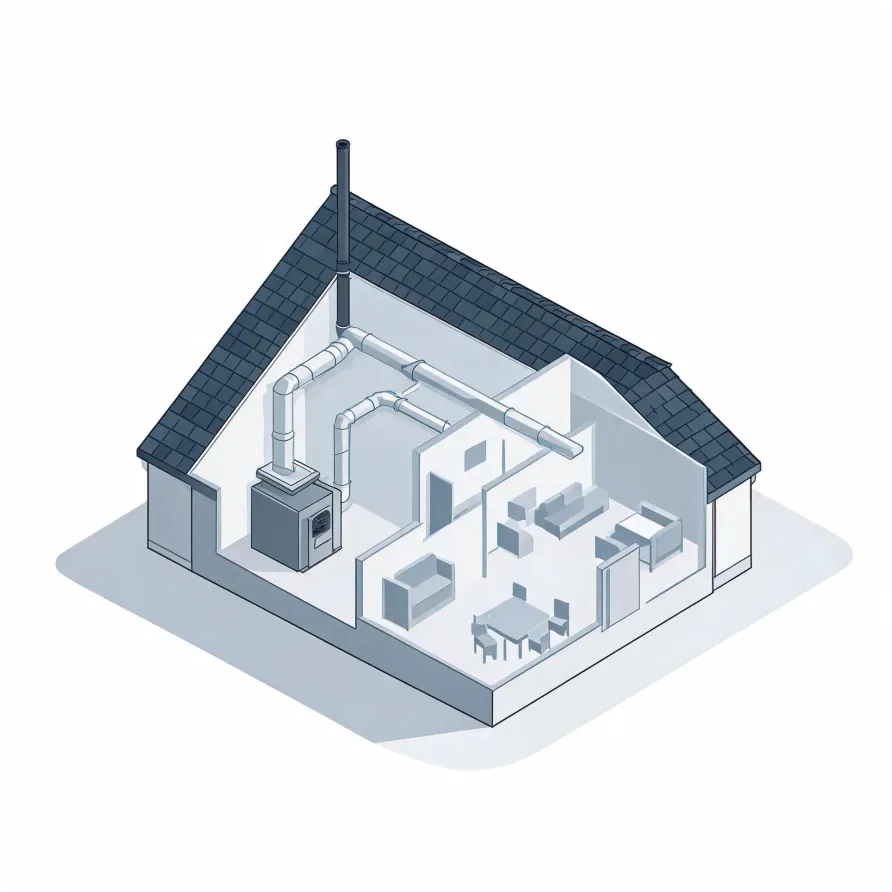
The furnace itself sits in the basement, utility room, or mechanical closet and is the piece doing the heating work. A gas valve, a burner assembly, and a heat exchanger all live inside the cabinet. The blower motor at the base of the cabinet pushes heated air out into the home.
The flue pipe runs from the furnace up through the wall or roof and carries combustion gases out of the house. Alongside it, the contractor installs a new thermostat on an interior wall, which is the only piece the homeowner touches day to day. A condensate drain line is added on high-efficiency models to carry moisture outside.
The drawing shows a typical layout, and a licensed contractor determines exactly what applies to your house.
Get matched in Larimer CountyLarimer County, by the numbers
359 severe weather events were recorded in Larimer County, Colorado between 2015 and 2024.
NOAA National Centers for Environmental Information, Storm Events Database, bulk CSV export, events 2015-01-01 through 2024-12-31.Half the homes in Larimer County, Colorado were built in 1993 or earlier (2020-2024 ACS 5-year).
U.S. Census Bureau, 2020-2024 American Community Survey 5-Year EstimatesLarimer County, Colorado holds 164,690 housing units (2020-2024 ACS 5-year).
U.S. Census Bureau, 2020-2024 American Community Survey 5-Year EstimatesOwners occupy 64.0% of the occupied homes in Larimer County, Colorado (2020-2024 ACS 5-year).
U.S. Census Bureau, 2020-2024 American Community Survey 5-Year EstimatesFurnace Installation Rules & Standards for Larimer County, Colorado4 codes, laws & standards
What the installation actually looks like
Non-weatherized gas furnaces manufactured on or after November 19, 2015 must reach 80.0 percent AFUE.
Non-weatherized oil-fired furnaces manufactured on or after November 19, 2015 must reach 83.0 percent AFUE.
Mobile home gas furnaces manufactured on or after November 19, 2015 must reach 80.0 percent AFUE.
Non-weatherized gas furnaces manufactured on or after December 18, 2028 must reach 95.0 percent AFUE, up from the 80.0 percent minimum that applies to units manufactured before that date.
Severe Weather Events in Larimer County
Larimer County's climate puts real demands on heating equipment, and those demands are shaped by how hard the weather runs year to year. A furnace sized and installed for local conditions holds up differently than one spec'd without that picture in mind.
359 severe weather events, 2015–2024. Source: NOAA National Centers for Environmental Information, Storm Events Database.