Tell us about the job
Takes about a minute. No obligation.
A furnace in Lake County never really rests. Homes in Lake County, CO run heat in every month of the year. The burner and heat exchanger cycle through every season, and that steady accumulation of on-off stress shows up in the ignition system before almost anything else. A contractor called to diagnose a heating problem here checks ignitor condition and heat exchanger fatigue early, because the load history of the equipment points there. Parts that might last years longer in a milder climate are already worn before a homeowner notices a problem.
Furnace repair in housing stock this old lives or dies on parts availability. Half the homes in Lake County, Colorado were built in 1972 or earlier (2020-2024 ACS 5-year). A system that has been running through high-altitude winters in a house built for entirely different equipment has often been serviced with whatever was close enough at the time, and what a contractor finds once the furnace is open reflects that history: a mix of original components and substitutions, some of which no longer have a clean replacement path. That is what shapes the scope and the cost, before anything else.
The Parts of a Furnace a Contractor Checks First
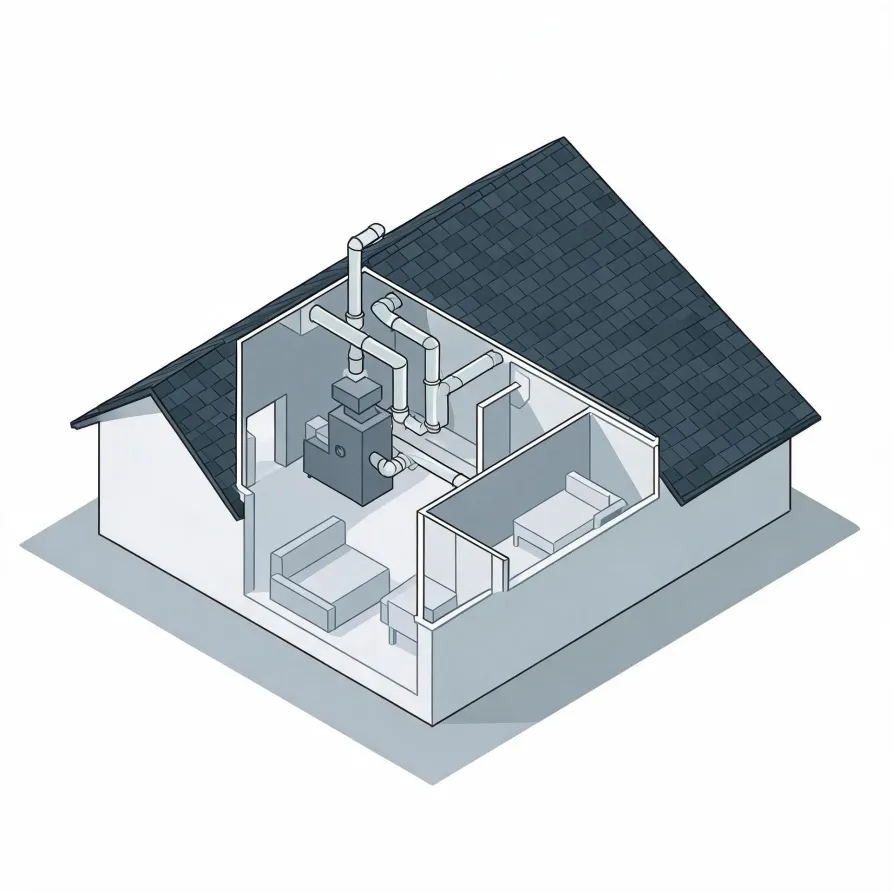
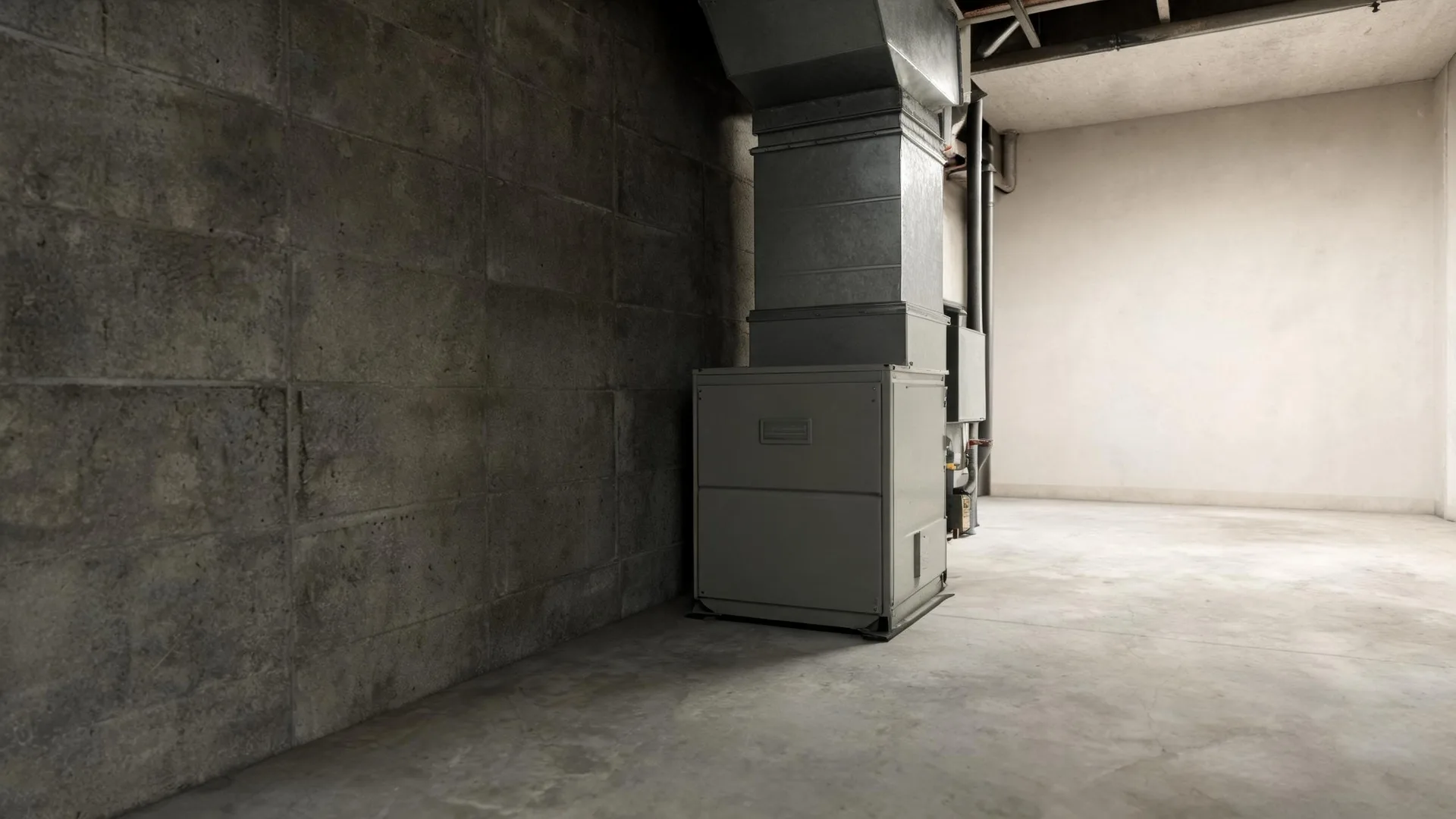
The furnace itself sits in a basement, utility closet, or crawl space and is the first thing a contractor opens up. Inside it, the heat exchanger is the piece most worth understanding: a crack or breach there lets combustion gases into the air stream, so a contractor will inspect it closely. The burners, which fire inside that exchanger, are checked for uneven flame, buildup, or failure to light.
The blower motor sits at the base of the furnace cabinet and pushes conditioned air out through the ducts. The flue pipe runs from the top of the unit to the outside and is checked for blockages or separations that let exhaust back into the house. The control board and the igniter are both small components that a contractor reaches early, because either one can stop the whole system from starting.
The drawing shows a typical furnace layout, and a licensed contractor determines which parts apply to the specific equipment and conditions in your home.
Get matched in Lake CountyLake County, Colorado, by the numbers
149 severe weather events were recorded in Lake County, Colorado between 2015 and 2024.
NOAA National Centers for Environmental Information, Storm Events Database, bulk CSV export, events 2015-01-01 through 2024-12-31.Half the homes in Lake County, Colorado were built in 1972 or earlier (2020-2024 ACS 5-year).
U.S. Census Bureau, 2020-2024 American Community Survey 5-Year EstimatesLake County, Colorado holds 3,983 housing units (2020-2024 ACS 5-year).
U.S. Census Bureau, 2020-2024 American Community Survey 5-Year EstimatesOwners occupy 75.6% of the occupied homes in Lake County, Colorado (2020-2024 ACS 5-year).
U.S. Census Bureau, 2020-2024 American Community Survey 5-Year EstimatesCodes & Standards Governing Furnace Repair in Lake County, Colorado4 sourced rules & standards
What HVAC Repair Looks Like in Lake County
Non-weatherized gas furnaces manufactured on or after November 19, 2015 must reach 80.0 percent AFUE.
Non-weatherized oil-fired furnaces manufactured on or after November 19, 2015 must reach 83.0 percent AFUE.
Mobile home gas furnaces manufactured on or after November 19, 2015 must reach 80.0 percent AFUE.
Non-weatherized gas furnaces manufactured on or after December 18, 2028 must reach 95.0 percent AFUE, up from the 80.0 percent minimum that applies to units manufactured before that date.
Severe Weather Events in Lake County
Extreme weather puts real strain on heating equipment, cycling it hard and shortening the life of components that might otherwise last. How much of that load a furnace carries depends on where it runs, which makes local weather history a direct part of the repair picture.
149 severe weather events, 2015–2024. Source: NOAA National Centers for Environmental Information, Storm Events Database.