Tell us about the job
Takes about a minute. No obligation.
A furnace repair in Prowers County starts with the parts that cycle hardest: the burner, the heat exchanger, and the ignition system. Homes in Prowers County, CO run heat about seven months a year, from October through April. By the time a furnace shows a fault, the ignition system has fired through a long string of cold mornings, and cracks in the heat exchanger have had seasons to widen. A contractor working a repair here checks those components first, because they carry the load the season puts on the equipment, and the bill follows what they find.
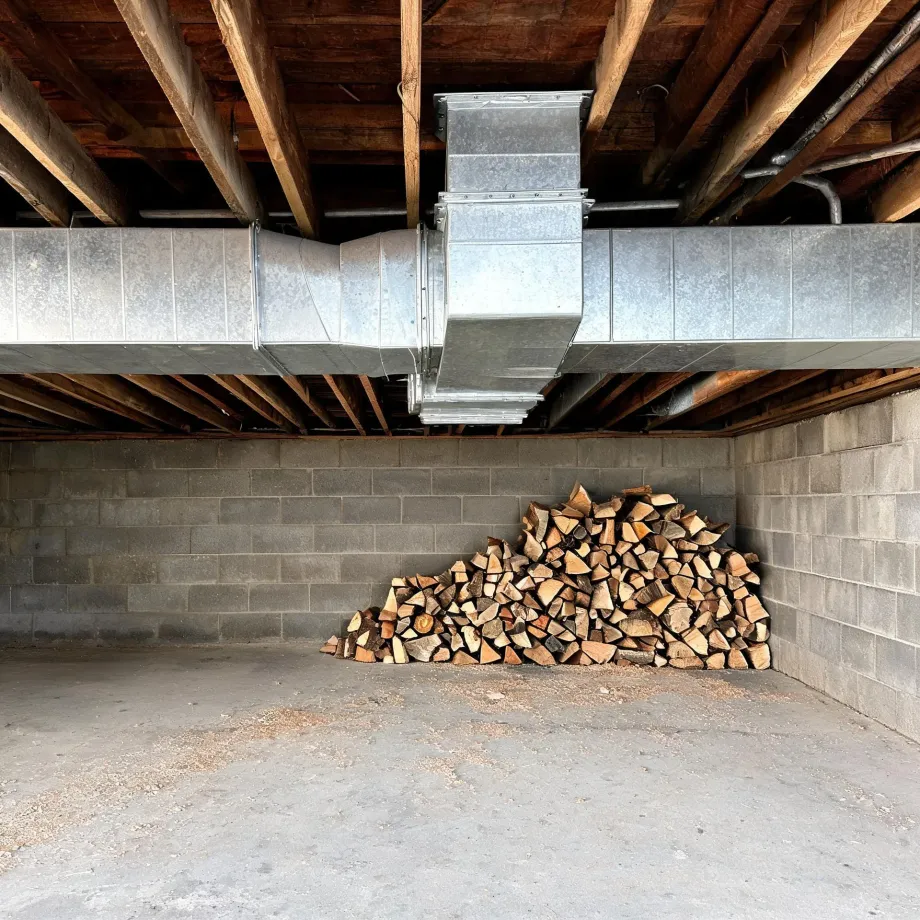
Ductwork and heat exchangers in this county's older stock have been through replacements that the original construction never anticipated, and each cycle leaves a system with components that may not match each other cleanly. Half the homes in Prowers County, Colorado were built in 1971 or earlier (2020-2024 ACS 5-year). A contractor opening a furnace here frequently finds a mix of generations inside one cabinet, which makes part identification slower and sourcing harder when a manufacturer has discontinued what that configuration takes. That mismatch between what the house was built around and what has been installed since is where furnace repair in this county gets complicated.
The Parts of a Furnace a Contractor Checks First
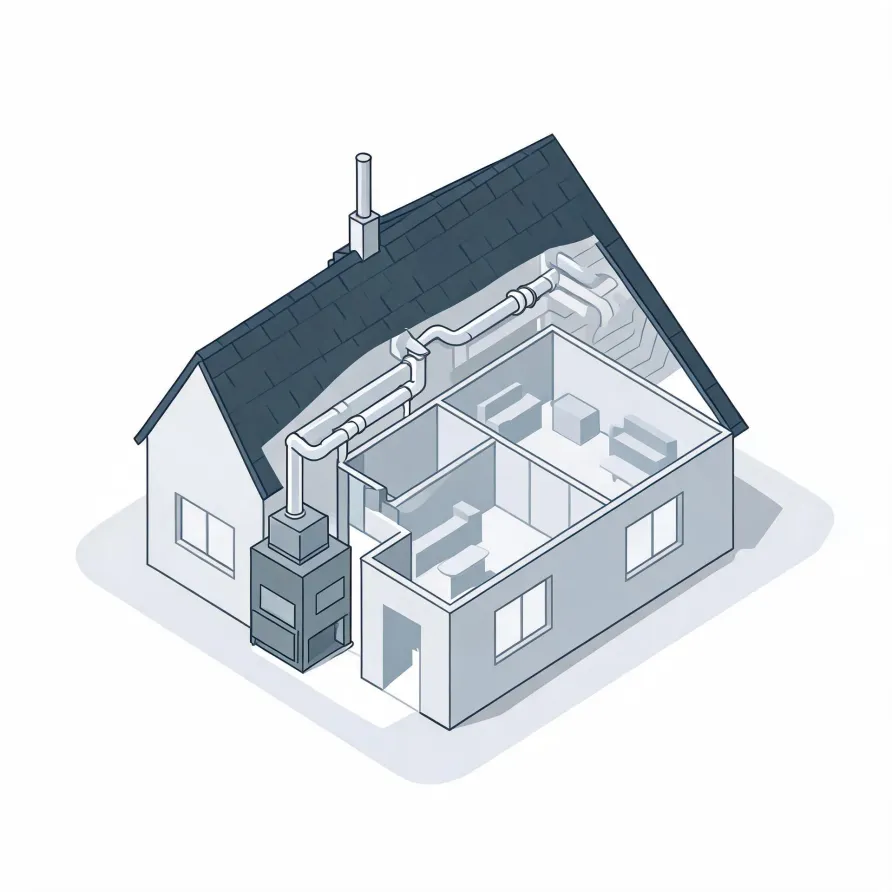
The furnace itself sits in a utility room, basement, or closet and is the heart of the system. Inside it, the heat exchanger is the piece a contractor looks at hard during a repair call. Cracks or corrosion there affect both heat output and safety, which is why it draws attention early.
The blower motor pushes conditioned air out through the ducts and sits inside the furnace cabinet. The ignitor and flame sensor work together at the burner assembly to start combustion and confirm it is running. The flue pipe runs from the furnace to an outside vent, and a blockage or breach there shows up as a fault the system cannot clear on its own.
The drawing shows a typical furnace layout, and a licensed contractor determines what applies to the specific equipment and configuration in your home.
Get matched in Prowers CountyProwers County by the numbers
271 severe weather events were recorded in Prowers County, Colorado between 2015 and 2024.
NOAA National Centers for Environmental Information, Storm Events Database, bulk CSV export, events 2015-01-01 through 2024-12-31.Half the homes in Prowers County, Colorado were built in 1971 or earlier (2020-2024 ACS 5-year).
U.S. Census Bureau, 2020-2024 American Community Survey 5-Year EstimatesProwers County, Colorado holds 5,479 housing units (2020-2024 ACS 5-year).
U.S. Census Bureau, 2020-2024 American Community Survey 5-Year EstimatesOwners occupy 67.1% of the occupied homes in Prowers County, Colorado (2020-2024 ACS 5-year).
U.S. Census Bureau, 2020-2024 American Community Survey 5-Year EstimatesCodes & Standards Covering Furnace Repair in Prowers County, Colorado4 rules & references
What HVAC Repair Looks Like in Prowers County
Non-weatherized gas furnaces manufactured on or after November 19, 2015 must reach 80.0 percent AFUE.
Non-weatherized oil-fired furnaces manufactured on or after November 19, 2015 must reach 83.0 percent AFUE.
Mobile home gas furnaces manufactured on or after November 19, 2015 must reach 80.0 percent AFUE.
Non-weatherized gas furnaces manufactured on or after December 18, 2028 must reach 95.0 percent AFUE, up from the 80.0 percent minimum that applies to units manufactured before that date.
Severe Weather Events in Prowers County
Extreme weather puts real stress on furnace components, and how often that stress hits depends entirely on where the equipment runs. That local pattern shapes how hard a furnace works and what repair needs tend to follow.
271 severe weather events, 2015–2024. Source: NOAA National Centers for Environmental Information, Storm Events Database.