Tell us about the job
Takes about a minute. No obligation.
Sizing a furnace for Kiowa County starts with the load the burner and heat exchanger are actually going to carry. Homes in Kiowa County, CO run heat about eight months a year, from October through May. A contractor who skips the load calculation and guesses low installs a system that runs longer cycles to meet demand, and the heat exchanger pays for that gap across every season. The ignition system and burner take the same accumulated starts either way, so a tight install with correct sizing from the beginning keeps wear predictable rather than accelerated.
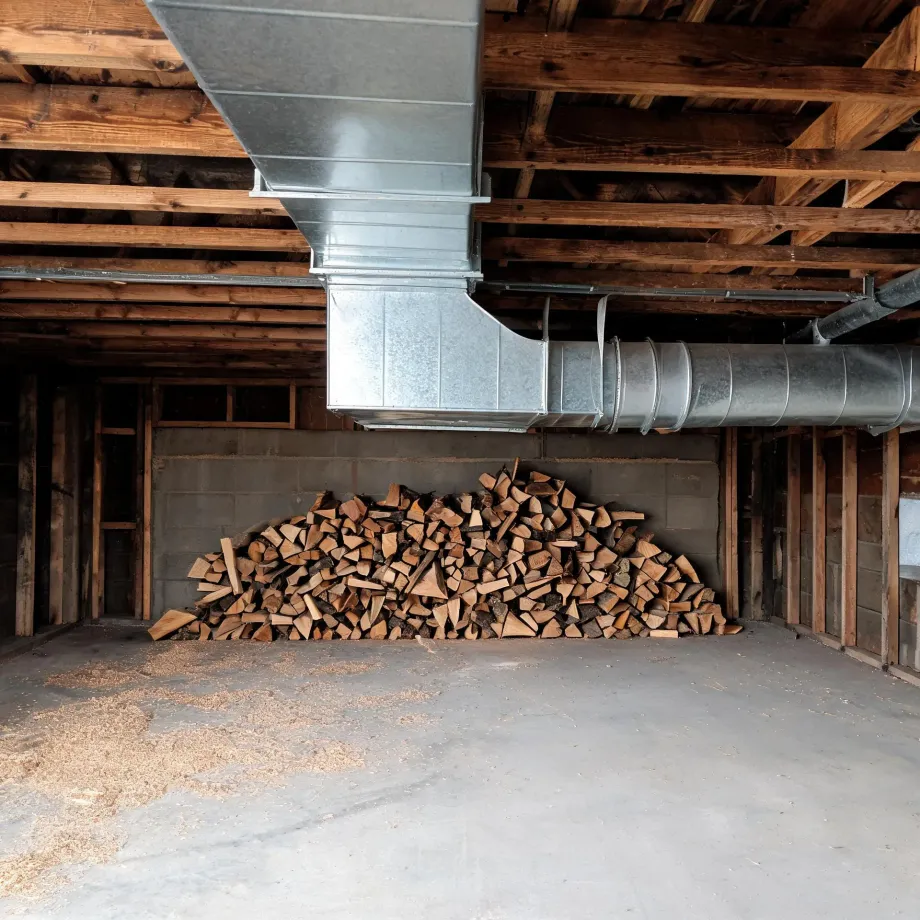
Ductwork laid down for an earlier generation of heating equipment shapes what a new furnace installation can actually do in a given house. Half the homes in Kiowa County, Colorado were built in 1964 or earlier (2020-2024 ACS 5-year). That gap between what the house was built around and what a contractor is now putting in means the existing runs, their sizing, and how they were connected are the first things to assess. A new furnace can move more air than the old one, or require a different return path, and ducts that were never meant to carry that load will show it. The electrical side matters too, but ductwork is where a straightforward swap becomes a longer job.
What Gets Installed With a New Furnace
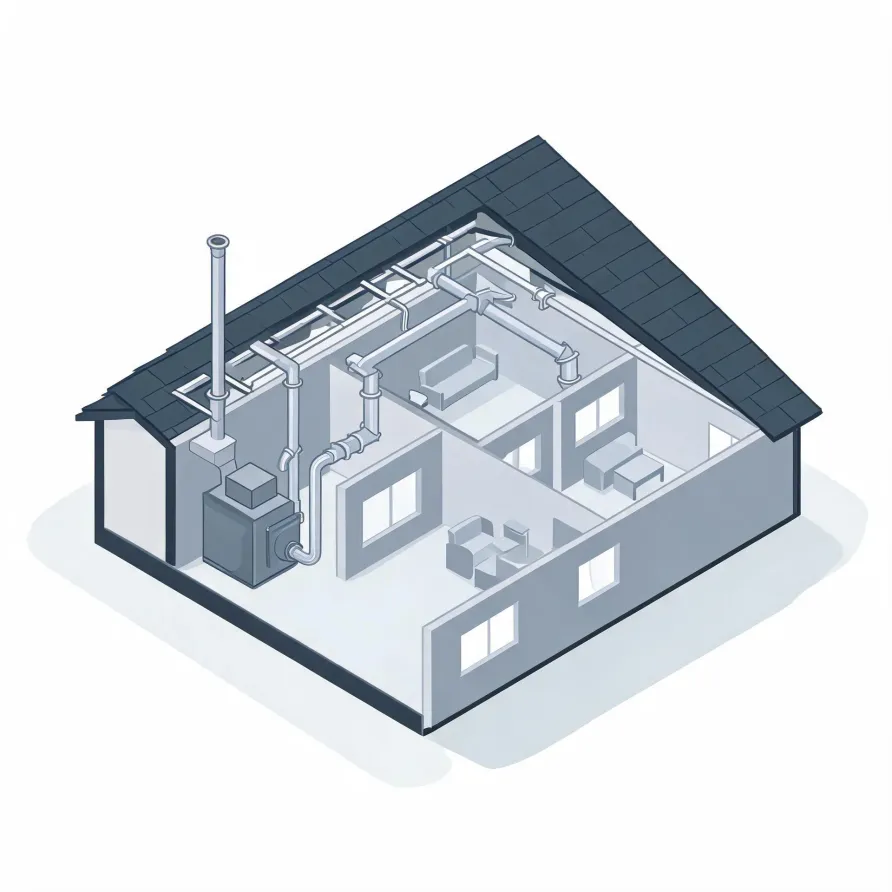
The furnace itself sits in a utility space, basement, or closet and is the unit a homeowner sees when they open that mechanical room door. Inside it, a burner assembly and heat exchanger produce the heat, while a blower motor pushes conditioned air out into the home.
The flue pipe runs from the furnace to an exterior wall or roofline and carries combustion gases out of the house. A thermostat mounts on a living-area wall and acts as the control point, telling the furnace when to fire and when to stop.
The drawing shows the general layout of these components, and a licensed contractor determines exactly what applies to your house and its configuration.
Get matched in Kiowa CountyKiowa County, by the numbers
132 severe weather events were recorded in Kiowa County, Colorado between 2015 and 2024.
NOAA National Centers for Environmental Information, Storm Events Database, bulk CSV export, events 2015-01-01 through 2024-12-31.Half the homes in Kiowa County, Colorado were built in 1964 or earlier (2020-2024 ACS 5-year).
U.S. Census Bureau, 2020-2024 American Community Survey 5-Year EstimatesKiowa County, Colorado holds 740 housing units (2020-2024 ACS 5-year).
U.S. Census Bureau, 2020-2024 American Community Survey 5-Year EstimatesOwners occupy 68.7% of the occupied homes in Kiowa County, Colorado (2020-2024 ACS 5-year).
U.S. Census Bureau, 2020-2024 American Community Survey 5-Year EstimatesFurnace Installation Rules & Codes for Kiowa County, Colorado4 sourced standards and regulations
What Happens When the Contractor Arrives
Non-weatherized gas furnaces manufactured on or after November 19, 2015 must reach 80.0 percent AFUE.
Non-weatherized oil-fired furnaces manufactured on or after November 19, 2015 must reach 83.0 percent AFUE.
Mobile home gas furnaces manufactured on or after November 19, 2015 must reach 80.0 percent AFUE.
Non-weatherized gas furnaces manufactured on or after December 18, 2028 must reach 95.0 percent AFUE, up from the 80.0 percent minimum that applies to units manufactured before that date.
Severe Weather History in Kiowa County
Heating equipment in Kiowa County works against the climate it sits in, and that climate includes periods of weather that push systems hard. What happens outside determines how much a furnace has to do, and choosing and installing equipment without accounting for local conditions is a shortcut that shows up later.
132 severe weather events, 2015–2024. Source: NOAA National Centers for Environmental Information, Storm Events Database.