Tell us about the job
Takes about a minute. No obligation.
Sizing a furnace for this county starts with what the burner and ignition system are actually asked to carry. Homes in La Plata County, CO run heat about ten months a year, from September through June. A heat exchanger cycling through that much of the calendar accumulates stress on every weld and seal, and an undersized unit runs longer per call, which compounds that wear faster. Contractors quoting a new install here work out the full heating load before specifying equipment, because a unit that fits a milder climate's math will be overworked before it reaches its expected service life in La Plata County.
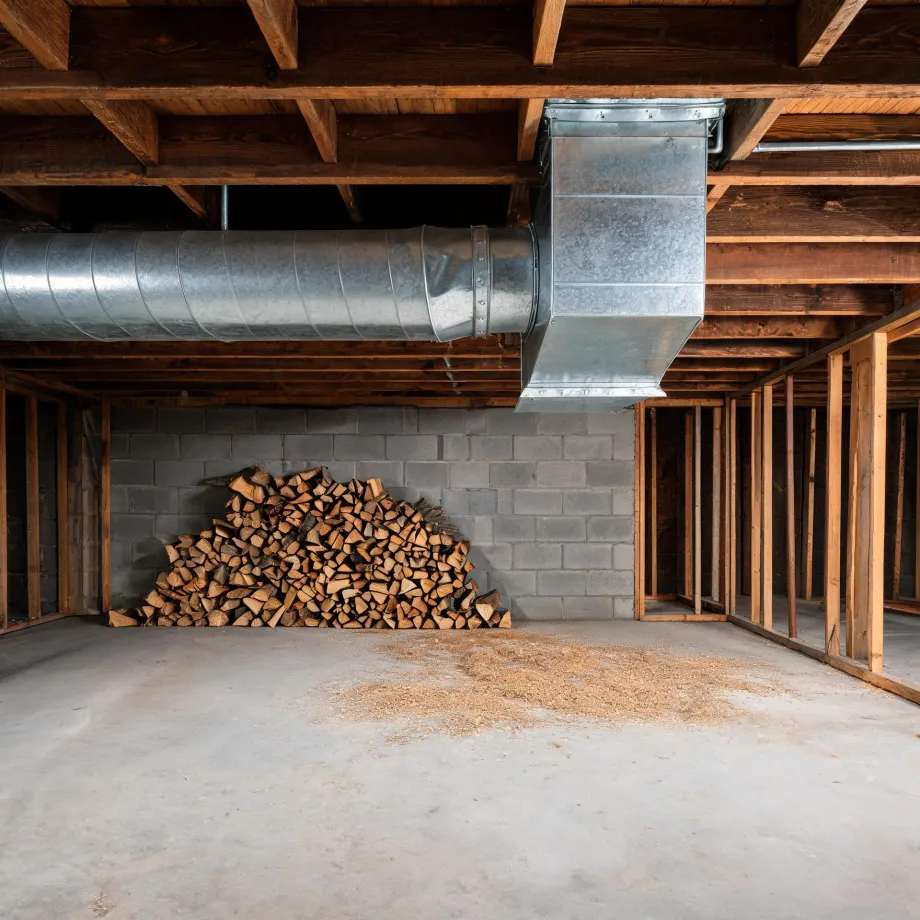
Ductwork laid in for a previous system carries assumptions about airflow, branch sizing, and static pressure that belong to whatever was running then. Half the homes in La Plata County, Colorado were built in 1993 or earlier (2020-2024 ACS 5-year). A contractor installing a furnace in stock like this has to assess whether the existing duct network moves enough air for the new unit's output, and where it does not, that assessment changes the scope before a single part is ordered. Electrical service matters too, though for furnaces the ductwork is usually where the variables stack up.
What Gets Installed With a New Furnace
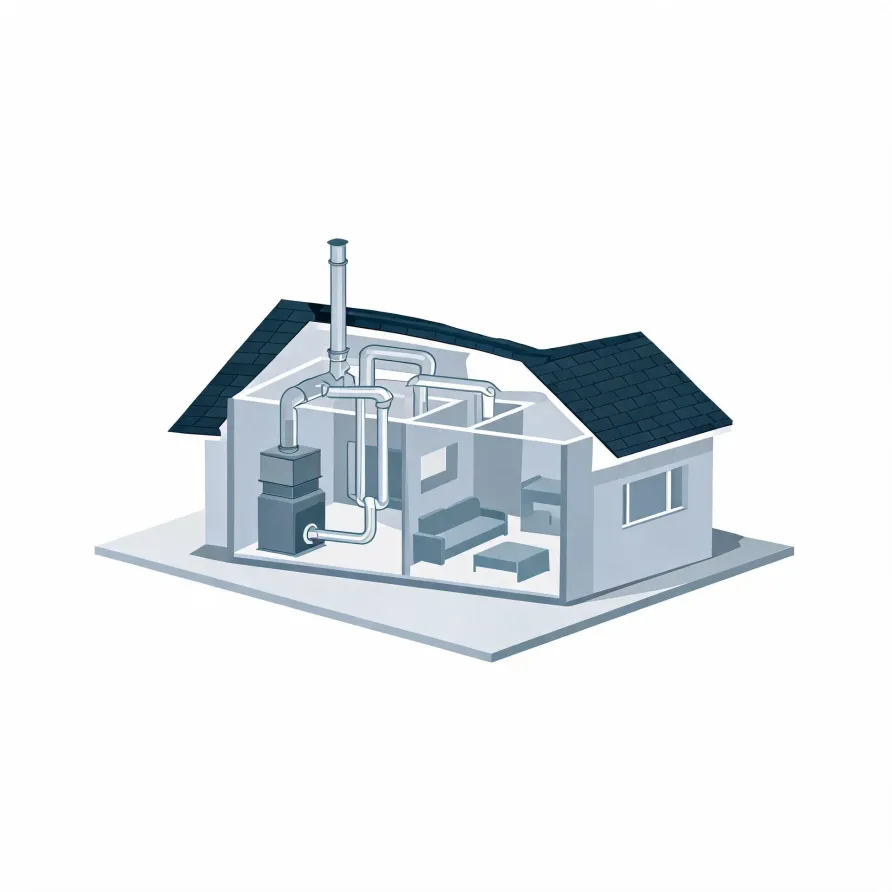
The furnace itself sits in a basement, utility room, or closet and is the heart of what a contractor installs. Inside it, the heat exchanger and burner assembly do the combustion work, while the blower motor pushes conditioned air out into the house. The flue pipe runs from the unit to an exterior vent, carrying combustion gases out.
The thermostat mounts on an interior wall and is the control point a homeowner touches every day. Alongside the furnace, a contractor also installs the air handler components that tie into the existing duct openings, and the gas line connection that feeds the burner. A condensate drain line is part of the assembly on high-efficiency units.
The drawing shows a representative layout, and a licensed contractor determines exactly what the installation involves in your specific home.
Get matched in La Plata CountyLa Plata County, by the numbers
167 severe weather events were recorded in La Plata County, Colorado between 2015 and 2024.
NOAA National Centers for Environmental Information, Storm Events Database, bulk CSV export, events 2015-01-01 through 2024-12-31.Half the homes in La Plata County, Colorado were built in 1993 or earlier (2020-2024 ACS 5-year).
U.S. Census Bureau, 2020-2024 American Community Survey 5-Year EstimatesLa Plata County, Colorado holds 28,990 housing units (2020-2024 ACS 5-year).
U.S. Census Bureau, 2020-2024 American Community Survey 5-Year EstimatesOwners occupy 70.9% of the occupied homes in La Plata County, Colorado (2020-2024 ACS 5-year).
U.S. Census Bureau, 2020-2024 American Community Survey 5-Year EstimatesFurnace Installation Rules for La Plata County, Colorado4 codes, standards & laws
What the Installation Actually Looks Like
Non-weatherized gas furnaces manufactured on or after November 19, 2015 must reach 80.0 percent AFUE.
Non-weatherized oil-fired furnaces manufactured on or after November 19, 2015 must reach 83.0 percent AFUE.
Mobile home gas furnaces manufactured on or after November 19, 2015 must reach 80.0 percent AFUE.
Non-weatherized gas furnaces manufactured on or after December 18, 2028 must reach 95.0 percent AFUE, up from the 80.0 percent minimum that applies to units manufactured before that date.
Severe Weather Events in La Plata County
Extreme weather puts real strain on heating equipment, shortening service life and raising the stakes on installation quality. What the climate does in La Plata County shapes what a furnace here has to handle, which is why local conditions belong in any honest conversation about equipment.
167 severe weather events, 2015–2024. Source: NOAA National Centers for Environmental Information, Storm Events Database.