Tell us about the job
Takes about a minute. No obligation.
Sizing a furnace for a Pitkin County home is not a generic calculation a contractor can run from a manufacturer's chart alone. Homes in Pitkin County, CO run heat in every month of the year. The burner, the heat exchanger, and the ignition system cycle through their workload without a long break, so a unit that is even slightly undersized runs harder and longer each cycle to hold temperature. A contractor who quotes a replacement here has to establish actual heat loss for the structure before recommending equipment, because an install that might perform adequately elsewhere will fall short of what this house demands.
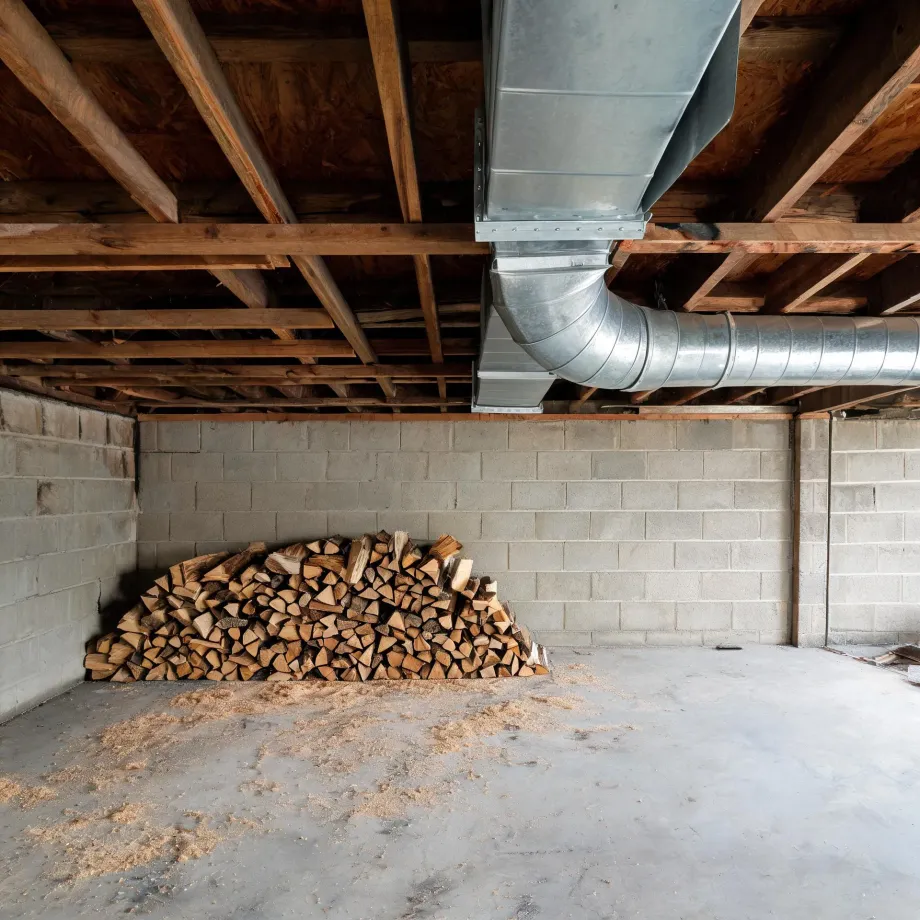
Existing ductwork in a Pitkin County home is the variable that decides how a furnace installation goes. Half the homes in Pitkin County, Colorado were built in 1985 or earlier (2020-2024 ACS 5-year). Duct systems built for older equipment were designed around different static pressure, different airflow volumes, and different heat output than what a modern furnace delivers. A contractor cannot assume the existing trunk lines will carry a new system without measuring what is actually there. Some runs will need to be resized, some takeoffs moved, and the electrical service checked against what the new unit draws.
What Gets Installed With a New Furnace
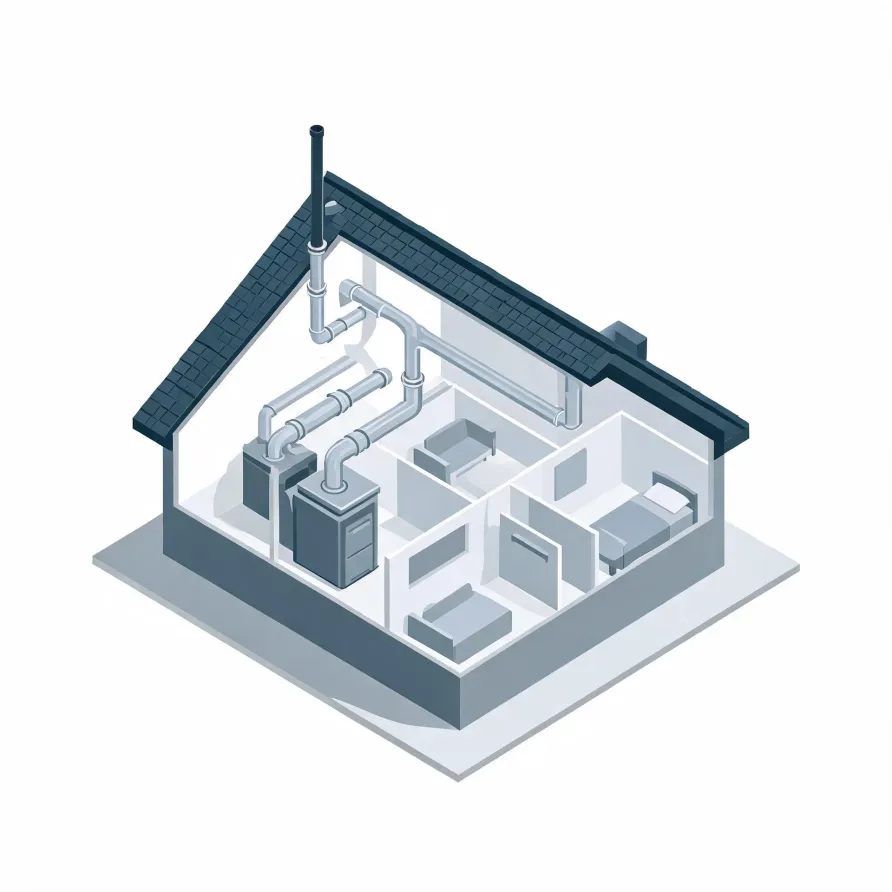
The furnace itself sits in a basement, utility room, or closet and is the piece doing the heating work. A burner inside the cabinet burns fuel, a heat exchanger warms the air above it, and a blower motor pushes that air into the rest of the house. That cabinet is what a contractor places and connects first.
The flue pipe runs from the furnace up and out of the house, carrying combustion gases away from the living space. Alongside it, the thermostat mounts on an interior wall and acts as the control point for the whole system, telling the furnace when to fire and when to stop.
The drawing shows a typical layout, and a licensed contractor determines exactly how each piece fits the configuration of your home.
Get matched in Pitkin CountyPitkin County, by the numbers
84 severe weather events were recorded in Pitkin County, Colorado between 2015 and 2024.
NOAA National Centers for Environmental Information, Storm Events Database, bulk CSV export, events 2015-01-01 through 2024-12-31.Half the homes in Pitkin County, Colorado were built in 1985 or earlier (2020-2024 ACS 5-year).
U.S. Census Bureau, 2020-2024 American Community Survey 5-Year EstimatesPitkin County, Colorado holds 13,412 housing units (2020-2024 ACS 5-year).
U.S. Census Bureau, 2020-2024 American Community Survey 5-Year EstimatesOwners occupy 62.8% of the occupied homes in Pitkin County, Colorado (2020-2024 ACS 5-year).
U.S. Census Bureau, 2020-2024 American Community Survey 5-Year EstimatesFurnace Installation Rules for Pitkin County, Colorado4 codes, standards, and laws
What Happens During a Furnace Installation in Pitkin County
Non-weatherized gas furnaces manufactured on or after November 19, 2015 must reach 80.0 percent AFUE.
Non-weatherized oil-fired furnaces manufactured on or after November 19, 2015 must reach 83.0 percent AFUE.
Mobile home gas furnaces manufactured on or after November 19, 2015 must reach 80.0 percent AFUE.
Non-weatherized gas furnaces manufactured on or after December 18, 2028 must reach 95.0 percent AFUE, up from the 80.0 percent minimum that applies to units manufactured before that date.
Severe Weather Events in Pitkin County
Pitkin County's climate puts real stress on heating equipment, and that stress is not uniform from year to year. A furnace sized and installed for local conditions handles those swings better than one spec'd to a national average.
84 severe weather events, 2015–2024. Source: NOAA National Centers for Environmental Information, Storm Events Database.