
Why your furnace won't turn on in a Colorado winter

Once you send the form, finding a pro is off your list.

Hand it off

A furnace that won't start on a cold Colorado night usually comes down to the igniter, a flame sensor coated in residue, or a safety switch that tripped and shut the whole system down on purpose. Most gas furnaces use a hot surface igniter instead of a pilot light, and that part wears out with age, so it either glows too weak to light the burners or stops glowing at all. A dirty flame sensor reads no flame even when one is there, and the furnace shuts off rather than run unsafely. Thermostats can also be the problem, especially if the batteries died overnight or the schedule got bumped. None of these let the furnace run, and when it's single digits outside, that's not something to leave for a day or two while you sort out who to call. A furnace that won't fire needs a look from someone licensed to open the cabinet and test the parts safely.

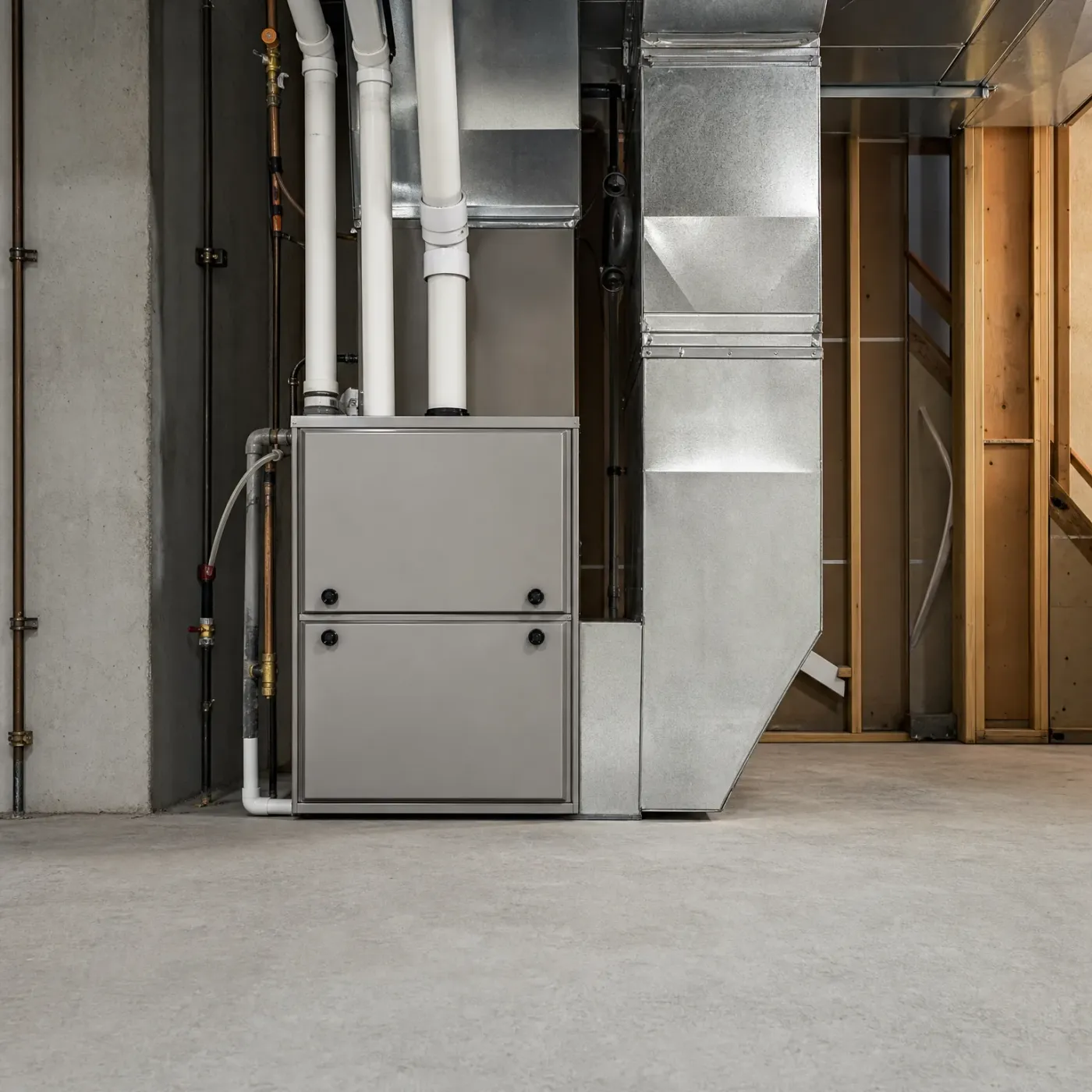
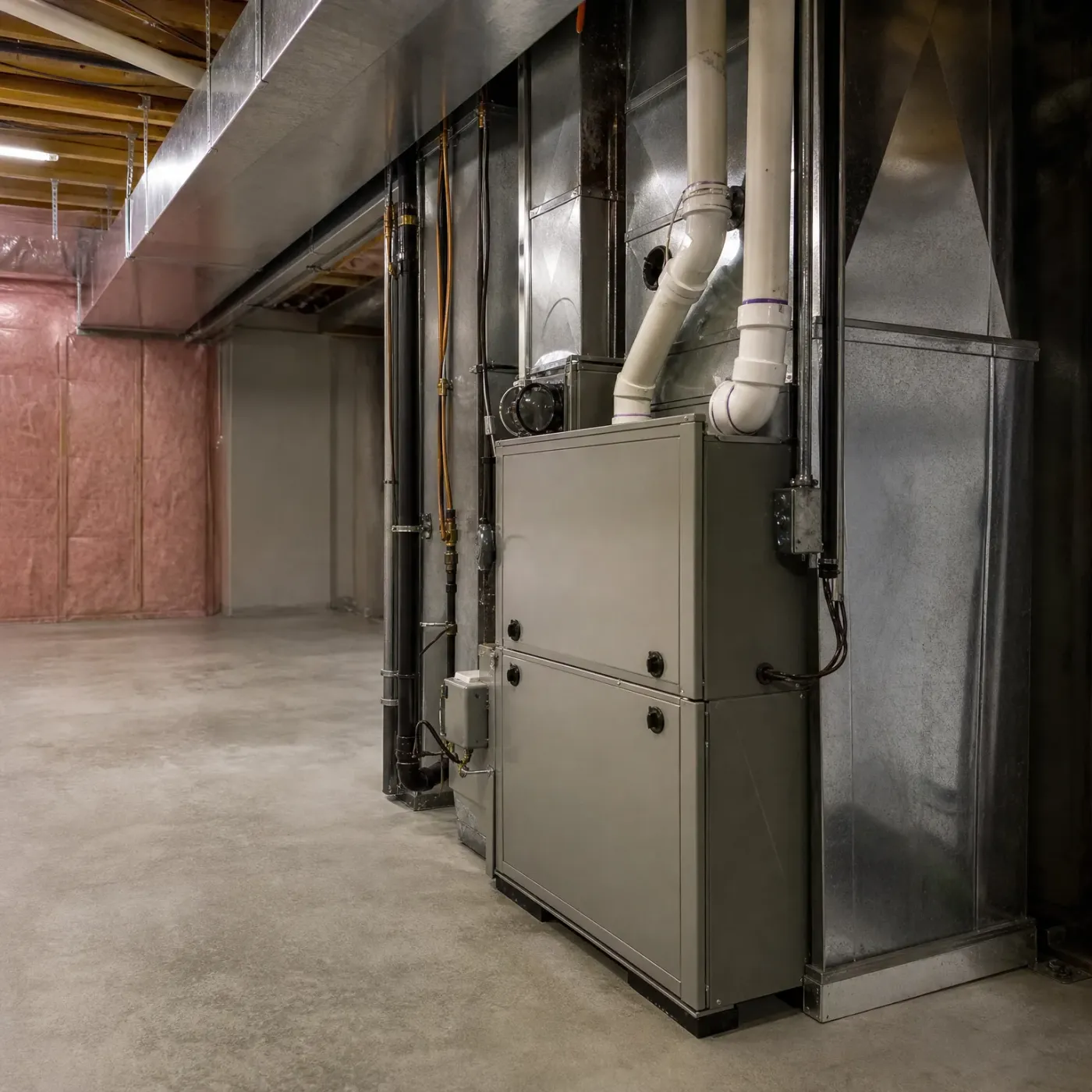
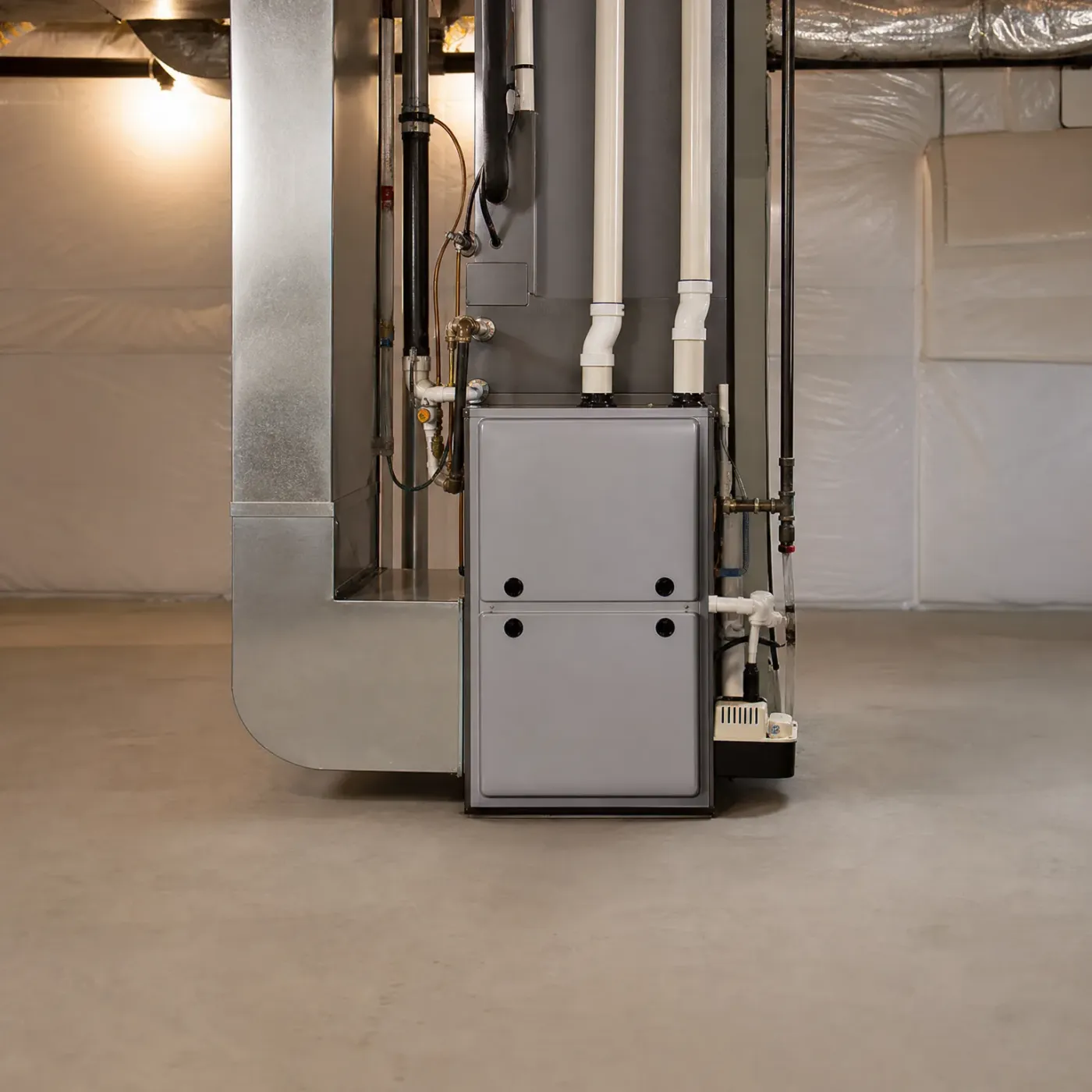
A gray high-efficiency furnace in a basement with white PVC vent pipes, sheet-metal ductwork, copper and black piping, a condensate pump, and insulated walls above a concrete floor.

Starting the way it should

Flip the thermostat up and the igniter glows, the gas valve opens, and warm air moves through the ducts within a minute. The flue draws exhaust out steadily. No clicking, no burner smell, no short cycling. This is what a furnace in good working order does every time, all winter.
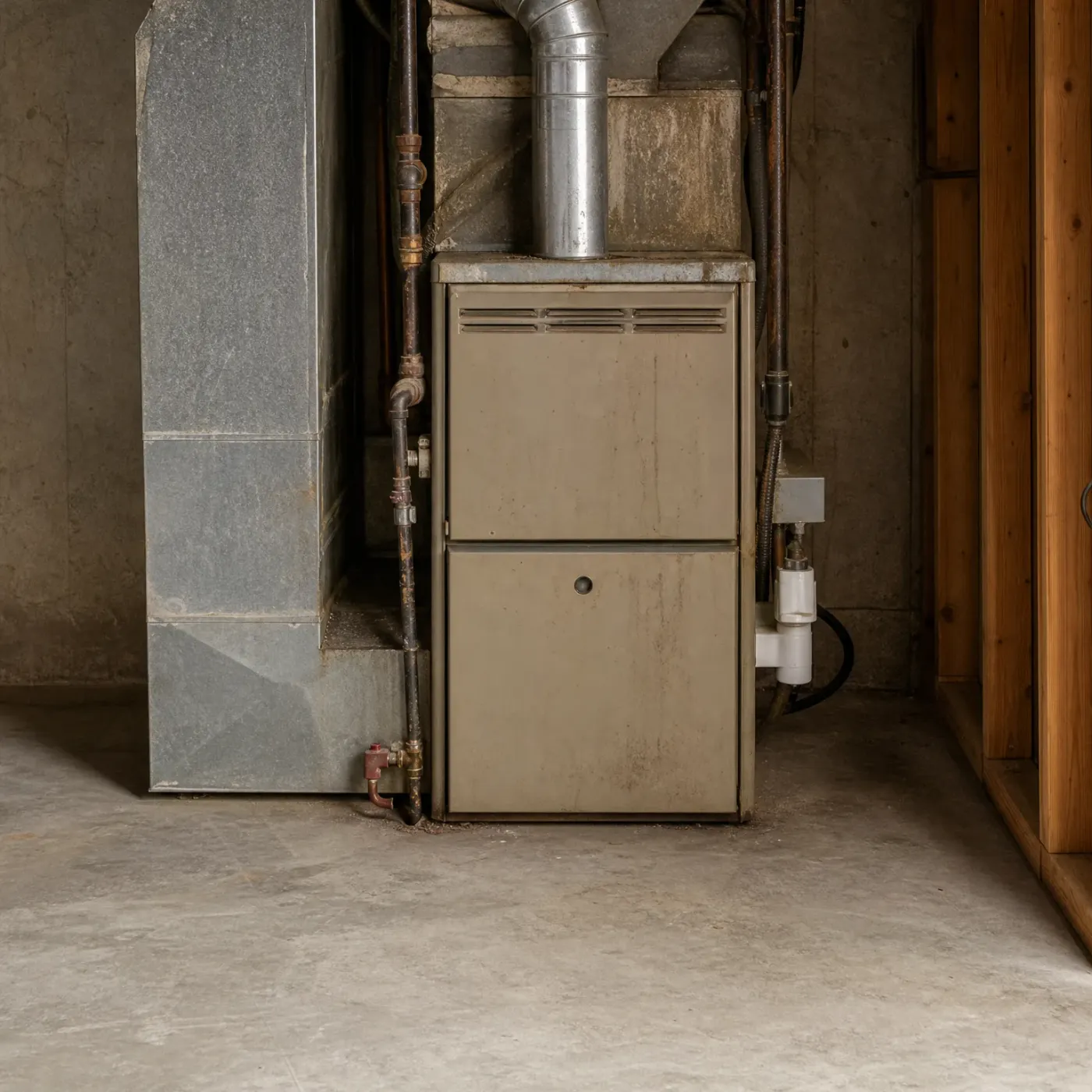
A beige residential furnace stands on a concrete basement floor beside galvanized sheet-metal ductwork, a round flue pipe, copper gas piping, and a PVC condensate line, with a wood-paneled wall at right.

Signs something is wrong

The furnace clicks but won't catch, or it starts and shuts off again within a few minutes. Maybe you notice grime on the access panels, rust along the flue, or a burner that used to come on first try and now takes two or three tries. Any of that means it needs a look before the next cold night.

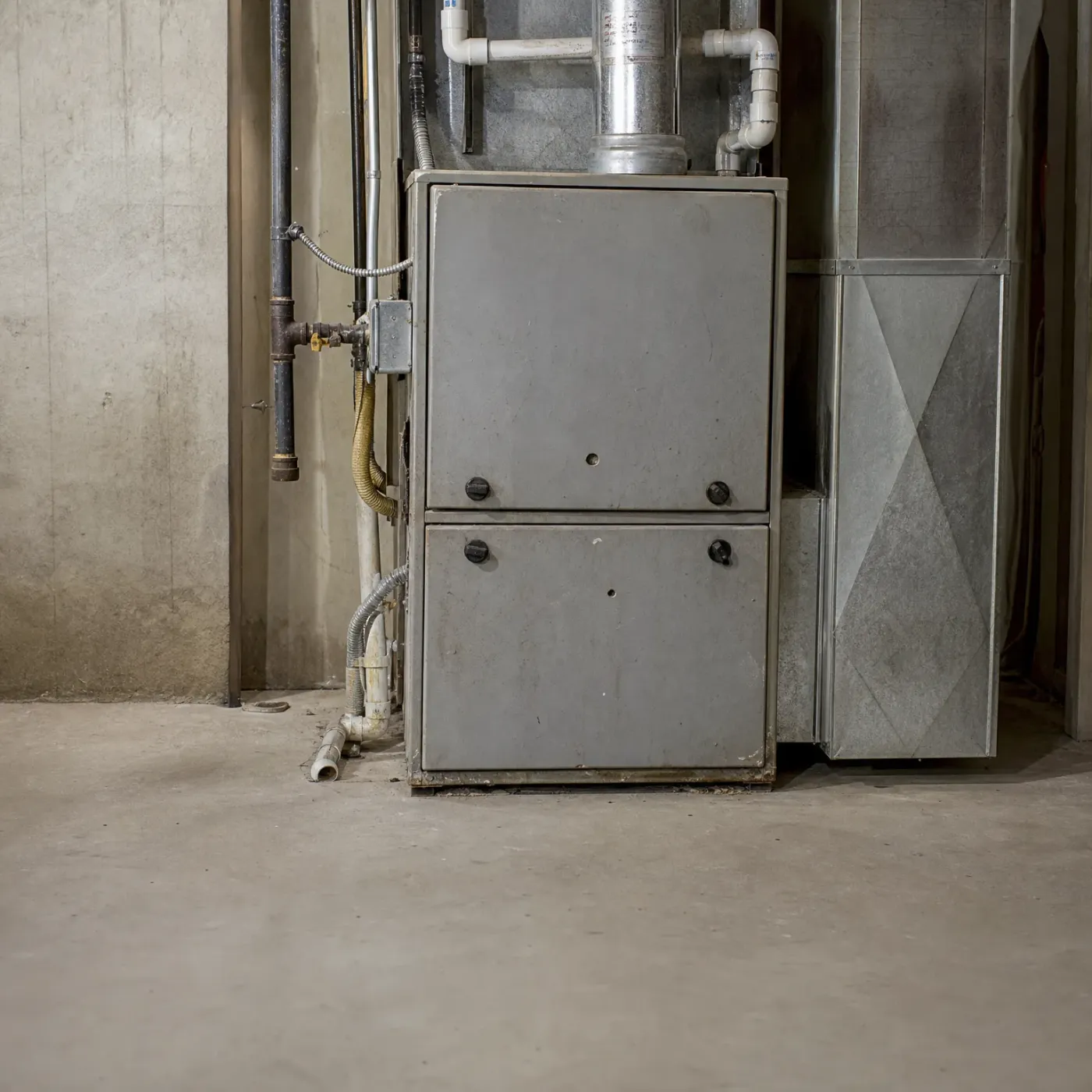
A gray furnace with two access panels stands on a concrete basement floor beside sheet-metal ductwork, with pipes, flexible conduit and an electrical box on the concrete wall to the left.
Before you get your furnace repair
A gray high-efficiency furnace stands on a concrete basement floor beside galvanized sheet-metal ductwork, white PVC vent pipes, copper and black piping, and unfinished wood stud framing.
After you get your furnace repair

How the start sequence works

  • The thermostat calls for heat, and the control board checks the limit switch and pressure switch before it does anything else.
  • A draft inducer motor spins up first to clear the heat exchanger, and the furnace won't ignite until it proves that draft.
  • The igniter heats for about 15 to 20 seconds, then the gas valve opens and the flame sensor has roughly 2 to 7 seconds to confirm a flame.
  • If the sensor doesn't detect flame in that window, the valve shuts and the board tries again, usually up to three times before it locks out.
  • A tripped limit switch means the board never gets past that first check, so the inducer may run while the burners stay dark.
  • Each step depends on the one before it, so a furnace that hums or clicks but never lights is usually stopping partway through this sequence, not failing all at once.

The thermostat sends a call for heat, but the furnace doesn't just light. The control board runs through a checklist first, starting with the limit switch and the pressure switch, because it won't risk lighting a burner if either one says something's wrong. Once those check out, the draft inducer motor kicks on to pull air through the heat exchanger and out the flue. The board watches for proof of that draft before it lets gas anywhere near the burners. Only then does the igniter get power, glowing for somewhere around 15 to 20 seconds until it's hot enough to light gas on contact. The valve opens, the burners light, and the flame sensor has to confirm there's an actual flame within a few seconds, usually between 2 and 7. No confirmation, and the valve shuts right back down. The board will try the whole sequence again, typically up to three attempts, before it gives up and locks out until someone resets it or calls for repair. This is why a furnace that clicks, hums, or runs its inducer but never produces heat isn't broken everywhere at once. It got partway through this chain and stopped at one specific link, whether that's a switch that won't close, a sensor caked in residue, or an igniter that's lost its ability to heat up at all.

A smiling man in a dark navy sweater sits on a light sofa in a living room, with a glass bowl of popcorn on a wooden coffee table and bookshelves behind him.
A smiling man in a dark green sweater sits on a tan leather sofa in a dimly lit living room, with a bowl of popcorn in the foreground and a kitchen area blurred behind him.
A smiling middle-aged man in a dark shirt sits on a gray sofa in a living room, with a bowl of popcorn on a side table and shelves, a window and kitchen area behind him.
A smiling bearded man in a dark gray t-shirt sits on a gray couch in a living room, with a large glass bowl of popcorn on a wooden table in the foreground.

Why the cold makes it worse

A furnace that's been limping along on a marginal flame sensor or a sticky switch often fails the night it's actually needed, because a hard Colorado freeze asks more of it than a mild one does. The burners fire longer and more often to hold the house at temperature. That extra cycling finds the weak part. A pressure switch that read fine in October can stick shut once the flue is pulling in subzero air, and the board won't let the furnace light until it sees that switch close.

What a tripped switch is doing

The limit switch and pressure switch aren't failures by themselves. They're built to stop the furnace before a blocked flue or an overheated heat exchanger turns into something dangerous. When one of them trips, the control board holds ignition and often blinks a fault code on the panel. That code is the furnace telling you which check it failed. A furnace that refuses to start on a cold night is frequently doing exactly what it was designed to do, not breaking down on its own.

A woman with dark hair in a bun reclines on a sofa with her eyes closed, wrapped in a cream fleece blanket, a closed blue hardcover book resting in front of her, with a lit lamp and a vase of dried flowers in the background.
A smiling bearded man in a navy sweater sits at a candlelit dinner table with a glass of red wine, a bowl of salad, and plates of food in the foreground.
An unfinished basement with a concrete floor, pink insulation on one wall, exposed joists, galvanized sheet-metal ductwork, PVC vent pipes, and a tall gray furnace with attached gas and electrical lines.

Hand off the furnace problem

Explain the job once and skip repeating it on every call.

After you send the request, you're done searching.

Hand off the search

There's no charge for the request.

Winter nights average 16°F statewide

At 16°F, your furnace is running most of the night just to hold the thermostat setting, not cycling on and off like it does in milder weather. That long, steady burn is exactly when a weak igniter or a dirty flame sensor gives out.

NOAA nClimDiv 1991-2020 county normals weighted by homes

  1. Thermostat calls for heat and signals the control board

  2. Control board checks the limit switch and pressure switch first

  3. Draft inducer motor spins up to clear the heat exchanger

  4. Pressure switch closes once it confirms draft is present

What are you noticing right now in your house

The thermostat is set where it always is and the house still feels colder than that number. You might hear the furnace try, a click or two, maybe the inducer motor spin up, then nothing. Or it's dead quiet, no sound at all when you bump the temperature. Some rooms are colder than others. You might catch a faint gas smell near the furnace, or notice the pilot light area looks dark when it should show a flame. If this goes on through the night, pipes can freeze in the coldest part of the house, and anyone sensitive to cold is sitting in it right along with you.

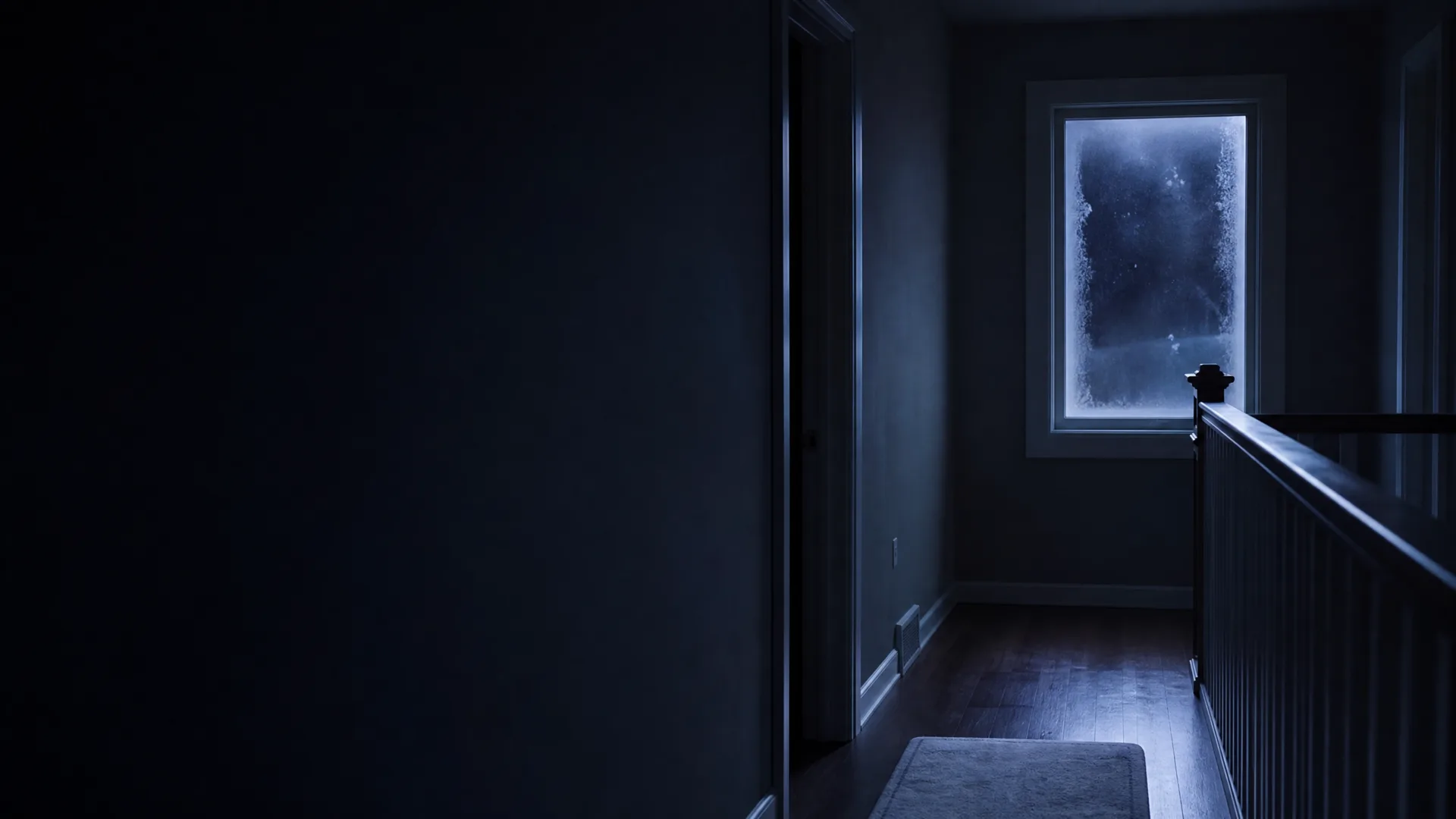
A dark interior hallway with a dim window at the end, a wooden floor, a stair railing on the right, and a bench or rug in the foreground.

You're awake before you know why. The hallway is cold in a way that gets your feet moving to the thermostat, and the number on the screen doesn't match what your skin is telling you. The vent by the bathroom door is quiet. No air, no hum, nothing. Outside the hallway window, frost has crept up from the corners of the glass, and the streetlight outside looks sharper through it. You stand there in the blue dark, 2 a.m., listening for the inducer motor to kick on. It doesn't. Just the house, settling, and your own breath turning faintly visible in the hallway.

Who tracks down the fix tonight

Call a repair line

  • You stop searching for who's open and who answers the phone at 11pm on a weeknight.
  • You explain the problem once, not to three different answering services before someone can actually help.
  • You skip comparing quotes from contractors you've never worked with while your house keeps losing heat.
  • Finding someone stops being your job the moment the form is sent, and that's weight off, not a rush.
  • You're not the one tracking down a part number or guessing whether the igniter or the pressure switch is the problem.

Handle it yourself

  • You're the one calling around in the cold, hoping someone in your area picks up tonight.
  • You compare quotes and licenses on your own time, usually while the house is still cold.
  • You explain the same symptoms again to each contractor you reach before any of them can quote the job.
  • You're guessing at what's wrong, whether it's the flame sensor, the switch, or something else, with no one to check your read.
  • You carry the whole search from first call to scheduled visit, on top of everything else tonight.
The gable end of a dark wood-clad building with a thick layer of snow on its roof, with snow-covered conifers and falling snowflakes behind it under a pale sky.

Winter nights average 16°F across Colorado, according to National Weather Service data. At that temperature your furnace isn't cycling on and off the way it does in October or March. It's running long, steady stretches to hold the house at whatever the thermostat says, sometimes most of the night. That kind of sustained burn puts more hours on the igniter and more residue on the flame sensor than a mild night ever would. A part that's been struggling along for weeks tends to give out on the coldest nights, not the easy ones, because that's when the furnace is actually being asked to work.

NOAA nClimDiv 1991-2020 county normals weighted by homes

A closed silver laptop and a ceramic mug of dark coffee sit on a wooden table in front of two chair backs, with a kitchen counter, tiled backsplash, wooden cutting boards, a vase of greenery and a potted plant by a window behind.

A furnace that won't start has a reason, and it's fixable

It comes down to one part doing its job wrong: an igniter that's gone weak, a flame sensor that's coated in residue, a switch that tripped to stop the furnace rather than let it run unsafe. None of that fixes itself by waiting, and a cold night is the worst time to find out which one it is.

Once you send the form, you're done hunting. No scrolling through numbers to find out who's actually open tonight, no telling the same story to a second company because the first one didn't answer, no sitting on quotes trying to guess which one is fair. Someone who works on furnaces gets the details and takes it from there.

A living room corner with a beige upholstered armchair holding navy and striped cushions, a small round wooden side table with a carved bowl and a potted green plant, a framed landscape picture on a pale wall, built-in shelving, and a curtained window.
At dusk, a dark board-and-batten house with a standing-seam metal roof and lit entry walkway of stone pavers, with two large outdoor heat pump units on a stone-walled pad at right and trees and hills in the background.

Furnace Repair

Send one request and you're done looking

Step 1 of 3: Equipment
  • A dimly lit living room corner with a beige upholstered sofa holding a dark green cushion and a chunky knit throw, beside a wooden sideboard with a lit ceramic table lamp, a small potted plant, and a wooden bowl, with a framed artwork on the wall and a mug on a book in the foreground.
    • A local pro who knows furnaces gets your details and gets in touch.
    • Tell a local repair pro what your furnace is doing.
  • A round wooden coffee table holding a round stone vase of green foliage, a lit candle in a glass container, and a small dark bowl, with a beige sofa, cushions and knit throw behind and a window at left.
    • Send the request and finding a pro stops being your problem.
    • After this form, you can stop searching for a furnace pro.
  • Sunlit living room with a wooden coffee table holding a ceramic vase of leafy branches and a carved wooden tray with two stacked books, in front of a beige sofa with tan and green cushions and a potted plant near a window.
    • One form replaces the calls you'd make to find a furnace pro.
    • Describe what your furnace is doing once, in one form.
  • Interior corner with a lit ceramic table lamp and wooden bowl on a wood sideboard, a framed picture and branch-filled vase behind, a knit throw over an upholstered chair, and a lit candle in a glass holder, stoneware mug and round planter of green foliage on a wooden table in the foreground.
    • Your request stays with one local pro.
    • Your request goes to one pro, not a list of companies.