





Why your furnace keeps turning on and off in Colorado

Step 1 of 3: Equipment

Why does my furnace keep turning on and off?

A furnace that fires up, runs for a few minutes, then shuts off and starts again soon after is called short cycling. It wears on the parts inside and it means your house never quite settles at the temperature you set. On a cold Colorado night that cycling is easy to notice, because the furnace is working through most of it.

A dirty filter or a flame sensor that can't hold the signal are the usual causes

Most of the time a clogged air filter is behind it. A blocked filter starves the furnace of airflow, the heat exchanger overheats, and a safety switch shuts the burner down before it can finish a normal cycle. The flame sensor causes the same pattern in a different way: once it's coated with residue, it can't confirm the flame is still lit, so the furnace cuts gas to the burner and tries again a minute later. A cracked heat exchanger or a failing thermostat can do it too, though those show up less often. Since your furnace is running most nights through a Colorado winter, a cycling problem repeats dozens of times a day and puts real wear on the ignition system.

  1. Flame sensor builds up residue and stops reading the flame.

  2. Control board can't confirm flame, so it shuts the gas valve.

  3. Furnace waits, then tries to relight on its own.

  4. Dirty filter or blocked vent overheats the heat exchanger.

A woman in a cream sweater with her hair in a bun laughs while seated at a stone counter holding a glass of red wine, in a dimly lit interior with a sofa, houseplants and a large window at night.
A woman with long dark hair in a cream knit sweater laughs while looking off to the side, seated in front of a dimly lit kitchen with an island, stools, open shelving and a potted plant, with a glass of red wine in the foreground.
A smiling woman with long dark wavy hair in a light knit sweater sits at a marble counter with a glass of red wine, with a dimly lit living room and kitchen in the background.
A smiling woman with long wavy brown hair in a beige sweater sits at a white marble counter with a glass of red wine, with a living room, dining table and kitchen cabinets behind her.

A furnace that keeps shutting off and relighting is doing more than annoying you. Each cycle is a short burst of heat, and in a Colorado winter those bursts don't add up to a warm house. You'll notice rooms cooling off again before the furnace even finishes its rest between starts. The repeated starts also wear down parts that aren't built for that kind of use. An igniter or blower motor that fails on a cold night leaves you without heat right when you need it most. The constant cycling also means the blower is running more than it should, and that cost lands on your gas and power bill. If the cause is a dirty filter or blocked vent overheating the heat exchanger, that's not something to live with, since it touches the safety of the whole system. Adjusting the thermostat or the vents might change how the symptom feels, but it won't stop a flame sensor or control board problem from coming back. Left alone, the furnace can quit entirely on the night you need it most.

What This Means for Your House

  • Short cycling in January or February means the house loses heat faster than the furnace can catch up, so rooms feel cold again within the hour.
  • Every extra start strains the igniter and the blower motor, and a part that fails on a ten-degree night leaves you without heat until it's fixed.
  • A furnace that won't stop cycling runs the blower far more often, and that shows up on your gas and power bill at the end of the month.
  • If the heat exchanger is overheating from a dirty filter or blocked vent, that's a safety issue, not just a comfort one.
  • Thermostat settings or vent adjustments won't fix a flame sensor or a failing control board, so the cycling keeps coming back until the part itself is addressed.
  • Waiting it out through a Colorado winter risks the furnace shutting down completely on the coldest night, when a repair takes longest to arrange.
A bearded man in a dark navy sweater over a collared shirt smiles and looks off to the side while seated at a dinner table with a glass of red wine, a lit candle, and a plate of food in the foreground of a dimly lit room.
A woman in a dark gray sweater reclines on a couch with her eyes closed and a knit blanket over her lap, an open book resting face-down in front of her, with a lit table lamp and shelving blurred in the background.

What's Actually Happening Inside

  • The flame sensor is a thin metal rod in the burner compartment, not the igniter, and the two get confused often.
  • A furnace cycles off on purpose if the limit switch reads the heat exchanger running too hot inside.
  • Pressure switches click to confirm the inducer motor is pulling exhaust before the gas valve ever opens.
  • A cracked heat exchanger can trip the same limit switch that a dirty filter trips, with a different repair on the other side.
  • Thermostats set to a wide swing, like two degrees, make a furnace cycle more often than one set to a tight swing.
  • A furnace that short cycles on a mild day and runs fine on a cold one usually points to airflow, not gas.

The flame sensor sits in the burner compartment and does one job: it tells the control board a flame is actually lit. It is not the igniter, though homeowners often mix the two up when a contractor explains the problem. If that rod gets a layer of residue on it, the board thinks the flame went out and shuts the gas valve, even though the burners were working fine. The limit switch works differently. It watches the temperature inside the heat exchanger, and if that metal gets too hot, the switch cuts the burners off on purpose, as a safety measure. A dirty filter can starve airflow enough to trip it. So can a cracked heat exchanger, and that is the harder case, because both show up as the same shutdown with a very different repair behind them. Before any of that, the pressure switch has to click closed, confirming the inducer motor is actually pulling exhaust out of the house, or the gas valve never opens at all. Thermostat settings matter too. A wide swing, set two degrees above and below the target, lets the furnace cycle more than a tight one-degree setting would. One pattern worth noticing on your own: if the furnace short cycles on a mild afternoon but runs a full cycle on a cold night, the trouble is usually airflow or a switch, not the gas supply itself.

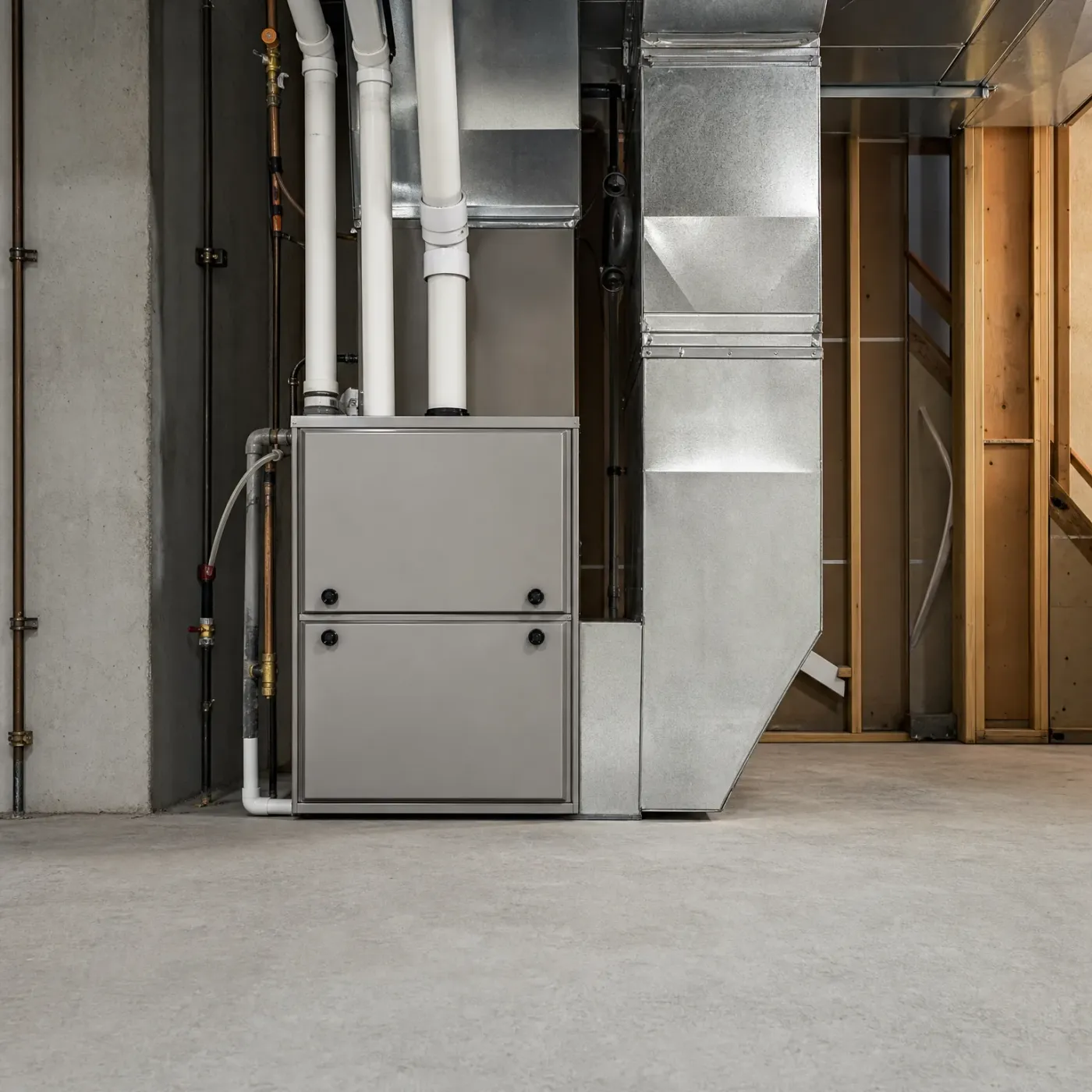
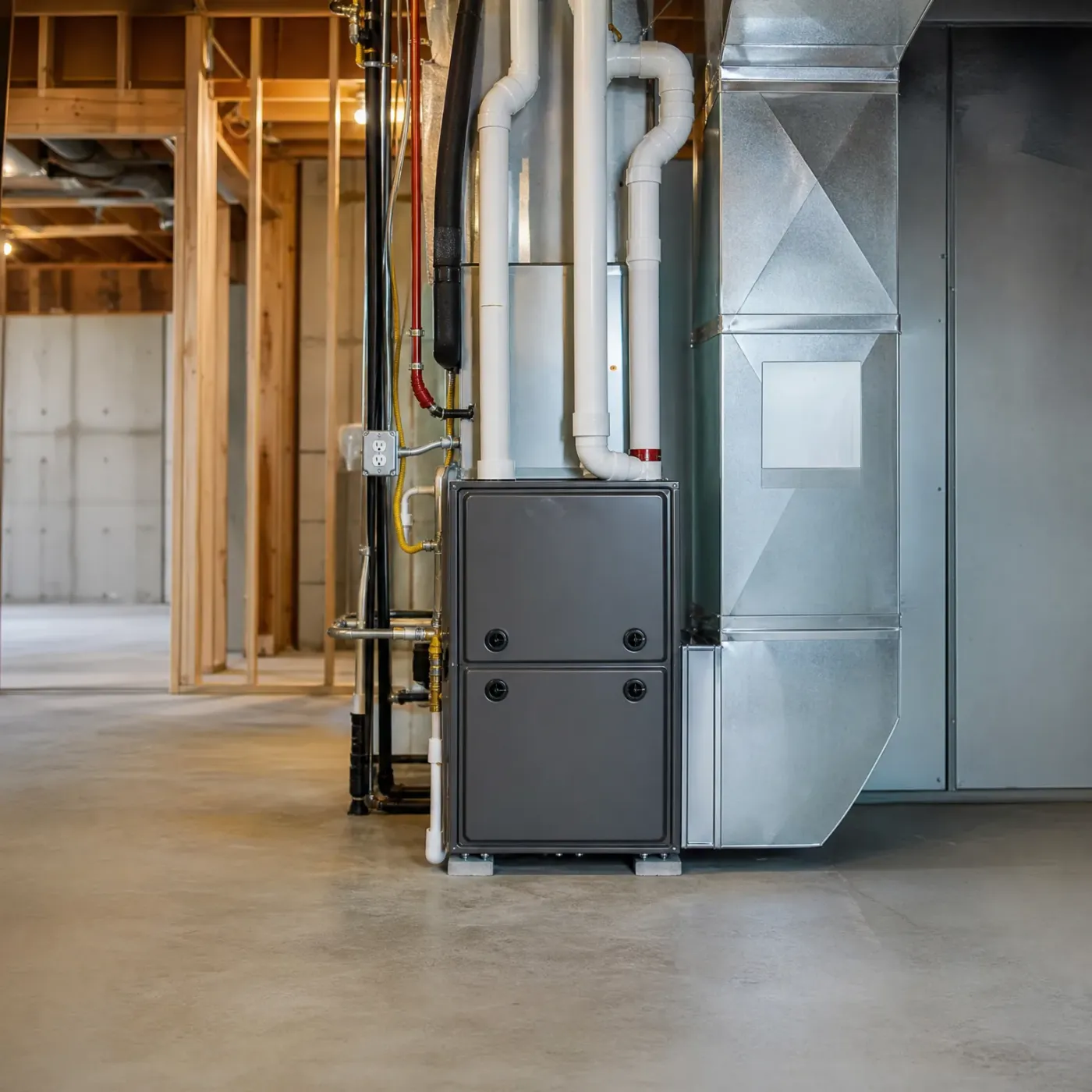
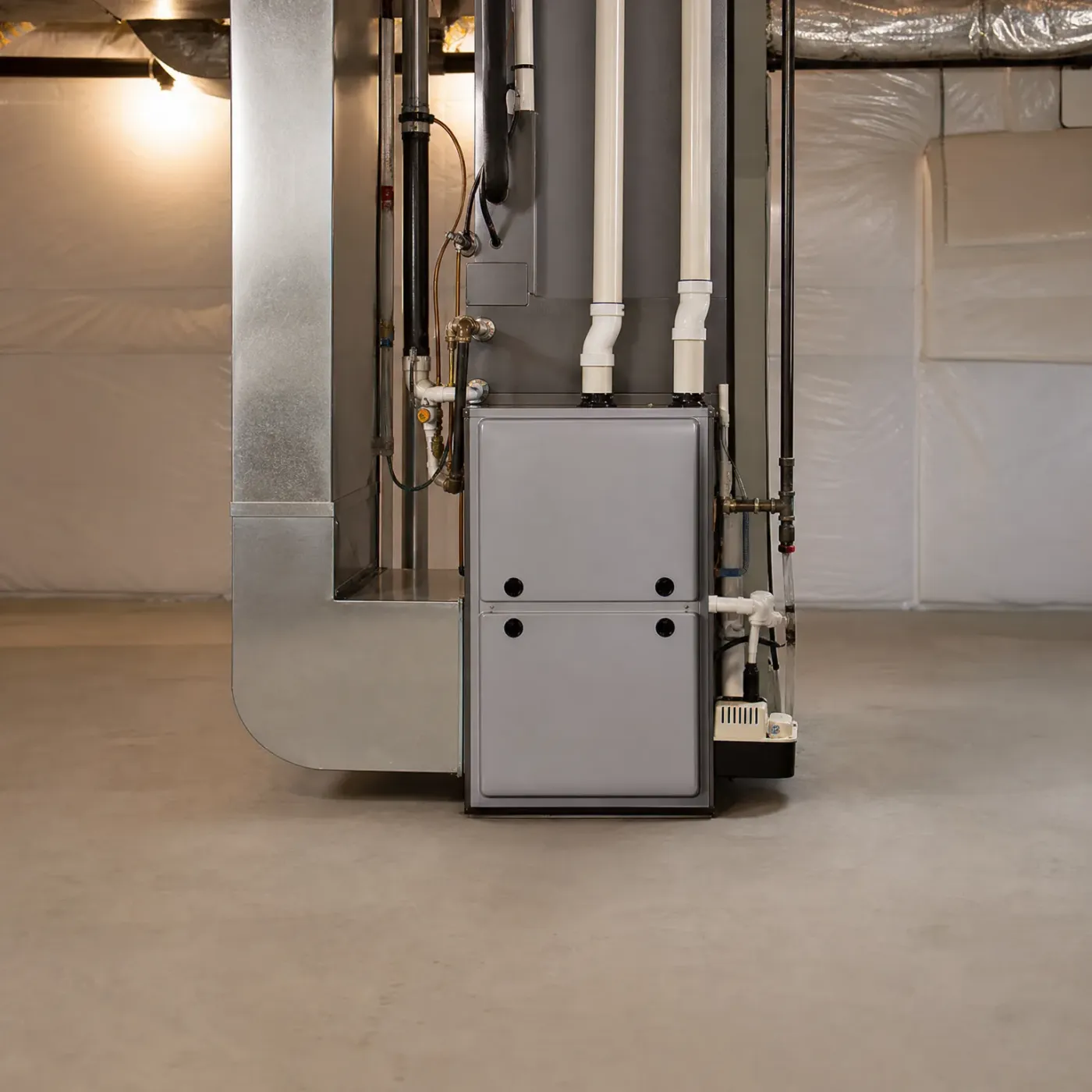
A gray high-efficiency furnace stands on a concrete basement floor beside galvanized sheet-metal ductwork, with white PVC vent pipes, gas and water lines, and unfinished wood framing behind it.
A furnace that fires, runs its full cycle, and shuts off on its own schedule is heating the house the way it's supposed to.
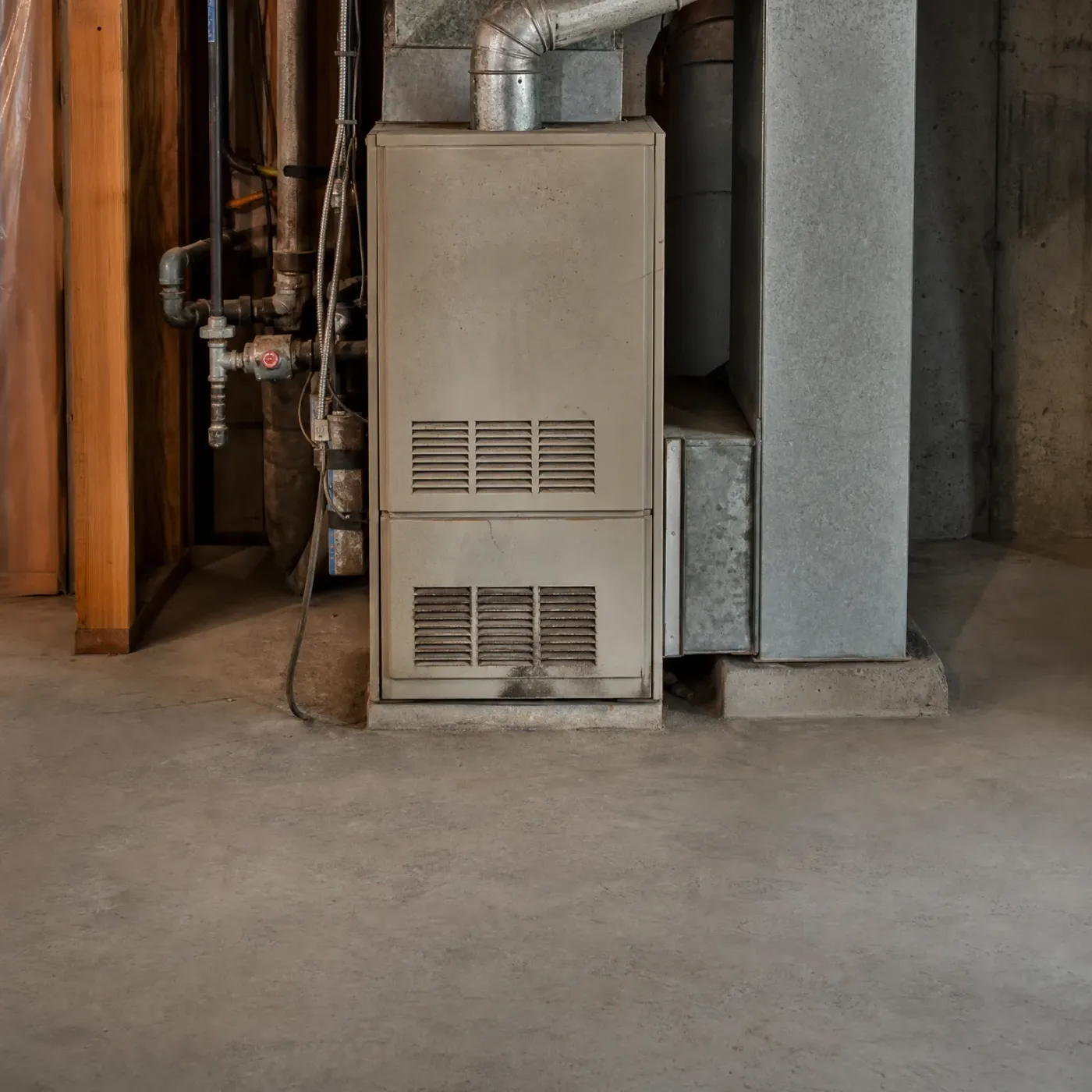
A beige furnace with two louvered front panels stands on a concrete basement floor beside galvanized ductwork, metal pipes, and a wooden post.
A furnace that fires, runs a few minutes, and quits before the house warms up is the one that needs a look.

Winter nights average 16°F statewide

At 16°F overnight, your furnace can't afford short bursts. It needs long, steady runs to keep the house warm until morning. A furnace that keeps cutting those runs short is losing the fight on the coldest nights, not just running inefficiently.

NOAA nClimDiv 1991-2020 county normals weighted by homes

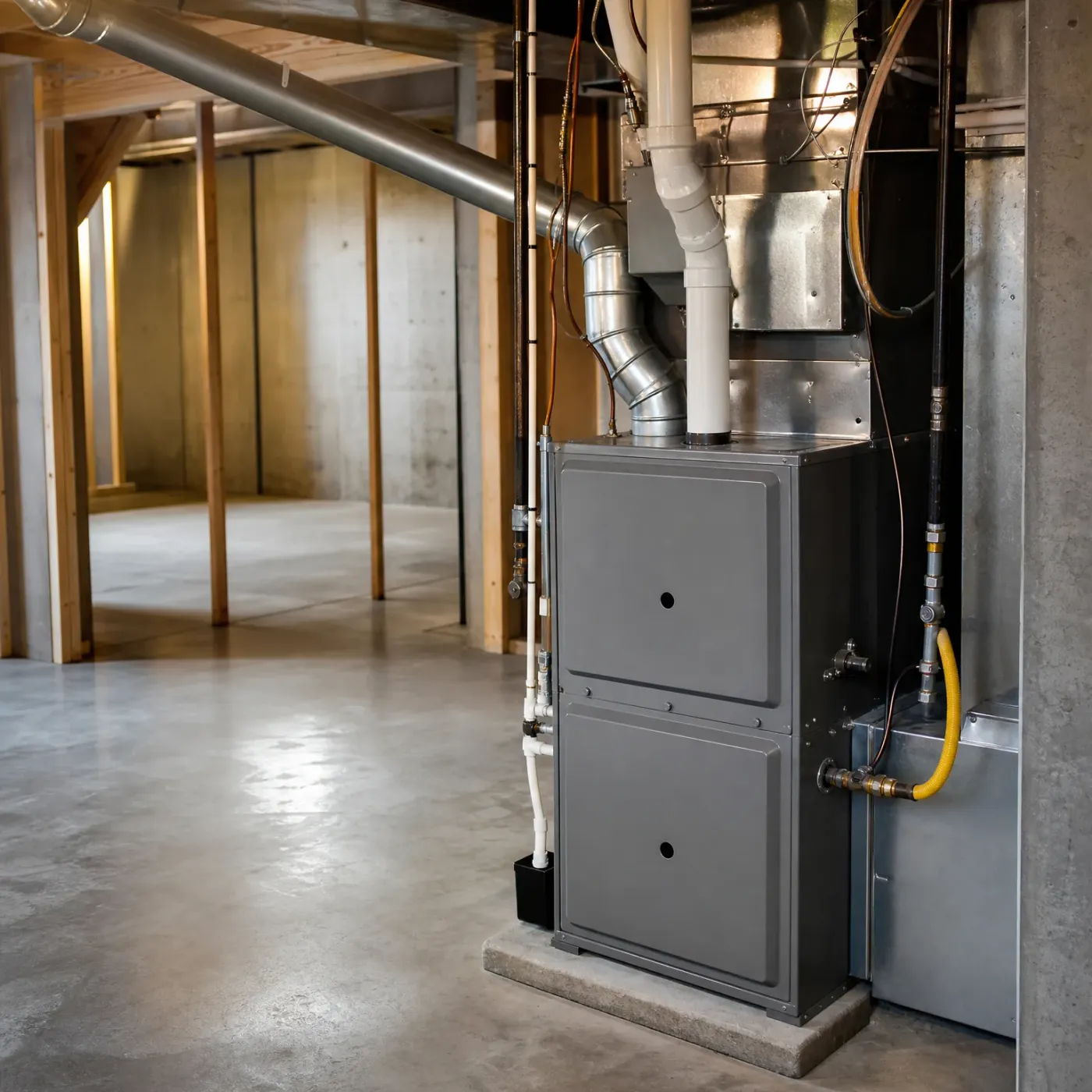
A gray high-efficiency furnace in a basement with white PVC vent pipes, sheet-metal ductwork, copper and black piping, a condensate pump, and insulated walls above a concrete floor.

Running normally

The furnace lights, the burners stay on, and the blower pushes warm air through the ducts until the thermostat is satisfied. It shuts off on its own and stays off for a while. The condensate line drains clean and the flue takes exhaust out without any trouble.
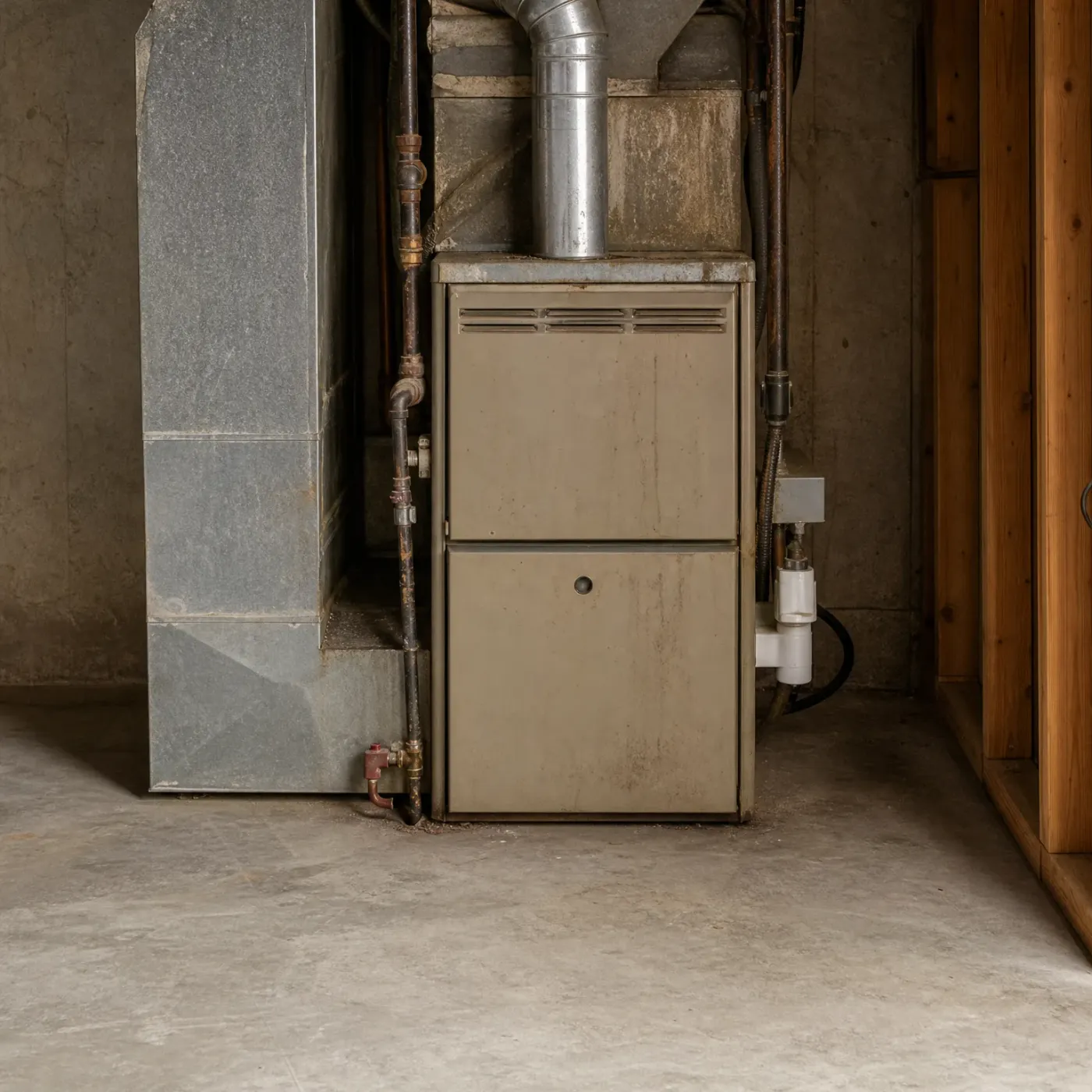
A beige residential furnace stands on a concrete basement floor beside galvanized sheet-metal ductwork, a round flue pipe, copper gas piping, and a PVC condensate line, with a wood-paneled wall at right.

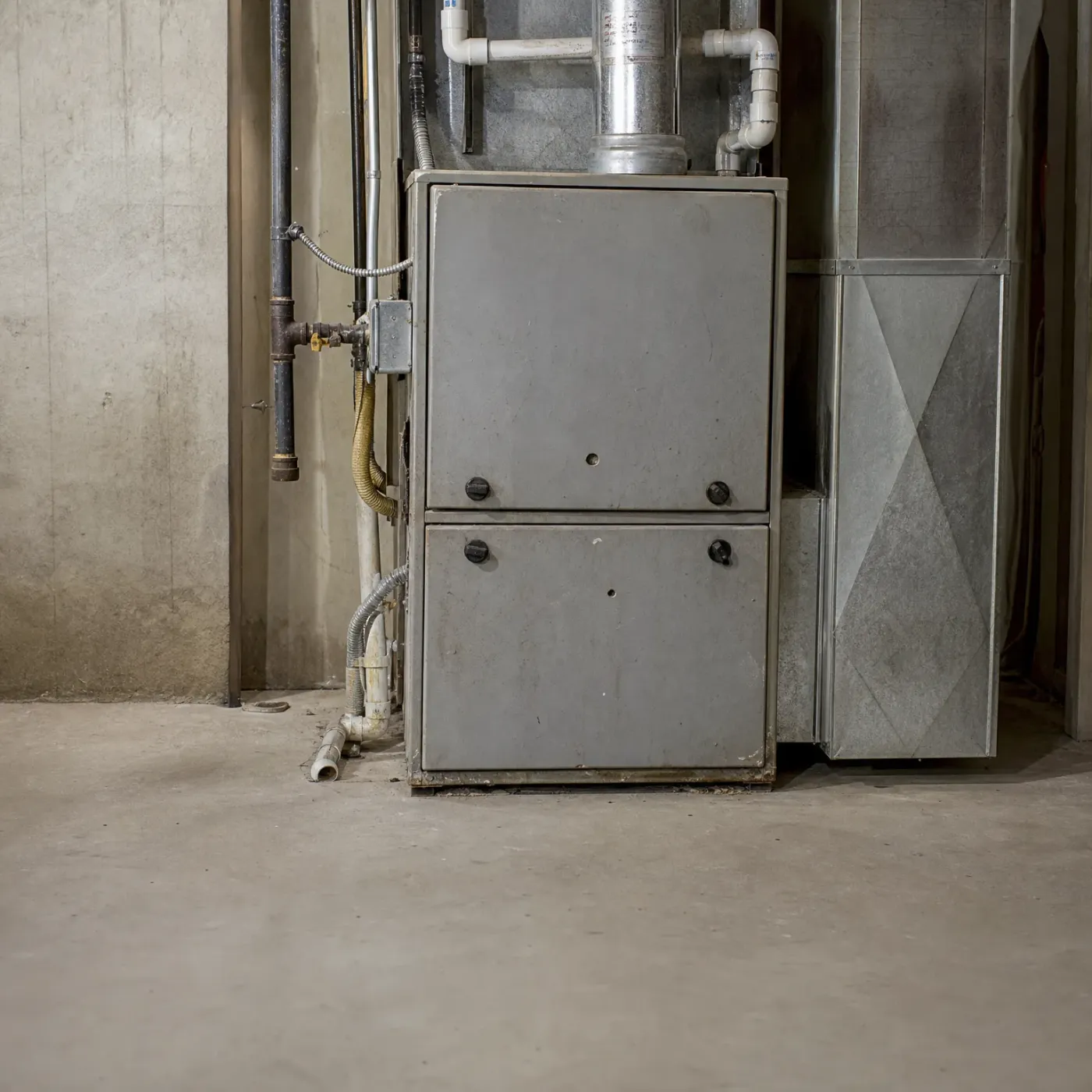
Short cycling

The furnace lights, runs a few minutes, and quits before the house warms up. It tries again soon after. On an older unit like this, a dirty flame sensor or a flue that isn't drafting right is often behind it, and the grime on the cabinet usually isn't the only thing aging in there.

A gray furnace with two access panels stands on a concrete basement floor beside sheet-metal ductwork, with pipes, flexible conduit and an electrical box on the concrete wall to the left.
Before you get your furnace repair
A gray high-efficiency furnace stands on a concrete basement floor beside galvanized sheet-metal ductwork, white PVC vent pipes, copper and black piping, and unfinished wood stud framing.
After you get your furnace repair
A gray gas furnace on a concrete pad in an unfinished basement, connected to sheet-metal ductwork, white PVC venting, and a yellow gas line, with concrete walls and wood framing in the background.

Matched to your furnace job

Skip searching for a furnace pro and answer a few questions instead.

Describe your furnace job, and a local pro who handles it gets in touch.

Skip the calls

You're not committing to anything by asking.

What you're noticing in your own house right now

You hear the burners kick on, then quiet, then on again a few minutes later, over and over through the evening. The vents blow warm for a short stretch and go cool before the room catches up. Some rooms stay chilly no matter how many times it cycles. You might notice the furnace is louder than usual on startup, or that the thermostat shows the set temperature but the air coming out doesn't feel like it. Left alone, this runs up your gas use for the heat you're actually getting, and it puts repeated strain on the igniter and blower motor. On a cold Colorado night, a part that gives out under that strain can leave the house without heat until someone looks at it.

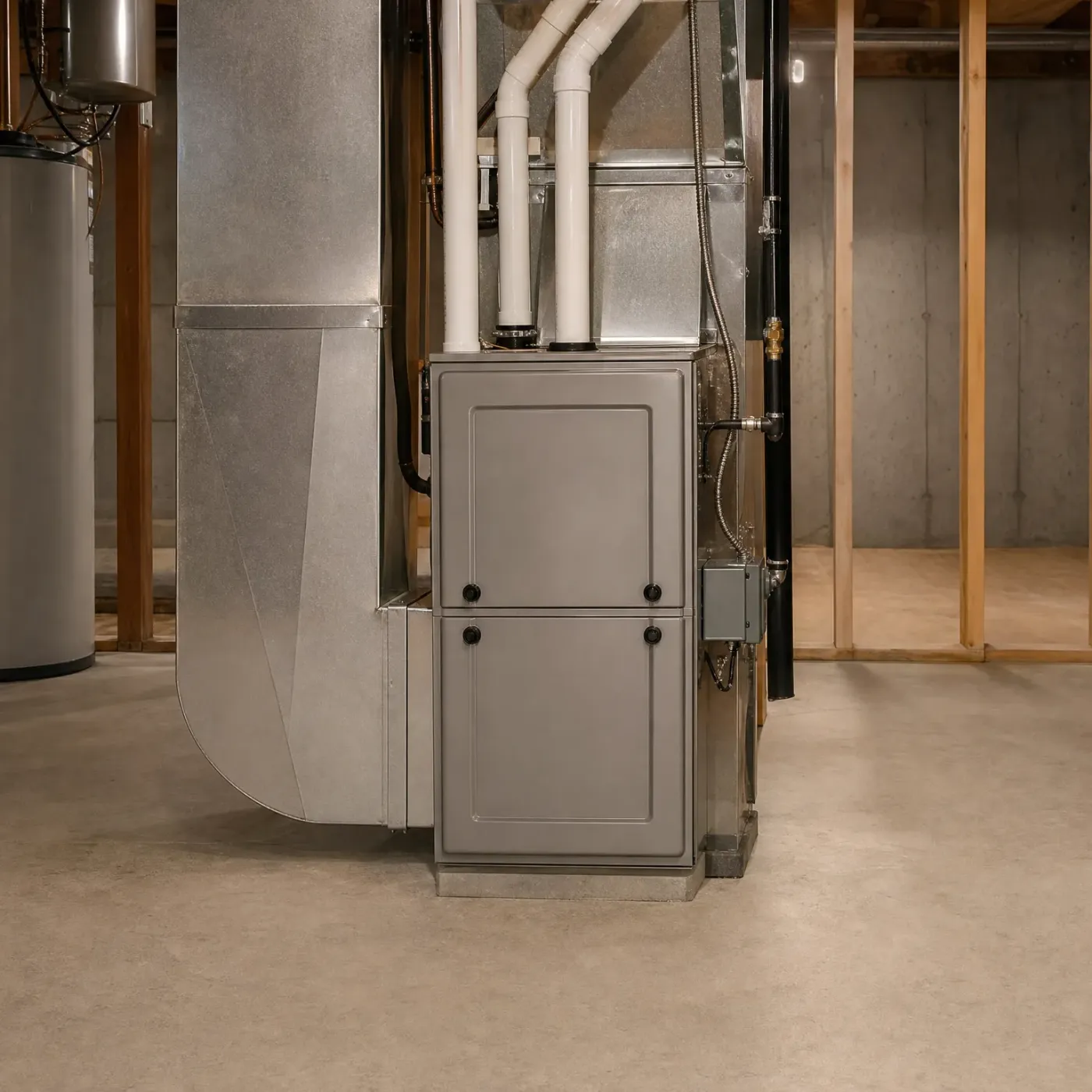
A gray high-efficiency furnace with white PVC vent pipes stands beside sheet-metal ductwork and a water heater in an unfinished basement with concrete walls and wood framing.

The furnace holding its cycle

This is a high-efficiency furnace venting through PVC pipe, set up with the ductwork running tight and sealed overhead. Air moves through the system on a full run, the burners stay lit until the thermostat is satisfied, and the blower shuts off clean.

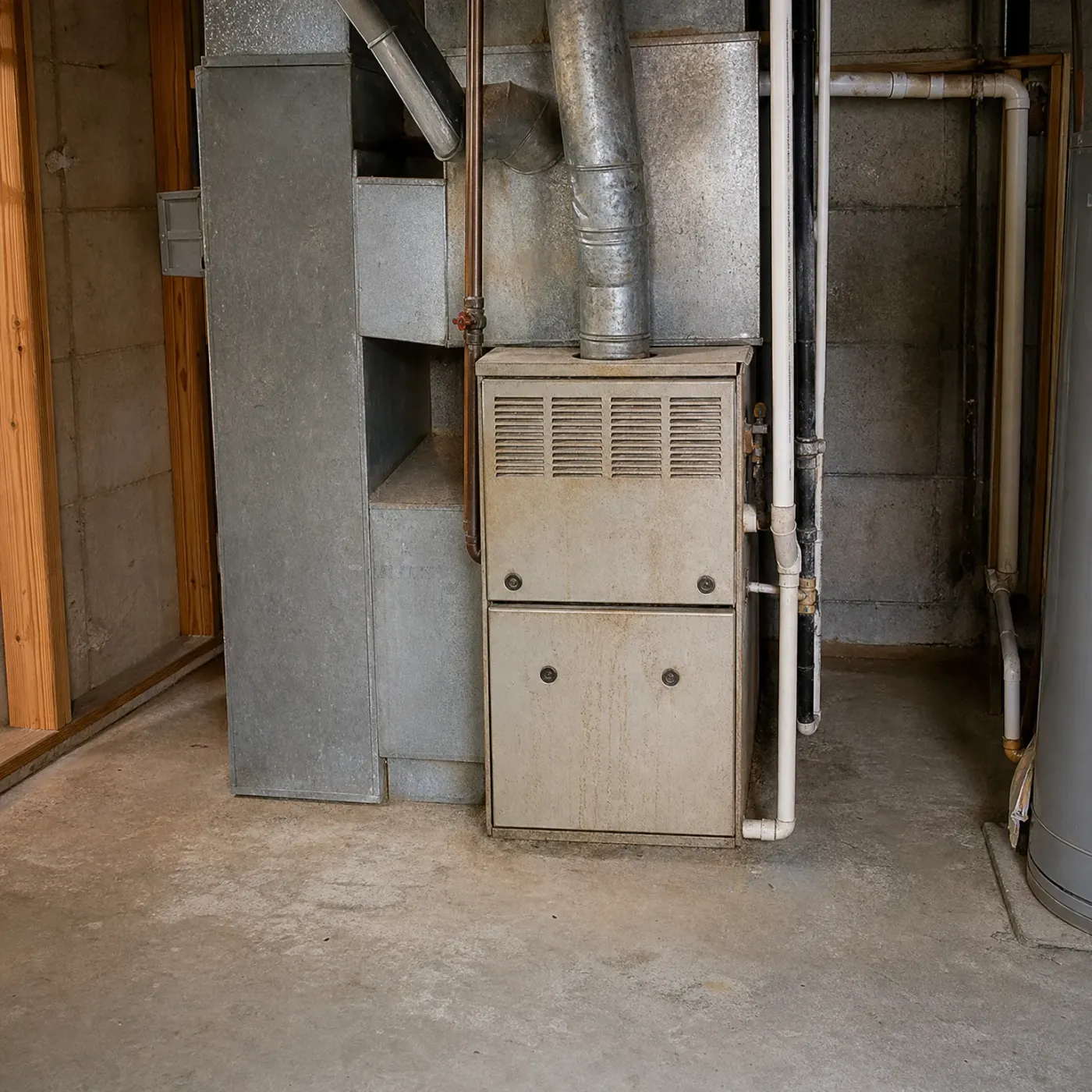
A beige gas furnace with a metal flue pipe stands in a basement against concrete block walls, beside sheet-metal ductwork, copper and white plastic pipes, and a water heater at right.

The furnace cutting out early

This older furnace feeds a sheet-metal return plenum through galvanized duct. A furnace built this way still depends on a clean flame sensor and a clear flue, and age alone wears both down. When one fails, the burners shut off before the house warms up.

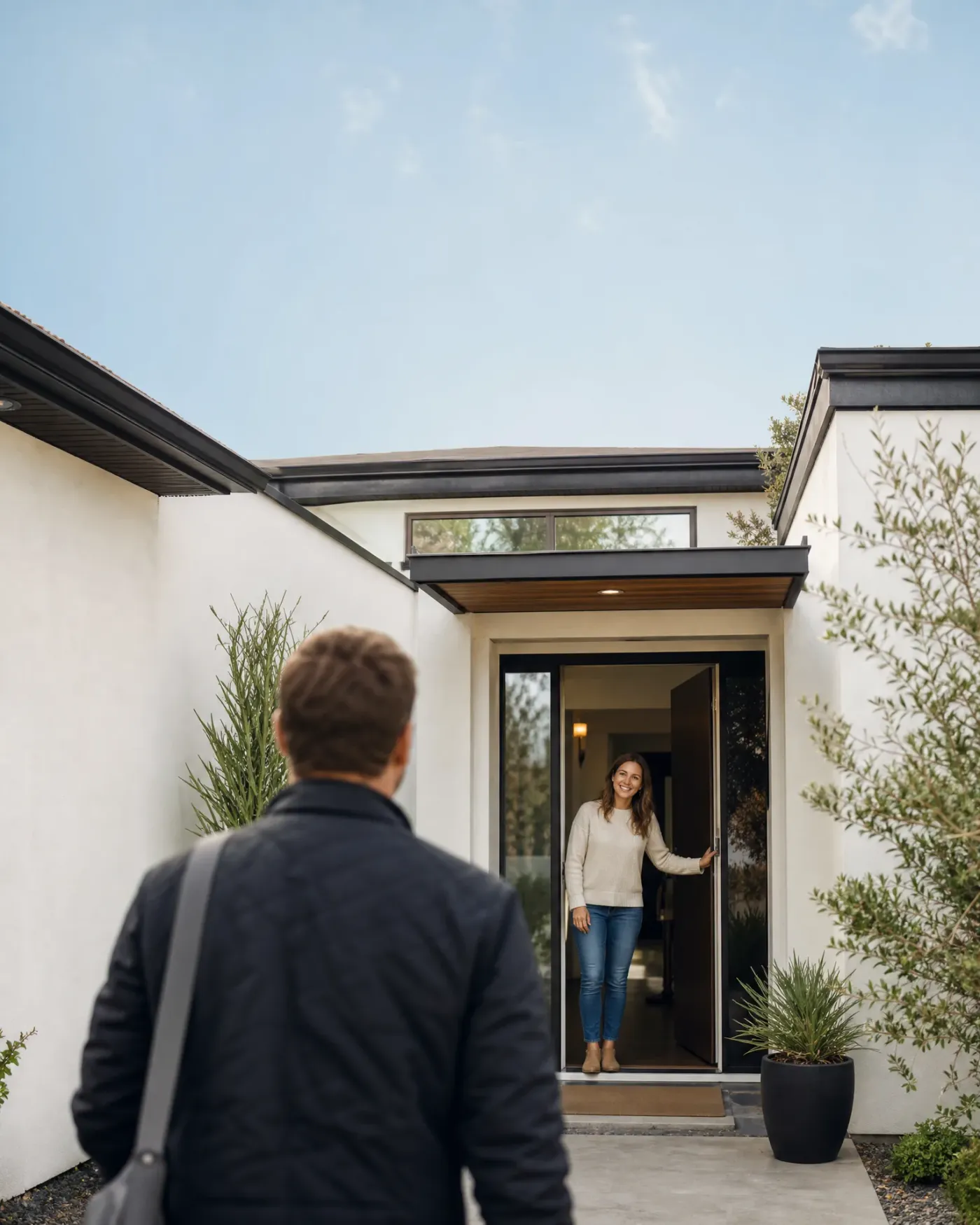
A woman in a cream sweater and jeans stands in the open doorway of a white stucco house, holding the dark door, while a man in a dark quilted jacket seen from behind walks toward the entry past potted plants.

What short cycling does to your house and your evening

You notice it most after dinner, when the house should be settling in for the night. The thermostat says 70 but the air coming out of the vents has already gone cool again, so you bump it up, and the furnace short cycles again trying to catch up. Rooms farthest from the furnace lag behind the rest of the house. Your gas bill reflects all those extra starts, since a furnace uses more fuel getting the burners lit than it does once they're running steady.

Left alone, short cycling tends to get worse, not better, because the thing causing it (a dirty flame sensor, a clogged filter, a failing limit switch) doesn't fix itself. Instead of spending another evening on hold with a contractor's office, describing the same on-off pattern twice, you can get matched with one who already knows furnaces in Colorado and has them call you directly to set up a look.

Interior corner of a living room with a beige upholstered sofa and dark cushion in the foreground, a ceramic vase of leafy branches on a dark side table by a curtained window, a framed picture on the wall, and a wood-surround fireplace at right.
Snow-covered gable roof and dark wood-clad upper wall of a building, with snow-laden conifers and falling snowflakes against a pale overcast sky.

Statewide, winter nights average 16°F. At that temperature a furnace that short cycles never gets the long, steady burn it needs to push heat into a cold house. Each short run warms the air near the vents and then quits, so the heat exchanger and ductwork barely get ahead before the burners shut off again. You'll feel it as a room that warms for a few minutes, then cools faster than it should once the burners stop. On a night that cold, the furnace that cycles properly is doing the work of catching the house up before morning. One that keeps interrupting itself is losing ground the whole night through.

NOAA nClimDiv 1991-2020 county normals weighted by homes

A furnace that keeps firing, quitting, and firing again is telling you something is wrong with the flame sensor, the limit switch, a pressure switch, or the airflow feeding it, and no thermostat setting fixes that. It needs a person who can open the cabinet and find which part is cutting the cycle short. What it costs you to find that person on your own is its own chore: searching through contractors you don't know, calling a few and waiting on callbacks, explaining the same on and off pattern to each one, then sitting with quotes trying to guess who's right. Skip that part. Answer a few questions about what your furnace is doing and you'll be matched with a contractor who takes on jobs like this, and they'll reach out to you directly. You still have a furnace that needs a look. You just won't spend your evening tracking down who's going to look at it.

The gabled roof peak of a house with a stone chimney, dark siding and wood brackets, framed against forested hills and a rocky mountain ridge under a cloudy sky.

A furnace pro near you

Answer a few questions

It costs nothing to send, and you don't have to hire anyone.

Skip calling a list of contractors and explaining the same short cycling problem over and over. Send one request and a contractor who works on furnaces in your area will reach out to you directly, so you're not stuck comparing quotes on a cold night while the house won't hold its heat.