
Why your furnace is leaking water in Colorado
A furnace that's leaking water almost always has a problem with its condensate line or drain, not the furnace itself. If you have a high-efficiency furnace, which is common in Colorado homes, it produces condensation as a normal part of burning gas, and that water is supposed to drain out through a small plastic line to a drain or pump. When that line clogs, cracks, or comes loose, the water backs up and drips out of the unit instead. A cracked heat exchanger can also cause this, though that's less common and more serious. The line can clog with sludge or algae over time even if nothing else is wrong. Either way, water pooling near your furnace is worth having checked soon. Left alone, it can damage the furnace's internal parts or the floor and ductwork around it.
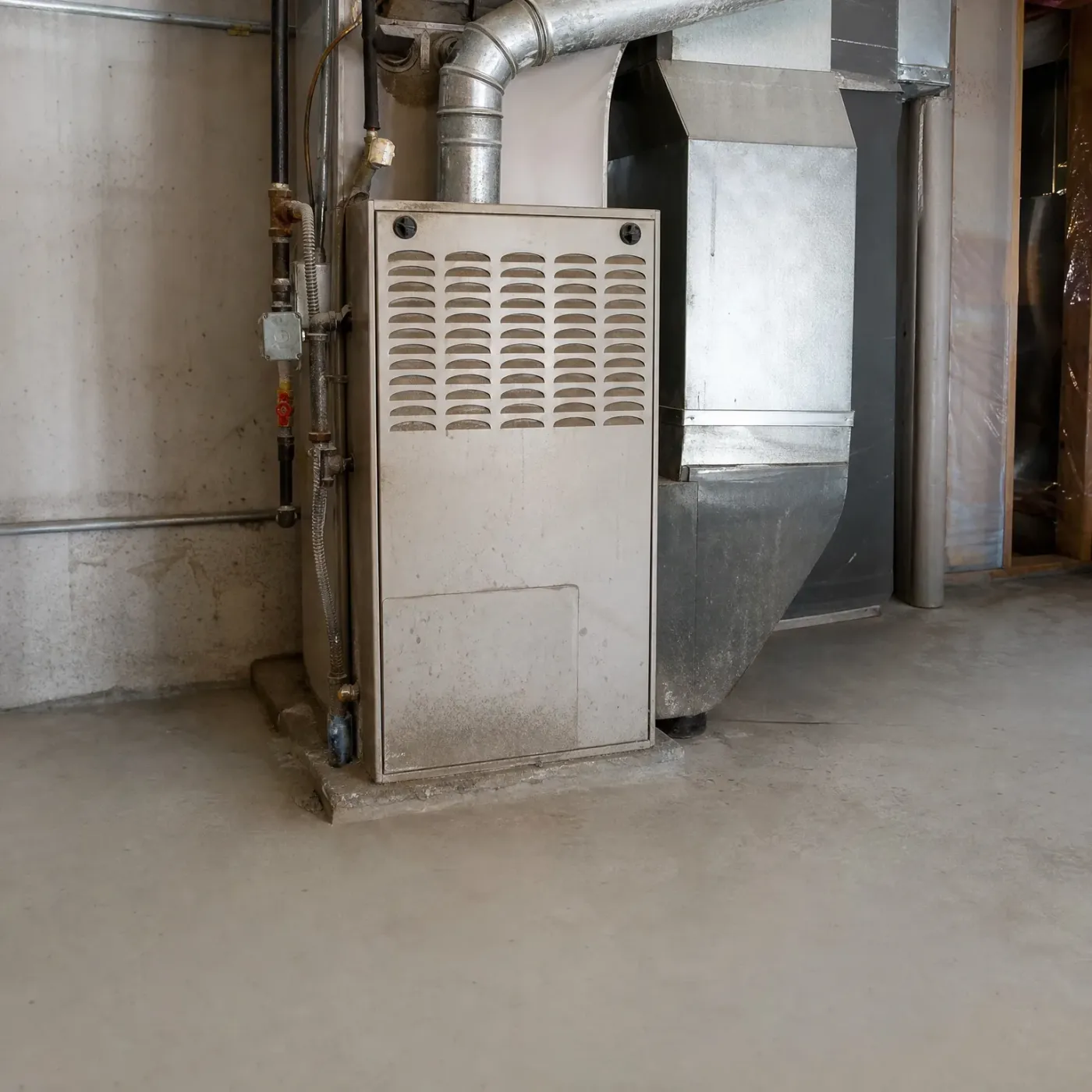
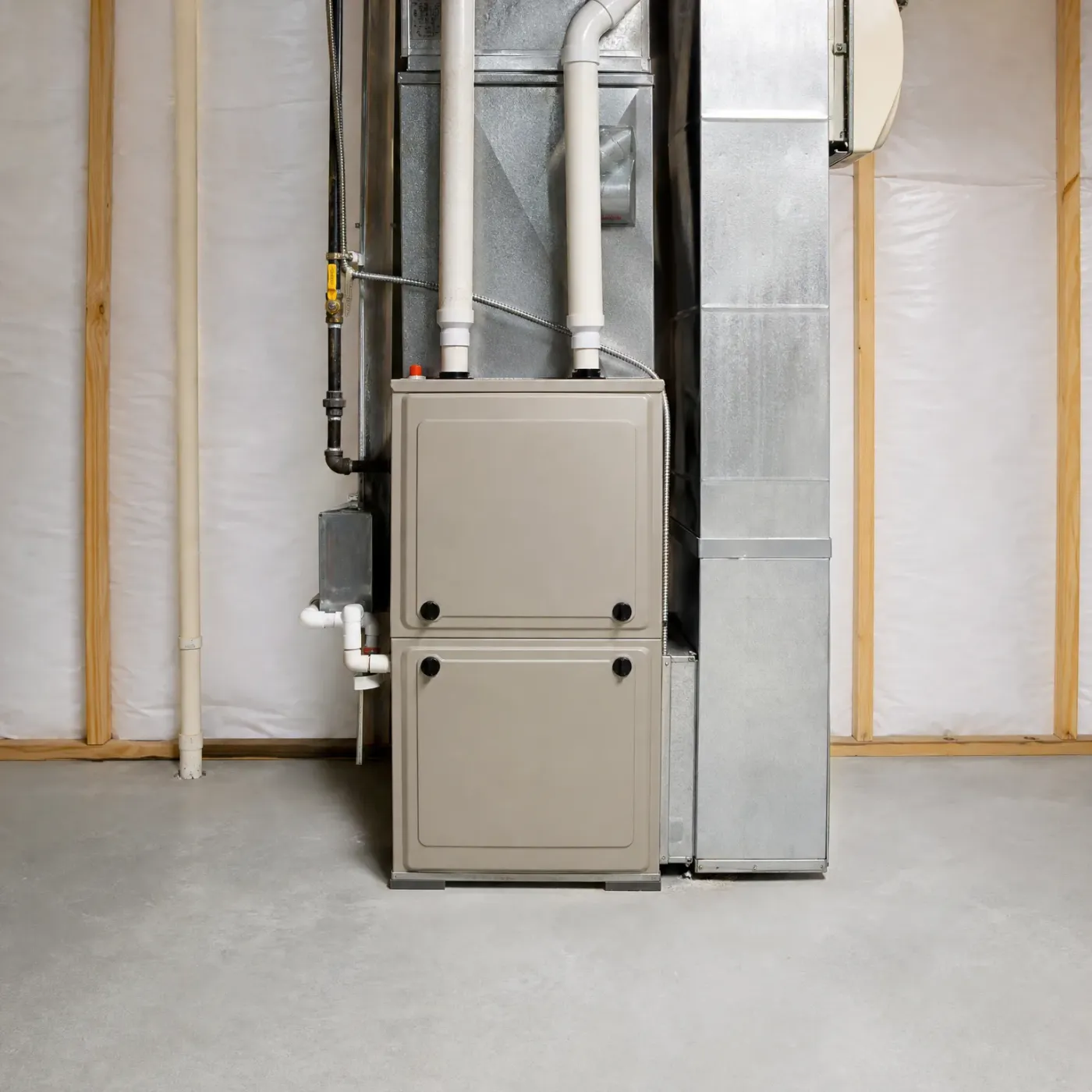
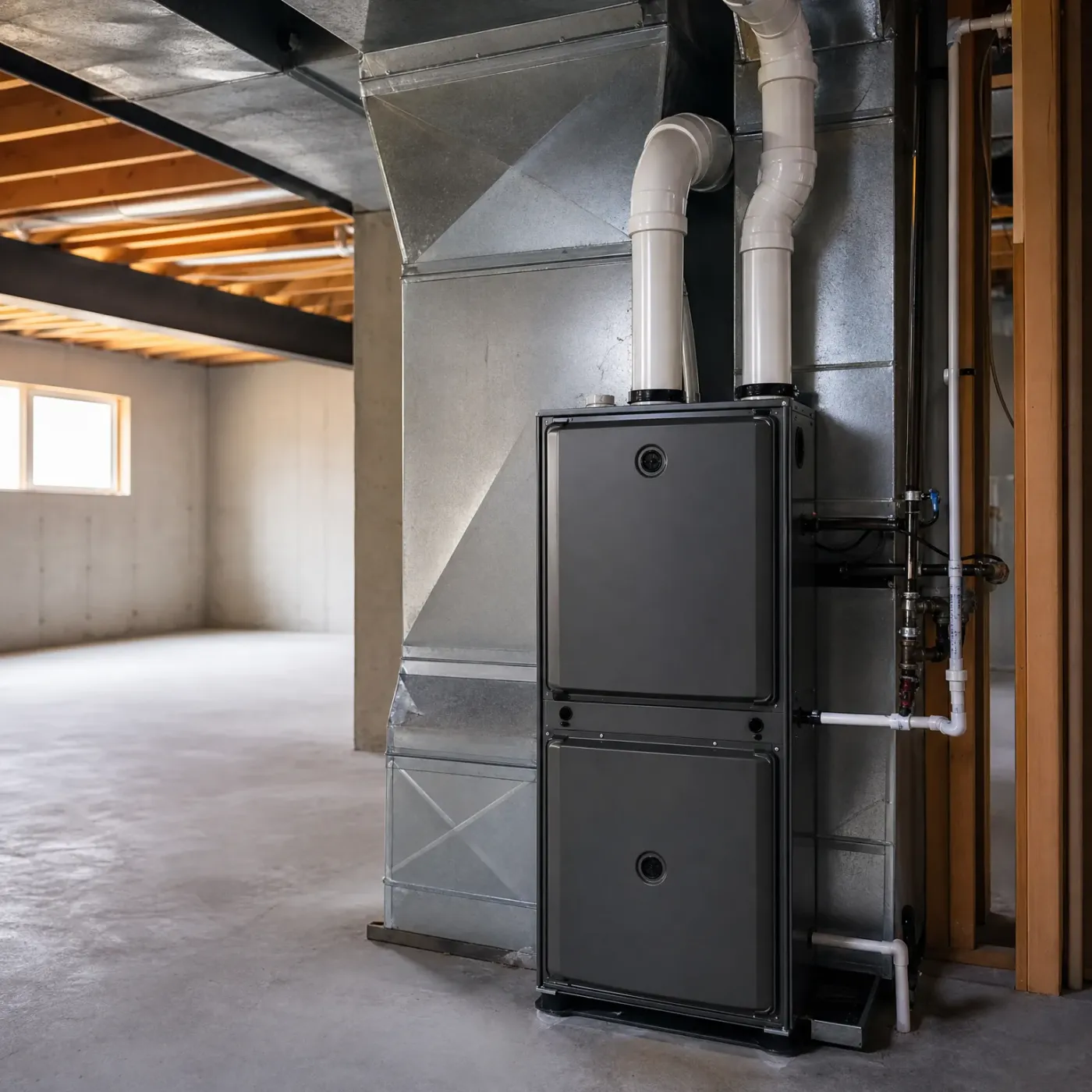
Your furnace burns gas, and once it pulls enough heat out of the exhaust, what's left condenses into water inside the unit. That water needs a path out, usually a plastic line running to a floor drain, a condensate pump, or a utility sink. The trouble starts in that line, not in the furnace itself. Algae and sediment collect inside the tubing over months of use, and eventually the passage narrows enough to stop water from draining at all. When that happens, the water has nowhere to go but back into the cabinet, and from there it finds the nearest gap to the floor. The vent pipe can cause the same problem a different way. If a section of PVC vent cracks or pulls loose, condensation from the flue gas drips inside the cabinet instead of running outside the house. And if your furnace uses a condensate pump, a stuck float switch or a dead pump motor means the water it's supposed to move out just sits there until it overflows.
Where the water actually comes from
- A high-efficiency furnace pulls so much heat out of the exhaust that the leftover gas turns to water, and that water has to go somewhere.
- That condensate drains through a plastic line into a floor drain, a condensate pump, or sometimes a utility sink.
- Algae and sediment build up inside that drain line over time and can block it completely.
- Once the line clogs, the water backs up into the furnace cabinet and finds its way out onto the floor.
- A cracked or disconnected PVC vent pipe can also let flue condensation drip inside the furnace instead of venting outside.
- If the condensate pump fails or its float switch sticks, the water it's supposed to pump out just collects and overflows.
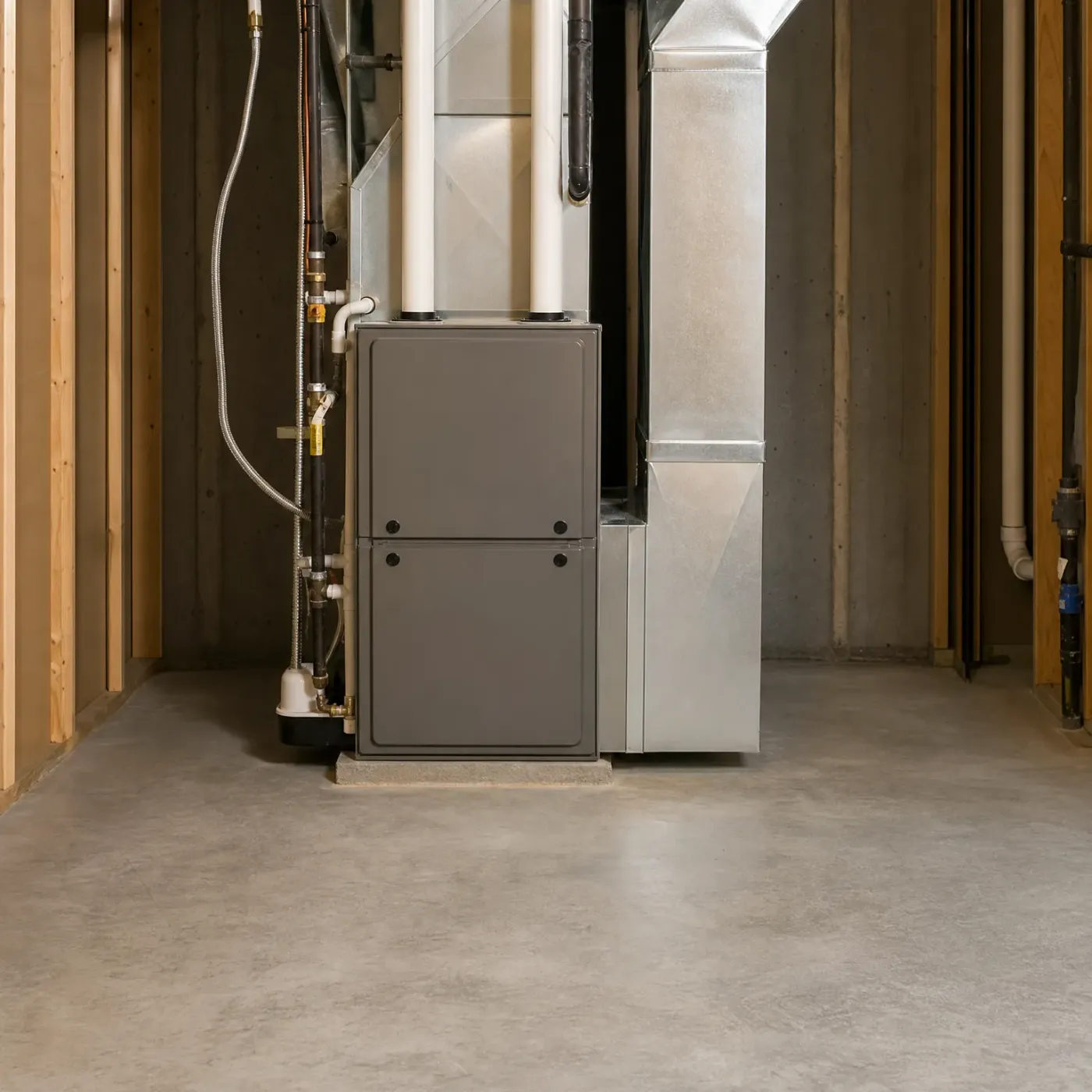
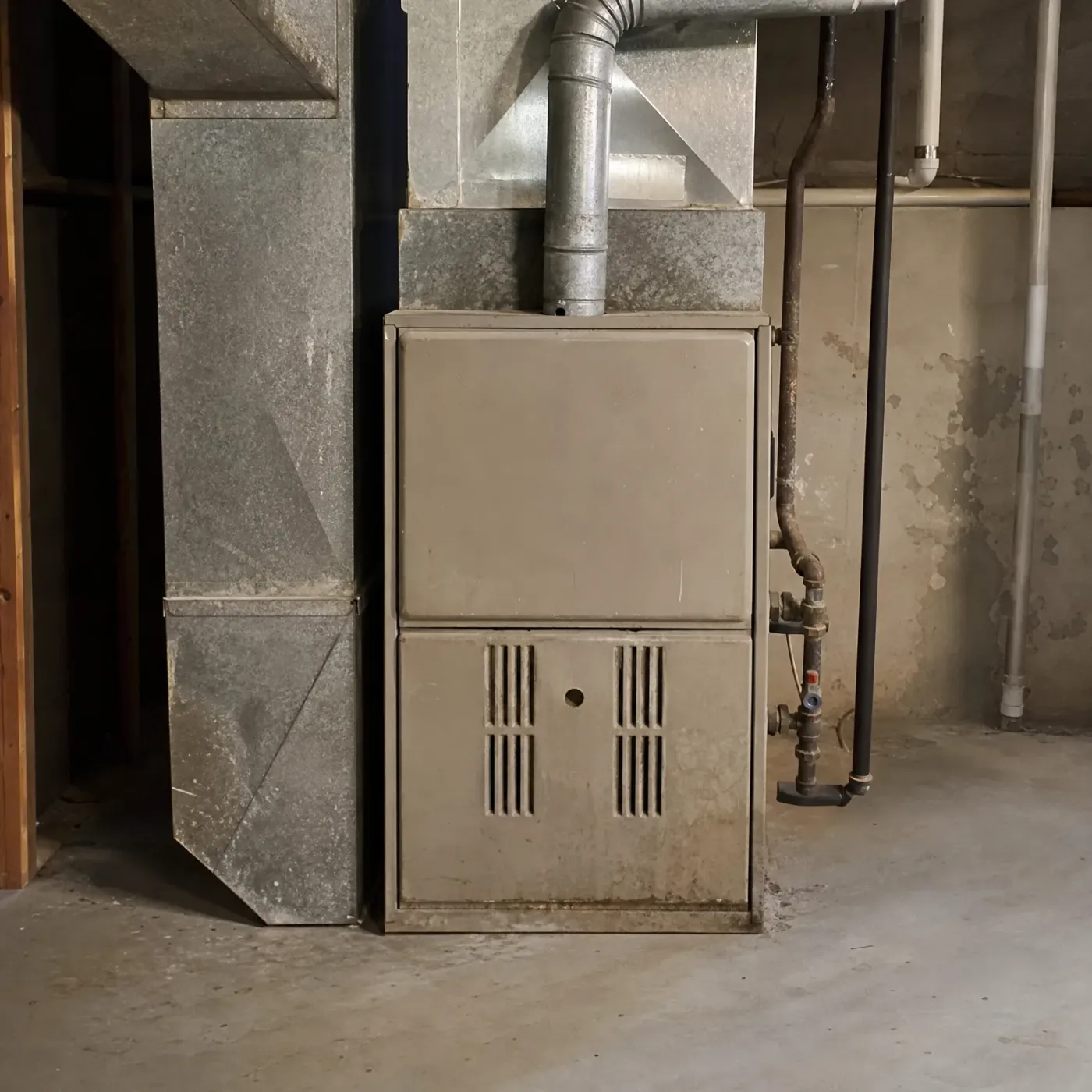
Gas burns and the furnace pulls heat out of the exhaust
Leftover exhaust cools and condenses into water inside the heat exchanger
Water drips down into the drain trap at the bottom of the furnace
The trap channels water into the condensate line
Which Furnace Type Do You Have
High-efficiency furnace
- Condensation is a normal part of how it burns gas, so a clear drain line is doing its job every time it runs.
- The water is mildly acidic, so the drain line, trap, and condensate pump have to actually hold up over time.
- A clog or a cracked line turns that normal water into a leak at the cabinet or a puddle on the floor.
- Because this design depends on drainage working right, a tech familiar with it can trace the leak back to the actual blockage instead of guessing.
- Colorado's dry air doesn't change how much condensate the furnace makes, since that comes from burning gas, not from the air outside.
Standard furnace
- Exhaust leaves hot, so there's no condensation process built into how it runs.
- Water showing up around a standard furnace usually points to something else, like a humidifier, a cracked heat exchanger, or a nearby AC line.
- There's no condensate trap or pump to check, so a leak here needs a different kind of look than a high-efficiency unit gets.
- Finding the real source matters, since water from the furnace cabinet itself can mean a more serious issue than a clogged drain.
- A tech who knows the difference between these two furnace types won't waste time checking a condensate system that isn't there.




Get the right pro for your furnace
Only one pro gets your request, so you hear from one company.
Describe your furnace job, and a local pro who handles it gets in touch.
Sending the form costs nothing.
Can a dirty filter make my furnace leak water?
You've already checked the condensate line and it seems fine, so now you're wondering if something simpler is going on. A dirty filter is the kind of thing you can check yourself before calling anyone, and it's worth asking whether it's connected to the water you're seeing on the floor.
Yes, but indirectly, through the heat exchanger and the evaporator coil, not the filter itself
A clogged filter restricts airflow, and if your furnace is paired with central air, that can cause the evaporator coil above it to ice up. When that ice melts, it can drip down past the furnace and look exactly like a furnace leak. A dirty filter can also make the heat exchanger run hotter than it should, which changes how much condensation forms and where it ends up. The filter doesn't hold water, so it won't be the source itself. It's worth pulling the filter and checking it anyway, since a fresh one rules out one more cause and makes it easier for a contractor to find the actual source of the water.
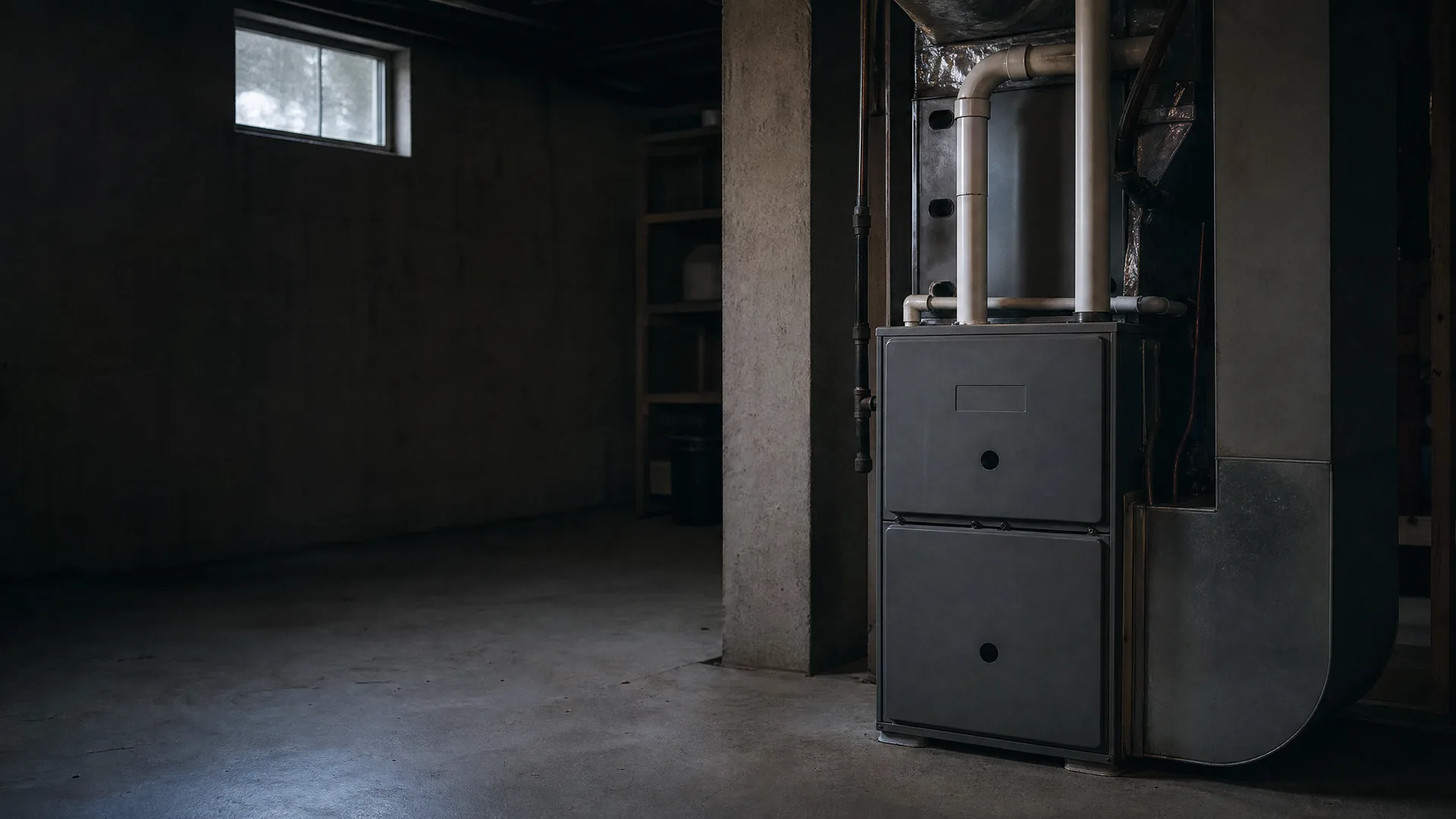
It's a November evening and the basement is cold enough that you notice it on the stairs. The furnace sits dark, not running, a thin haze of dust still hanging in the beam of the bare bulb overhead. You crouch down by the cabinet and see it before you smell the dust settle, a puddle spreading out from the base toward the drain in the floor. Outside it's been dry for weeks, the kind of dry Colorado gets once summer lets go, so you know this water didn't come from anywhere but the furnace itself. You put a hand near the vent. Nothing. Just cold metal and a quiet house getting colder.
Winter nights average 16°F statewide
With winter nights averaging 16°F across the state, your furnace runs long hours and produces condensation almost the whole time it's on. That means more water moving through the drain line, and more chances for a clog or crack to show up as a leak.
NOAA nClimDiv 1991-2020 county normals weighted by homes

A leaking furnace is a drain problem, not a lost cause
Water on the floor by the furnace almost always means the condensate line, the trap, or the pump isn't moving water the way it should. The furnace itself is doing what it's built to do. Once that line is clear and draining again, the leak stops.
Finding the clog or the crack and fixing it right is the kind of job that goes faster with someone who works on furnaces like yours all winter long, in houses around Colorado. If you request a repair here, you'll be matched with one licensed local contractor who takes it from there and reaches out to you directly, so you're not stuck fielding calls from a handful of companies trying to win the job.



A pro who works on furnaces
A leaking furnace is almost always a drain problem a local contractor sees over and over through Colorado winters, not a sign your furnace is done. Getting matched means one licensed contractor who works on this equipment all season reaches out to you, not a handful of companies competing for your call. They'll know to check the trap and line first, because that's where this usually starts, before anyone talks about bigger repairs.
Your request stays with one local pro.
You're not committing to anything by asking.