Fill out one short form instead of calling around.
One room never gets warm. Maybe it's the bedroom over the garage, or the one at the end of the hall farthest from the furnace. You've shut the vent in other rooms trying to push more air there, bumped the thermostat up, maybe put a space heater in the corner. None of it fixes the actual problem, because the actual problem is in the ductwork, the register, the insulation around that room, or in a furnace that's struggling to push air that far in the first place. Colorado winters don't forgive a room that runs cold. When it's in the teens outside, a ten or fifteen degree gap between that room and the rest of the house is the furnace and the ducts telling you something specific is wrong, not just bad luck.
Finding out what it is means getting someone who knows gas furnaces and the way houses here are ducted to actually look at the room, the runs feeding it, and the furnace itself. Left on your own, that means searching up a handful of HVAC companies, calling each one, explaining the same thing about the same cold room every time, waiting on callbacks, then trying to compare quotes from people who never saw the same thing you saw. A lot of homeowners give up partway through that and just live with the cold room another winter.
This page skips that part. Submit the details once and it goes to a licensed contractor local to Colorado, someone who works on furnaces and ductwork through winters like this one every year and has a good sense of what usually causes a single room to run cold before they ever walk in. You're not fielding calls from five different companies trying to win the job. It's one contractor, already matched to your situation, ready to come look at the room that's been cold all winter.
A room that stays cold while the rest of the house is fine usually isn't a furnace problem. It's a duct problem. That room sits at the end of a run, the last stop after the air has pushed through every branch and turn ahead of it, and by the time it arrives there's less of it, and it's cooler. A closed or partly closed damper somewhere in that line, a crushed flex duct behind a wall, or a run that's simply too long or too narrow for the room it feeds will all show up the same way: weak airflow out of that one vent no matter how high the thermostat goes. With a Colorado winter pushing a furnace hard for months, that weak spot is the room that never catches up. Shutting vents elsewhere in the house doesn't fix it and can strain the furnace by forcing it to push against more resistance. Fixing it means finding where the air is actually being lost between the furnace and that room, which takes someone checking the ductwork itself, not just the thermostat.
1
Technician checks the thermostat and airflow at the cold room's vent
2
Airflow gets measured at the register compared to rooms that heat fine
3
Duct run is traced back to find where air is lost or blocked
4
Crushed, disconnected, or leaky duct sections get found along that run
What that one cold room is doing to your house
You're paying to heat that air twice. Once when the furnace fires, and again when you turn the thermostat up another couple degrees trying to push warmth down a hallway that's already losing it somewhere in the duct. The rooms near the furnace end up too warm while the far room still doesn't get there. Shut doors and closed vents don't fix a duct that's crushed behind a wall or a joint that's come apart in the crawlspace. They just make the furnace work harder for the rooms that were already fine.
Finding someone who actually traces ductwork, instead of just swapping a thermostat or blaming the furnace, usually means a few calls, a few technicians standing in that cold room telling you different things. Here you tell it once, to one licensed contractor local to Colorado who works on furnace systems like yours all winter and knows where a duct run tends to fail first. No comparing quotes from three companies, no repeating yourself on the phone a fourth time.
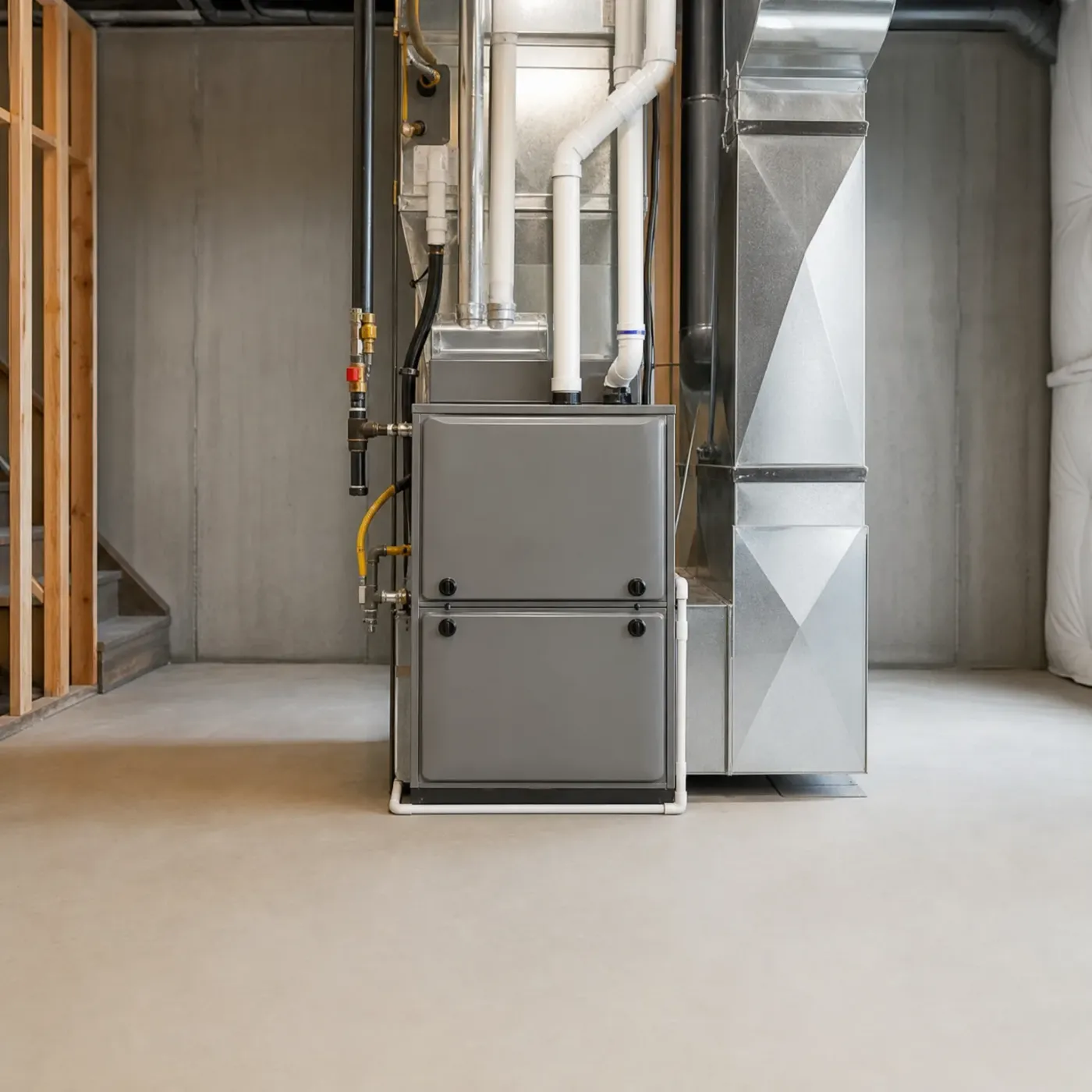
Furnace running right
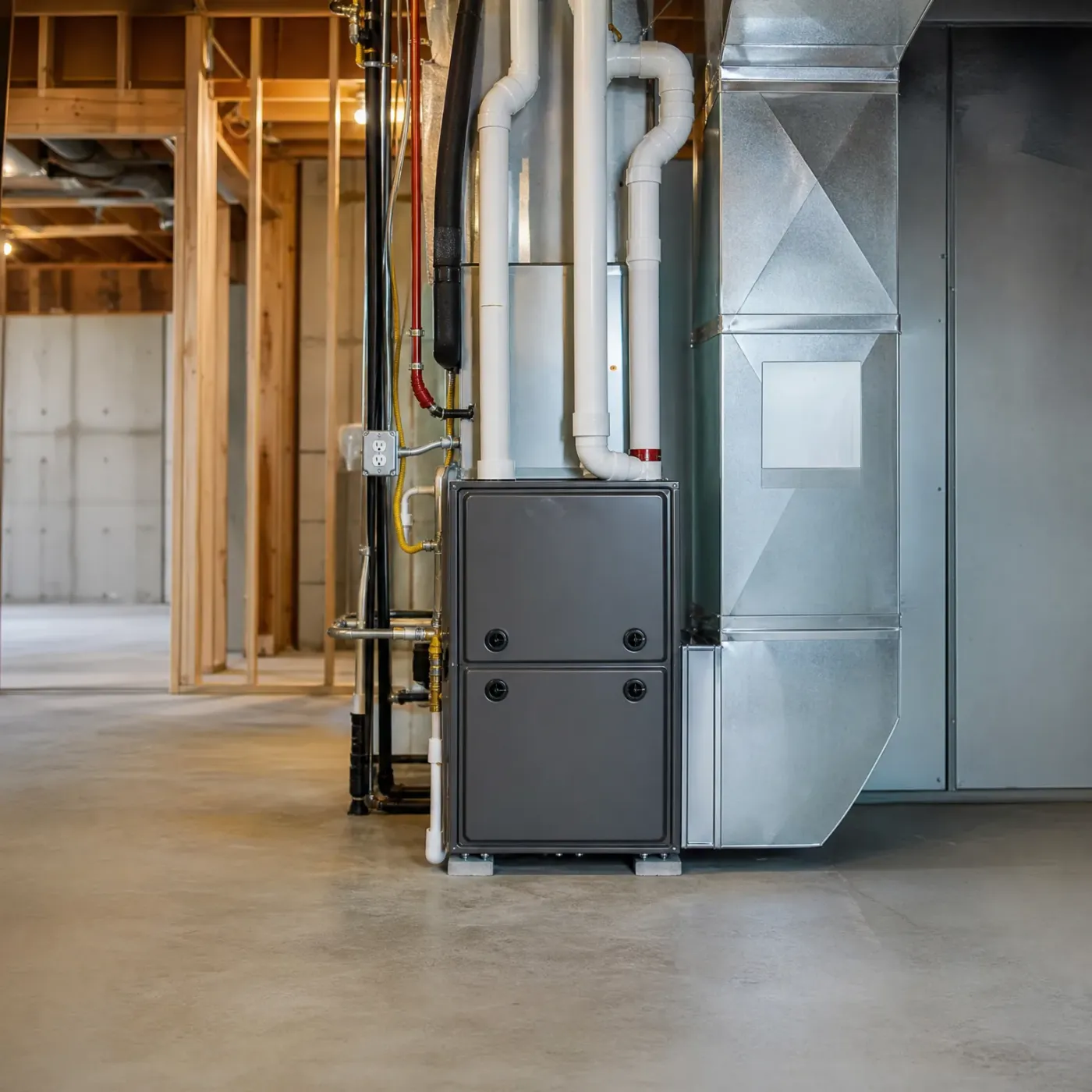
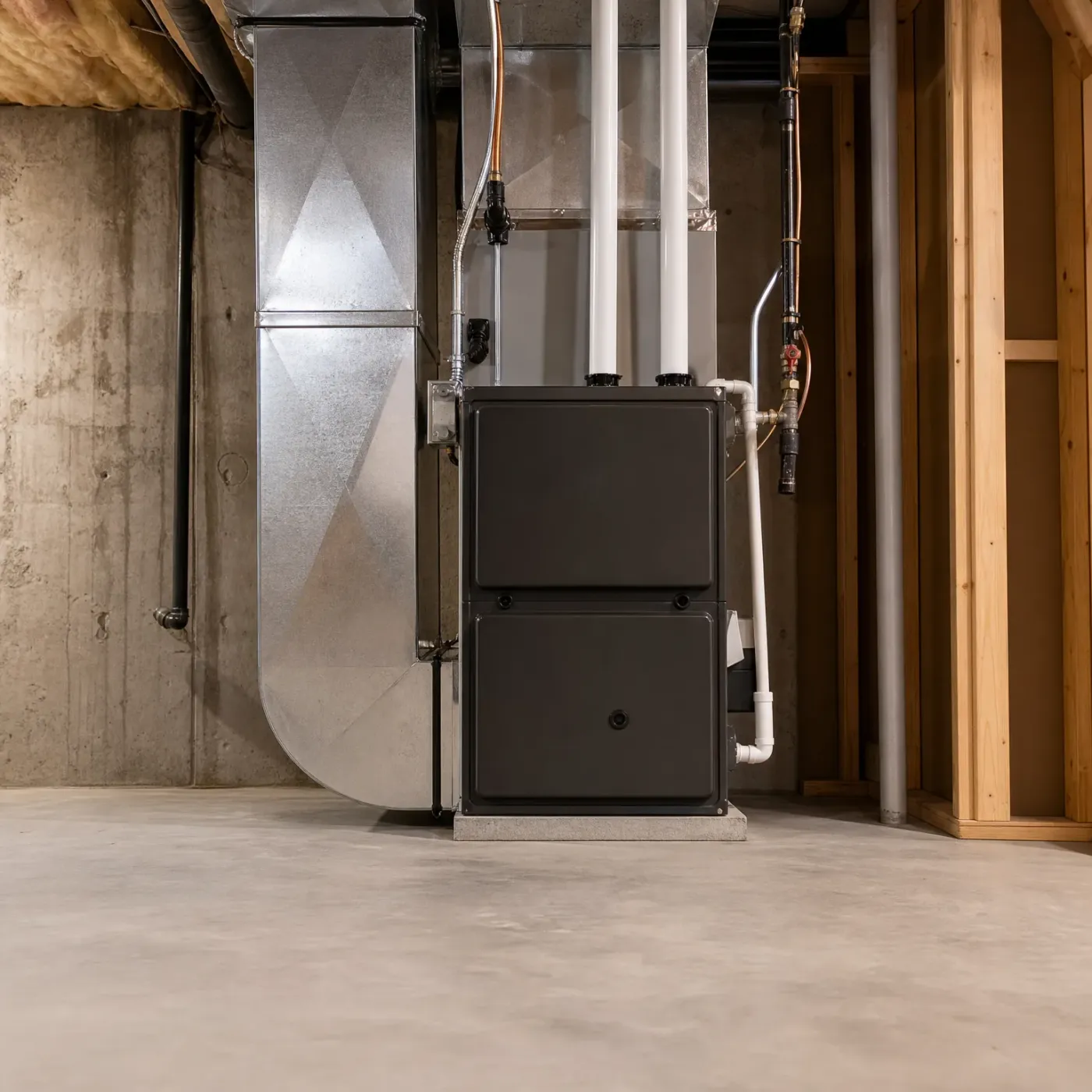
This is what's supposed to be pushing air to every room in the house, including that cold one. A two-stage furnace like this ramps up or down depending on what the house needs, and the supply plenum overhead is what splits that air out to each duct run. When this side of the system is working, the problem lives somewhere between here and the vent.
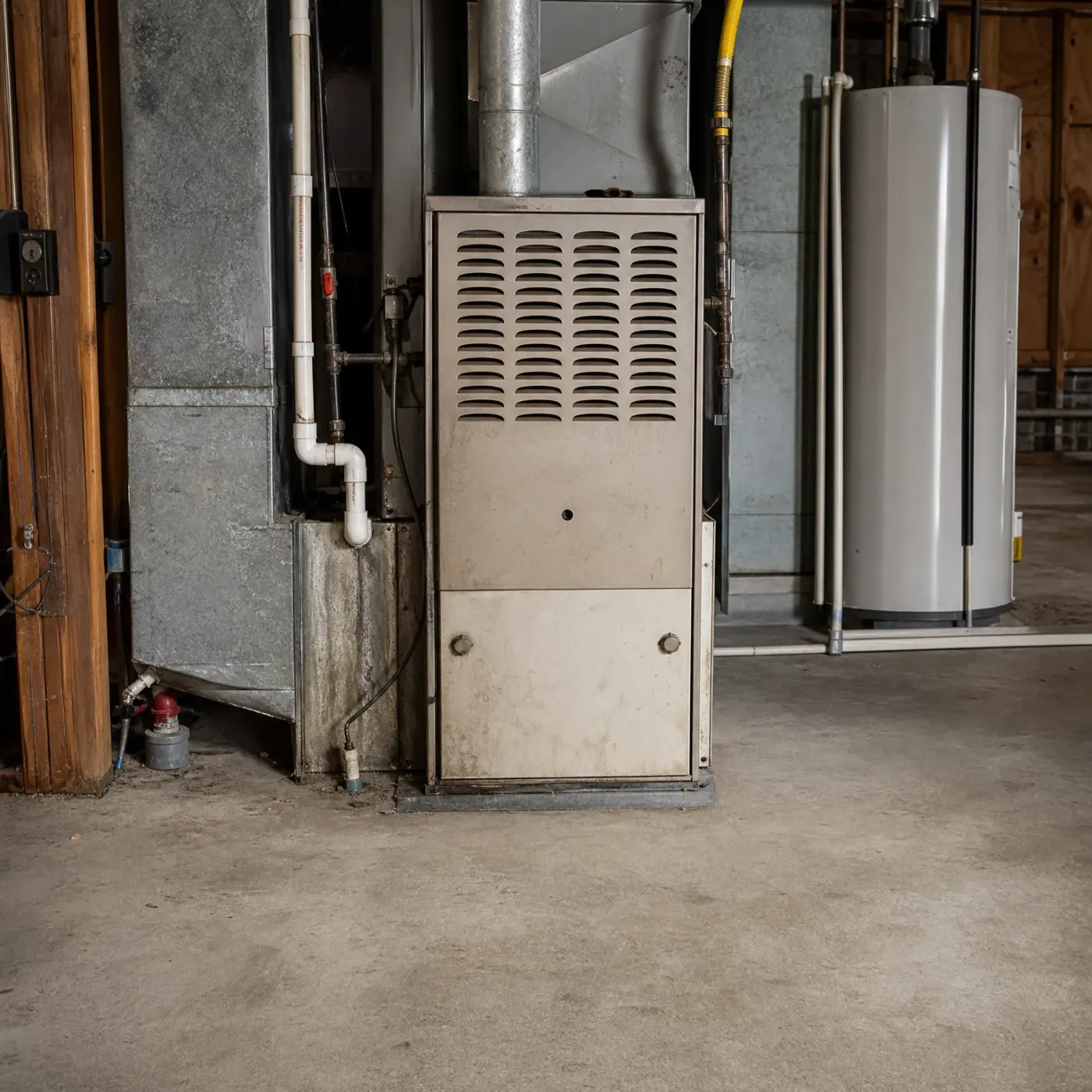
Furnace taking the blame
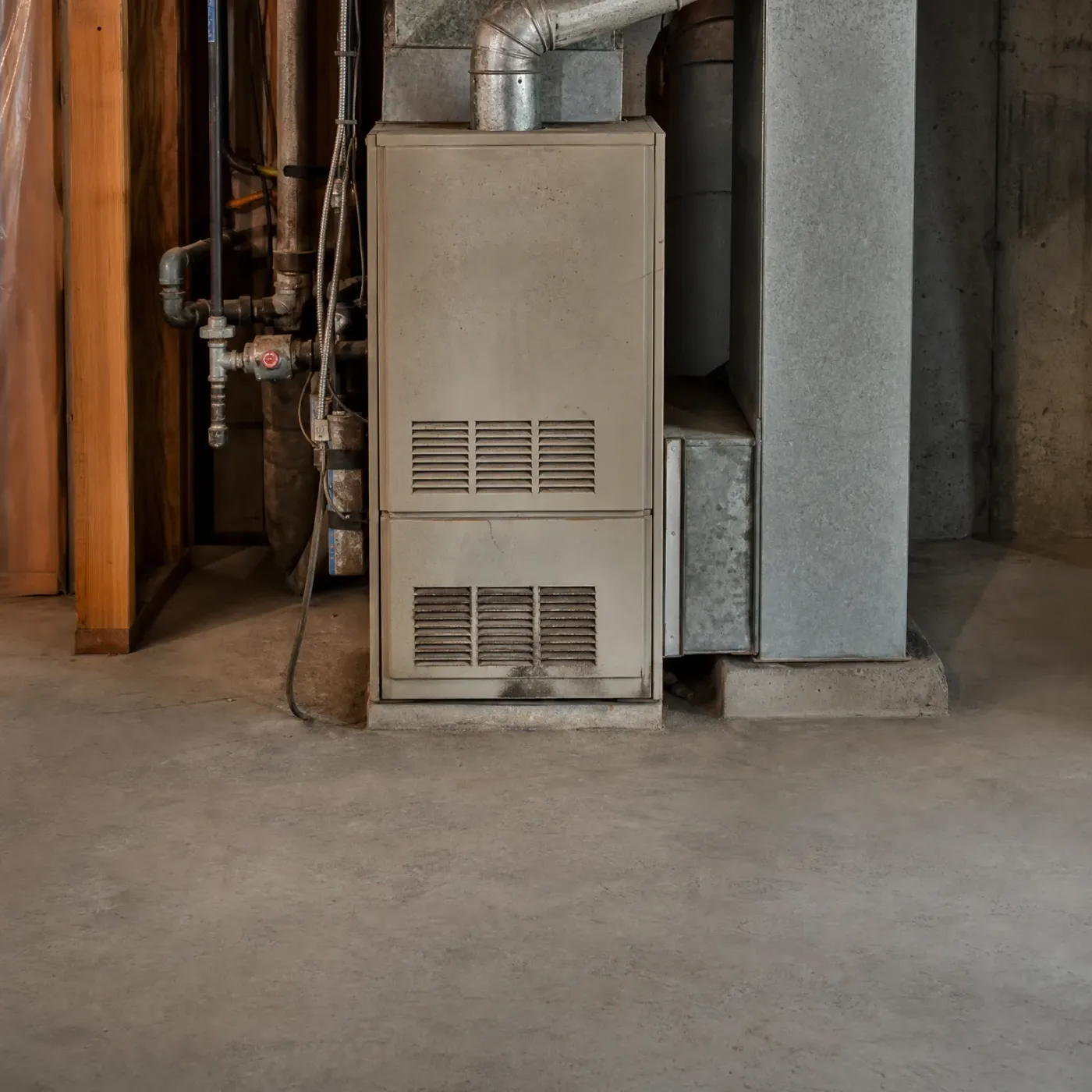
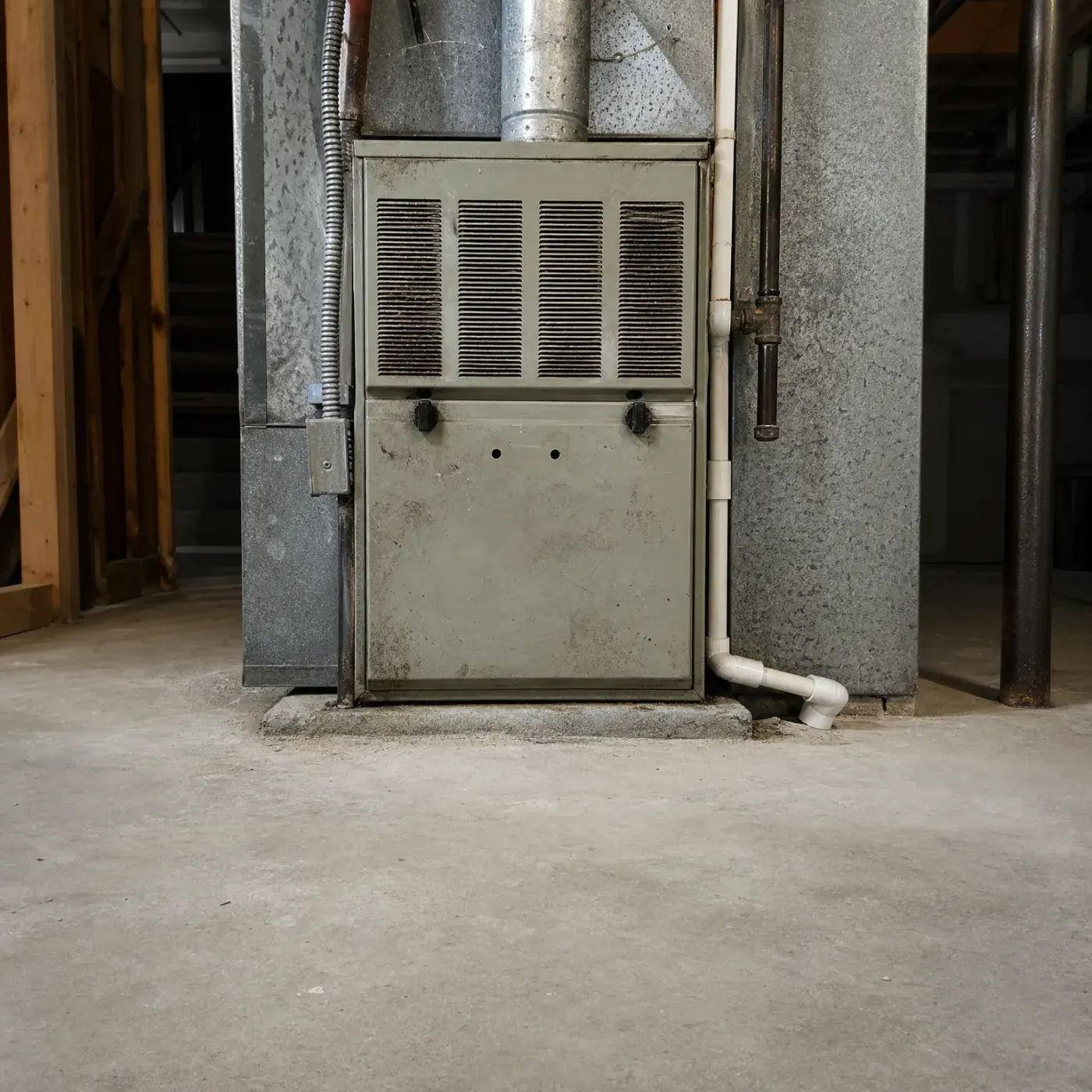
An older furnace gets blamed first because it's the thing making noise and burning gas. But the ductwork running off it is just sheet metal, and sheet metal crushes, separates at the joints, and leaks air into the basement before it ever reaches the hallway. A tech checking this unit still has to trace every run coming off it to find where that one room is actually losing its heat.
Is this the room you keep meaning to fix?
You already know which room it is before you walk in. The air feels still at the vent, maybe barely moving at all even with the furnace running. You've probably checked that the vent is open and the thermostat is set right, more than once. Closing doors doesn't help. A space heater might be doing more of the work than the furnace at this point. If it's a bedroom, someone is sleeping under extra blankets or skipping it in January. None of this means the furnace is failing. It means that room isn't getting its share of the air the furnace is already paying to heat, and the duct carrying it there is losing air somewhere between the furnace and that vent.
Air moves out of every register at close to the same strength, so no single room is working harder to get warm than the rest.
A crushed or disconnected run under the floor is cutting off that one room's air before it ever reaches the vent.
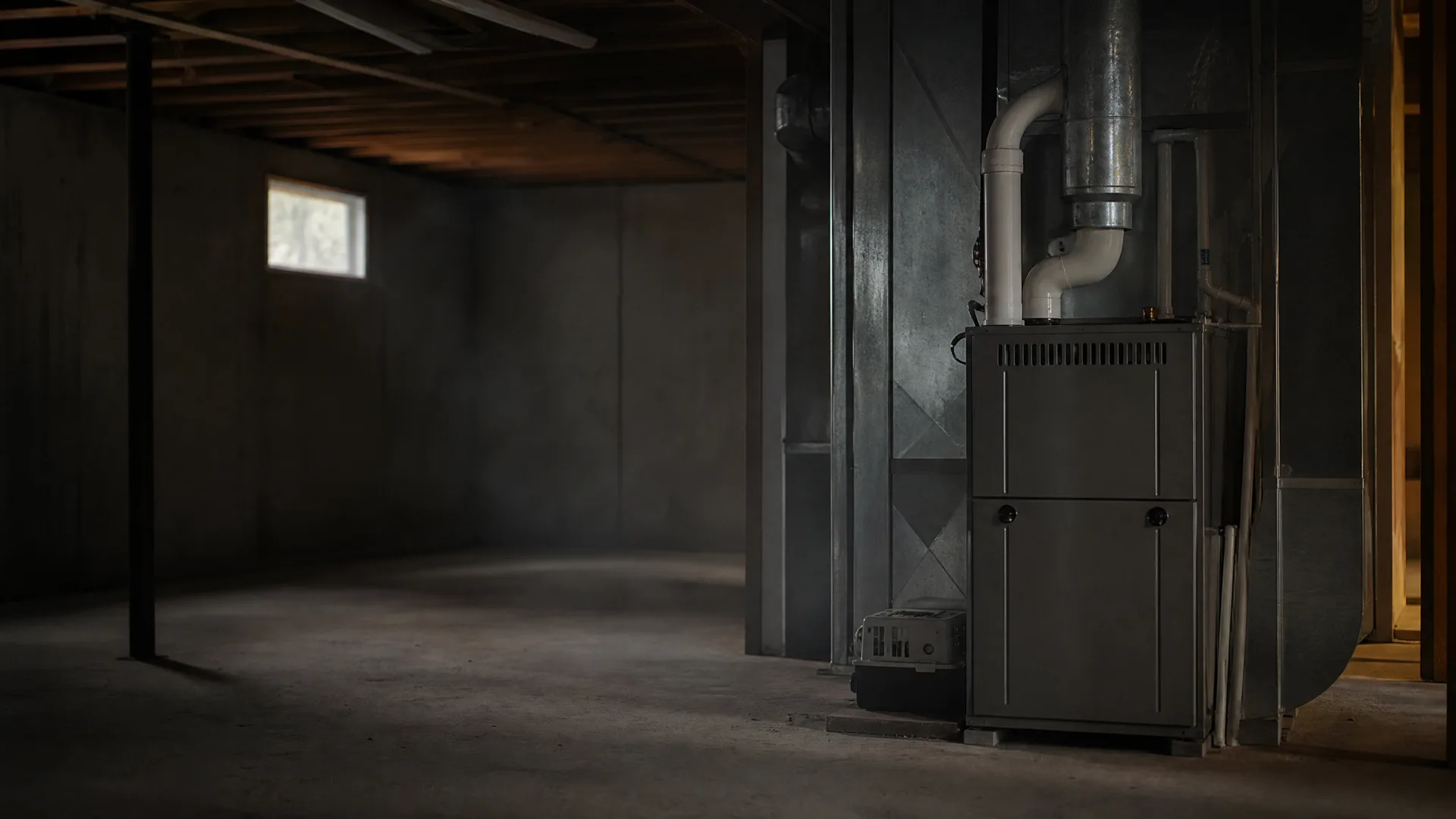
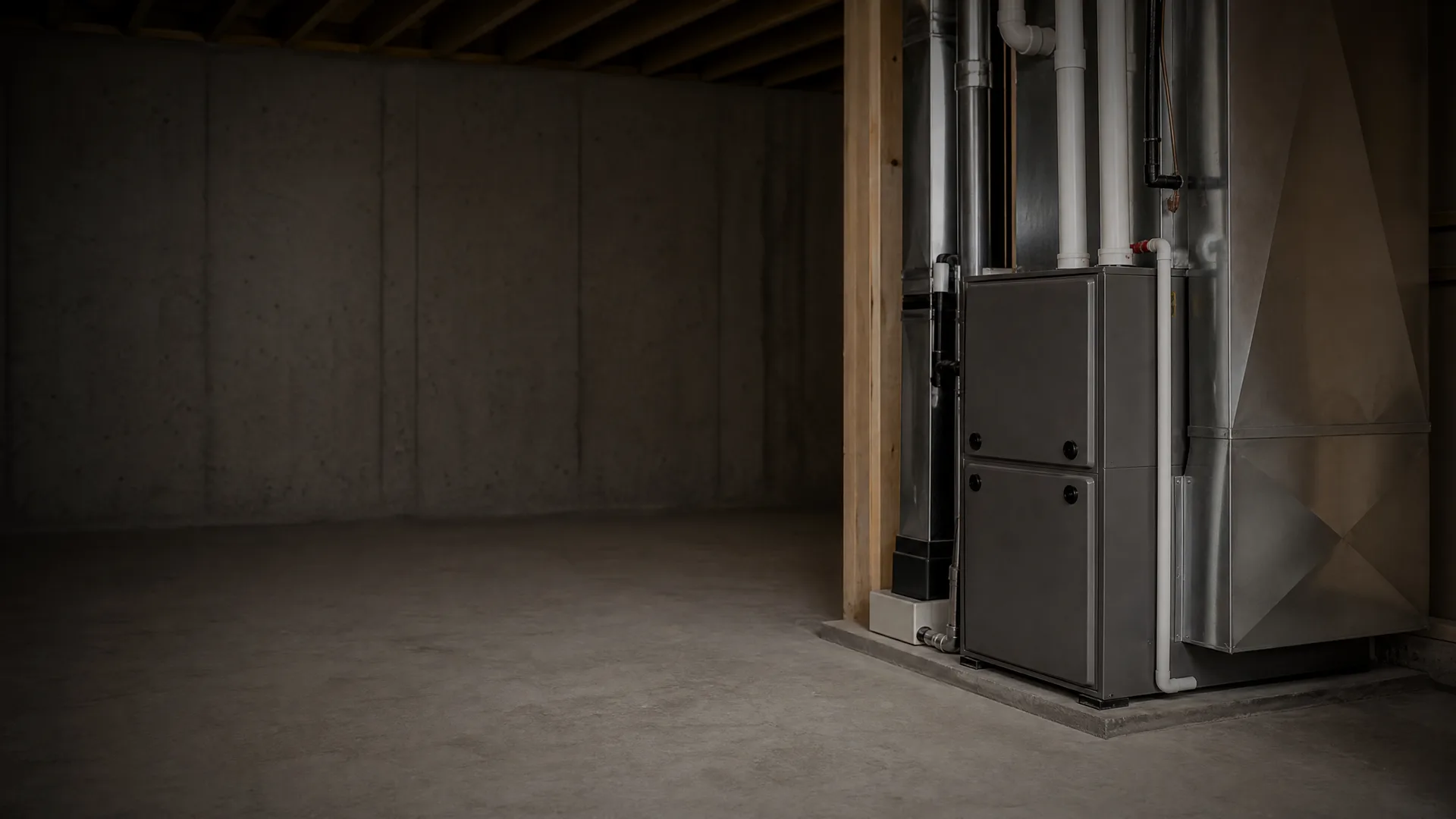
It's past six and dark outside already. You're down in the basement because the bedroom upstairs still hasn't warmed up, and you wanted to see the furnace for yourself. It sits there not running, a little dust hanging in the air near the burner compartment where the light catches it. You can hear the house settling, the kind of quiet a basement has in November. You crouch and look at the ductwork running off toward the far side of the house, trying to guess which branch feeds that cold room, not sure what you're looking for but looking anyway.
A duct problem under a floor or behind a wall isn't something you can see by opening a vent cover, so finding it means finding someone who can trace a supply run and find where it's crushed or leaking, and in Colorado that's a search that turns up a long list of HVAC companies with no way to tell which ones actually chase down duct issues instead of just swapping a thermostat and calling it done. This connects you with one licensed local contractor who works on furnace and duct systems all winter in this area and has seen plenty of rooms that stay cold for the same reasons yours is. You explain the problem once, to the person who's going to look at it, not to a handful of call centers first. No stack of quotes to compare, no repeat calls walking through the same cold room story. Just the one conversation that gets you toward a warm room instead of another winter working around it.
Why that far room loses heat first
A duct run isn't one straight shot from the furnace. It branches, turns, and narrows as it goes, and every bend slows the air down a little. The room closest to the furnace gets first pull at air that's still warm and still moving with some force. By the time that same air reaches a register at the far end of the house, it's covered more distance through more turns than any other run in the system. A small loss at each joint adds up over the length of the run, and the last room on the line feels it most.
What a leak or crush costs that room
A gap at a duct joint doesn't just slow the air down, it lets warm air escape into the crawlspace or attic before it ever reaches the vent. A crushed section does something similar by cutting the opening the air has to pass through, so less of it gets through no matter how hard the furnace runs. Either way, the room at the end of that run is working with whatever air survived the trip. You can raise the thermostat all you want. If the air isn't reaching the vent, the room won't catch up.
Winter nights average 16°F statewide
Overnight lows average 16°F across Colorado in December, January and February. That's the air moving through your ducts on its way to that back room, and any heat lost along a crushed or leaky run shows up fastest on nights that cold.
NOAA nClimDiv 1991-2020 county normals weighted by homes
Before you get your furnace repairAfter you get your furnace repair
Winter nights in Colorado average 16°F across the state, National Weather Service data shows. Your furnace has to push air past that cold the whole way to the end of the duct run, and a crushed or leaky section along that path loses more heat the harder the furnace is working to make up for it. That's why the cold room shows up worse on the coldest nights and better on a mild afternoon, even though the duct damage itself hasn't changed. The furnace isn't failing. It's losing the fight on one run before the air gets where it's going.
NOAA nClimDiv 1991-2020 county normals weighted by homes
One Cold Room, One Fix
A cold room at the end of a duct run almost always traces back to a crushed, disconnected, or leaky section, not the furnace itself.
Finding the exact spot means tracing the run under the floor or behind the wall, work that needs someone who does this on Colorado systems all winter.
A local contractor licensed to do this work already knows which duct runs in homes like yours tend to fail first.
You get matched to one contractor for this job, so you're not fielding calls from several companies while that room stays cold.
Once the duct section is found and repaired, air should reach that room at the same strength as the rest of the house.
Overnight lows near 16°F mean a loss along that run shows up fastest in the room farthest from the furnace.
The answer hasn't changed since the top of this page. A room that won't warm up while the rest of the house is fine is a duct problem, almost always a crushed, disconnected, or leaky section somewhere along that run. The furnace is doing its job. The air just isn't making it all the way to that register at the strength it should.
Finding the exact spot takes someone who can trace a supply run under a floor or behind a wall and knows where to look first. That's not guesswork for a contractor who works on Colorado systems every winter. They've seen which runs tend to fail in homes built like yours, and that shows in how fast they find the problem instead of opening up every section between the furnace and that back bedroom.
You get matched to one contractor, licensed and local, so this doesn't turn into a string of calls back and forth with several companies while that room sits cold. One person looks at the run, finds where it's losing air, and repairs that section.
Once the fix is made, air should move through that register the same way it does everywhere else in the house. No more shutting vents in other rooms to force warm air down the hall. No more space heater in the corner. Just that room, heating like the rest of them, even on the nights that drop to 16 degrees.
Describe it once
Only one pro gets your request, so you hear from one company.