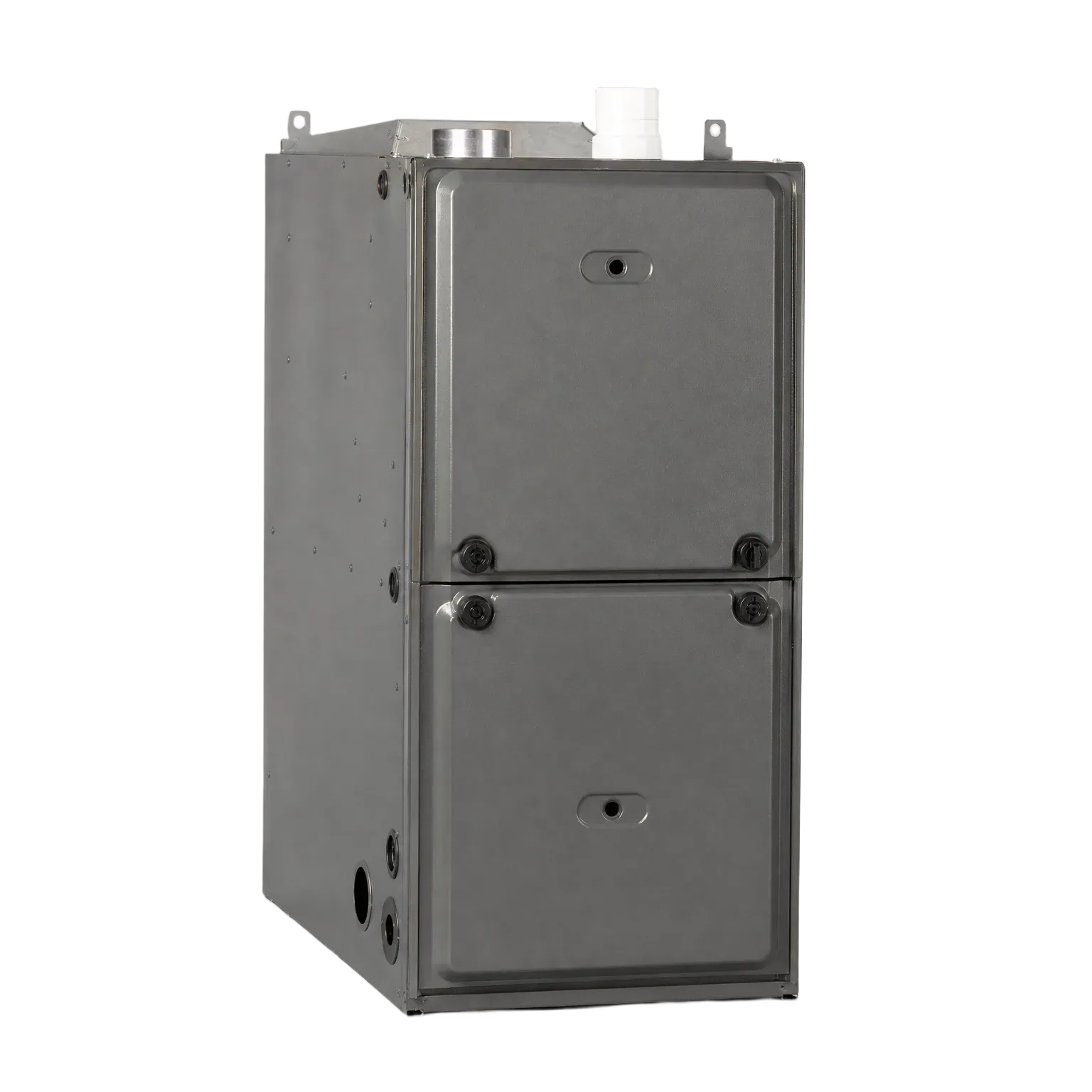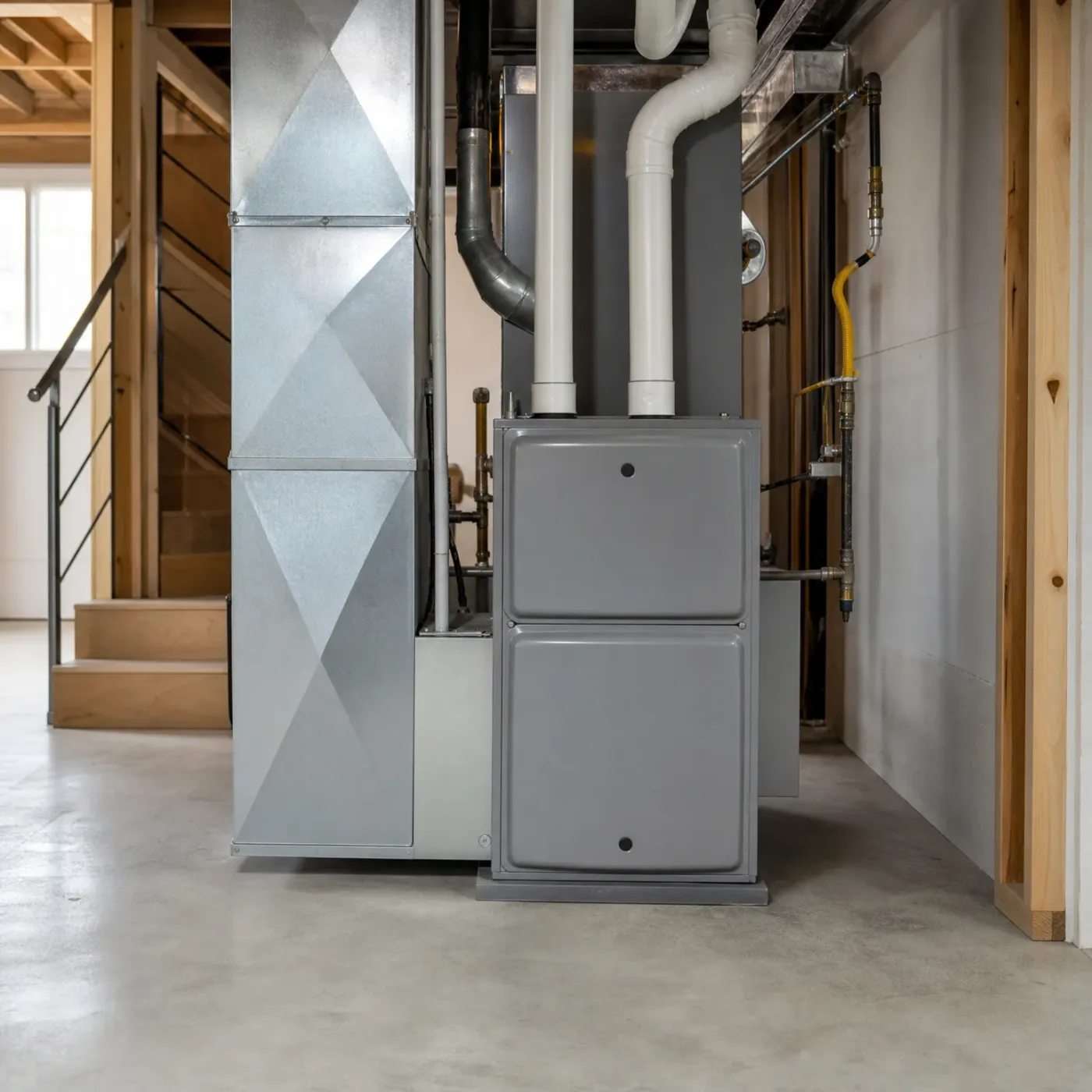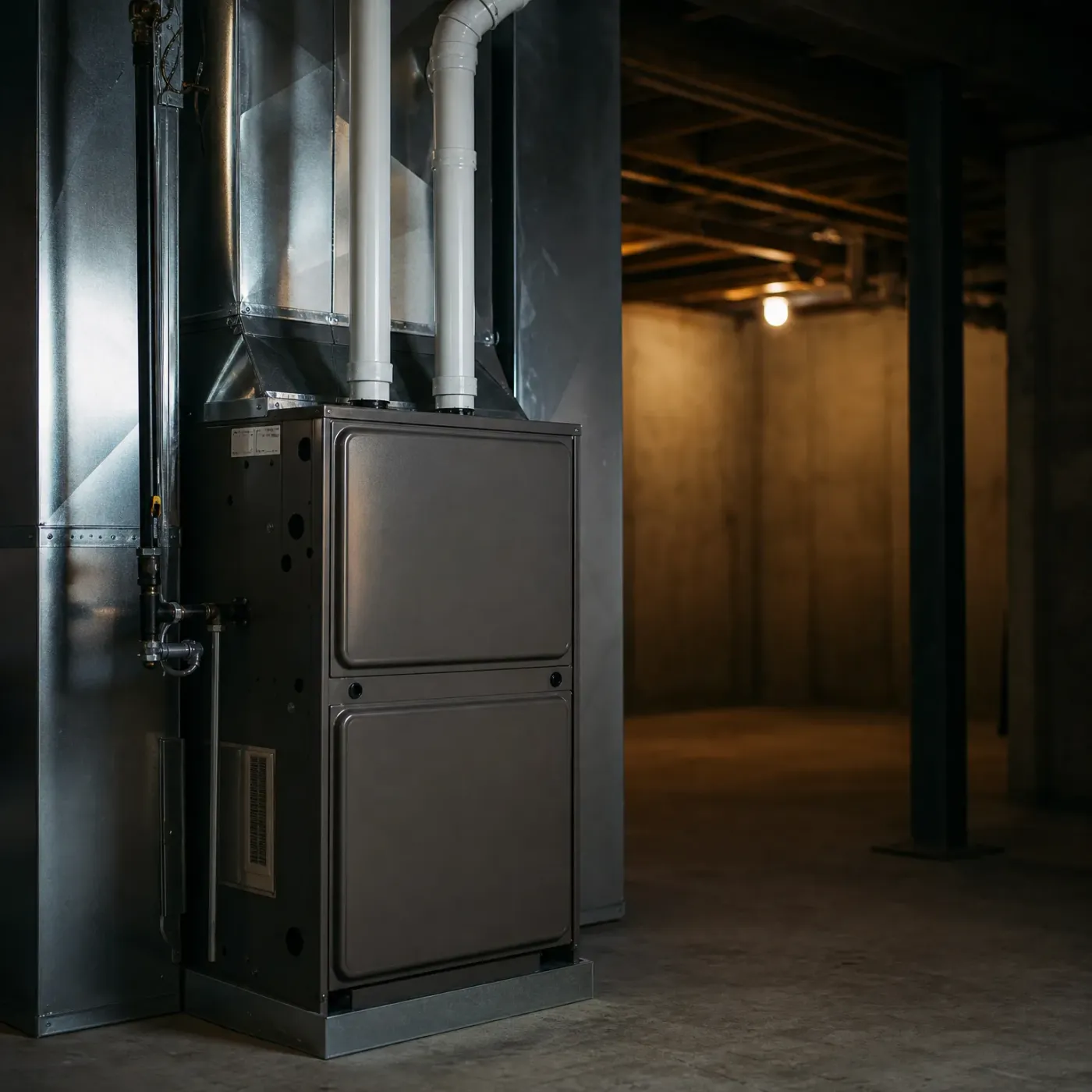

A gray high-efficiency furnace with two white PVC vent pipes stands beside galvanized sheet-metal ductwork in a dim basement with exposed joists and a concrete floor.

Stop chasing a furnace pro

What a furnace tune-up covers before a Colorado winter

A tune-up before winter checks the parts that let your furnace run safely through the cold, like the igniter, the flame sensor and the heat exchanger, and clears out what built up since last spring. This page walks through what gets checked and why. Send the form once and skip the calling around to find someone before the cold sets in.

Hand it off

A furnace tune-up before winter is a technician going through your furnace while it's still mild out, checking the parts that keep it running safely once the cold sets in. That means the igniter and flame sensor, which decide whether the burners light and stay lit, the heat exchanger, which can crack and leak carbon monoxide into your house if it's never been inspected, and the blower and filter, which move the warm air through your ducts. It also means cleaning out the dust and debris that built up over a Colorado summer of not running at all. None of this is urgent in September. It matters in December, when a furnace that skipped its check is the one most likely to stop working on the night you need it most, and the one hardest to get a technician to on short notice.

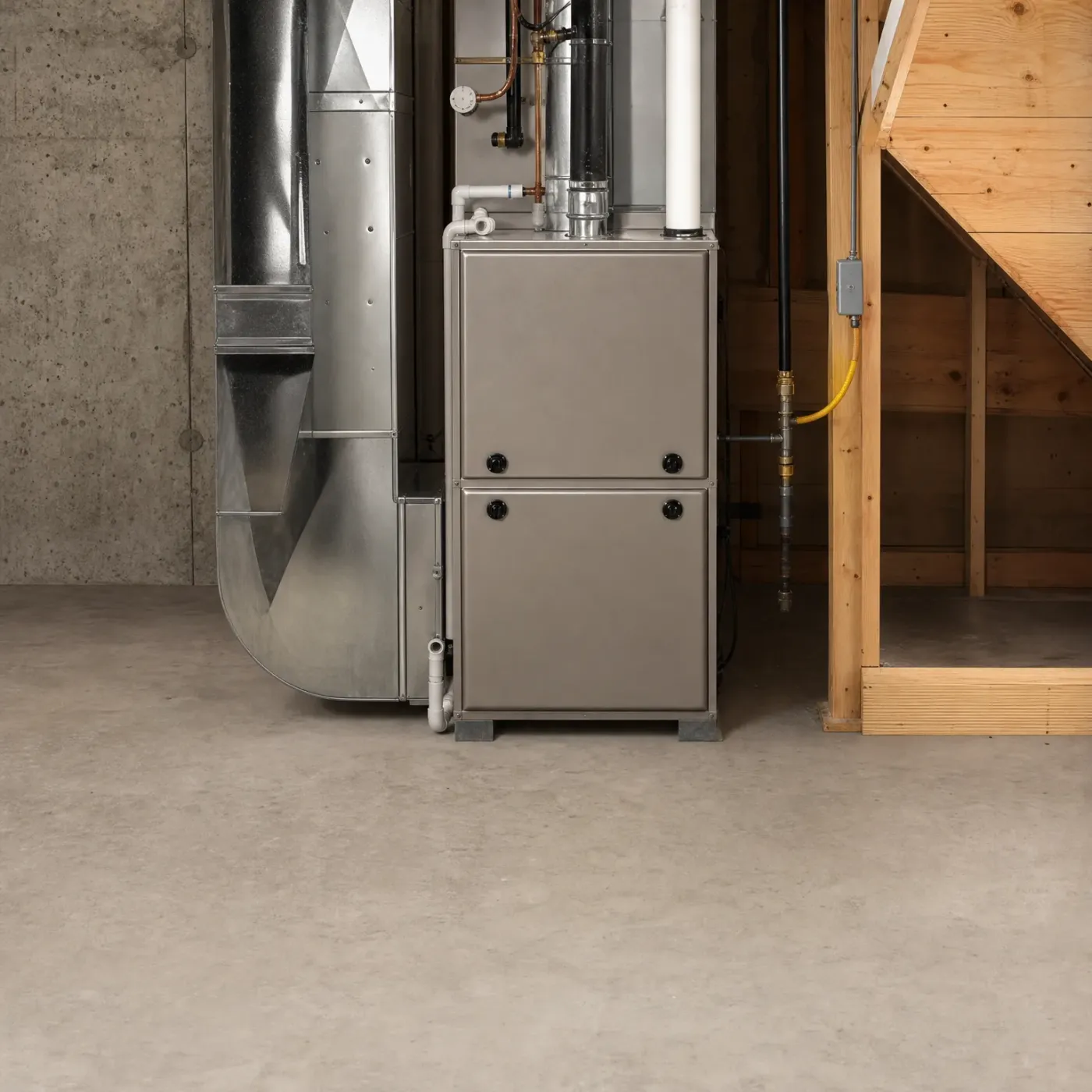
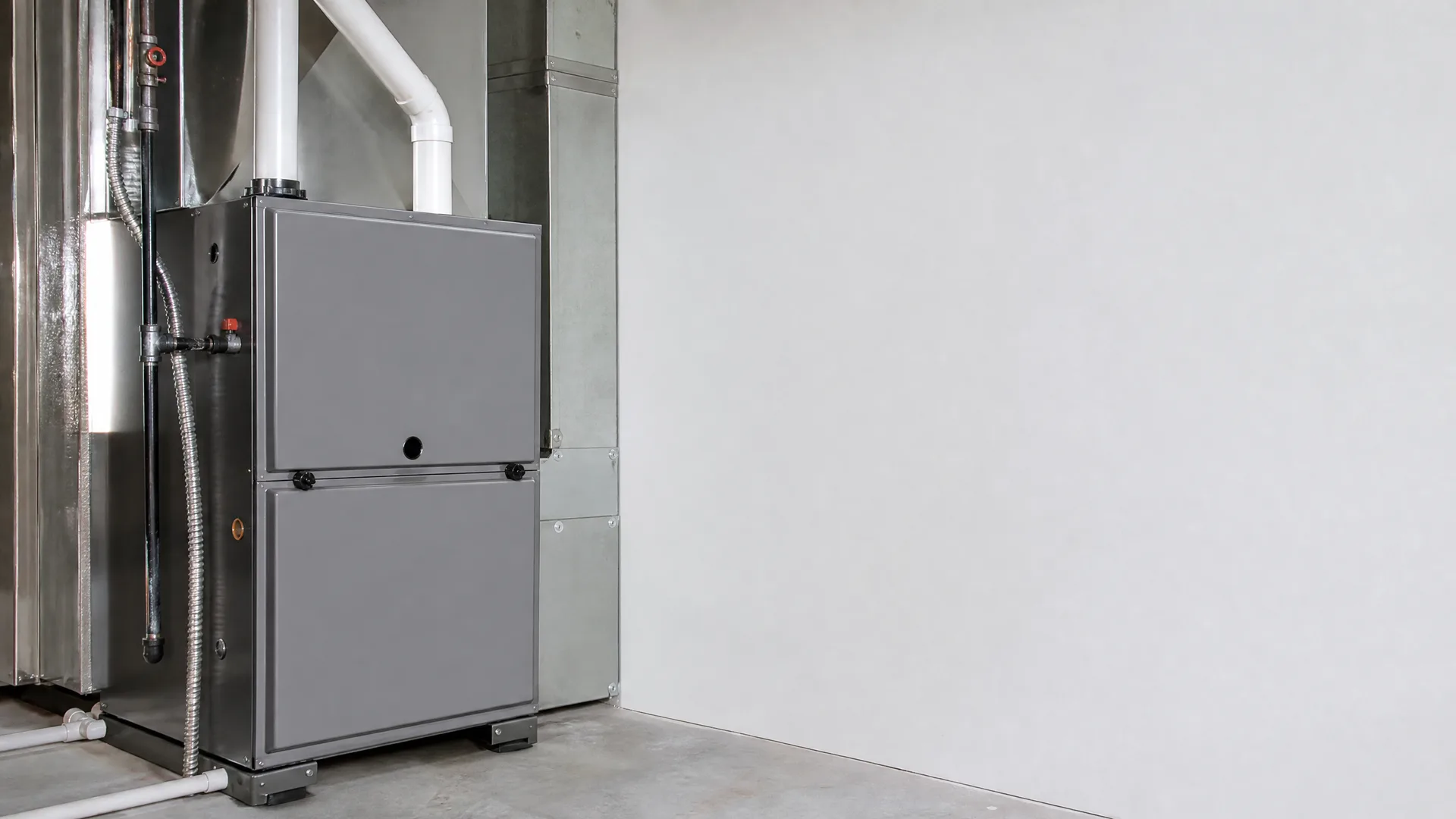
A gray high-efficiency furnace with two access panels stands in a bare basement corner, connected to sheet-metal ductwork, white PVC vent pipes, and flexible gas and electrical lines.

The heat exchanger gets checked for cracks

A cracked heat exchanger can let exhaust leak into the air your furnace blows through the house. A technician looks it over with a light or a camera, because a crack isn't always visible from the front. This is the part that matters most in a safety check, and it's also the one you can't see or test yourself. If it's cracked, the furnace needs to stay off until it's replaced.

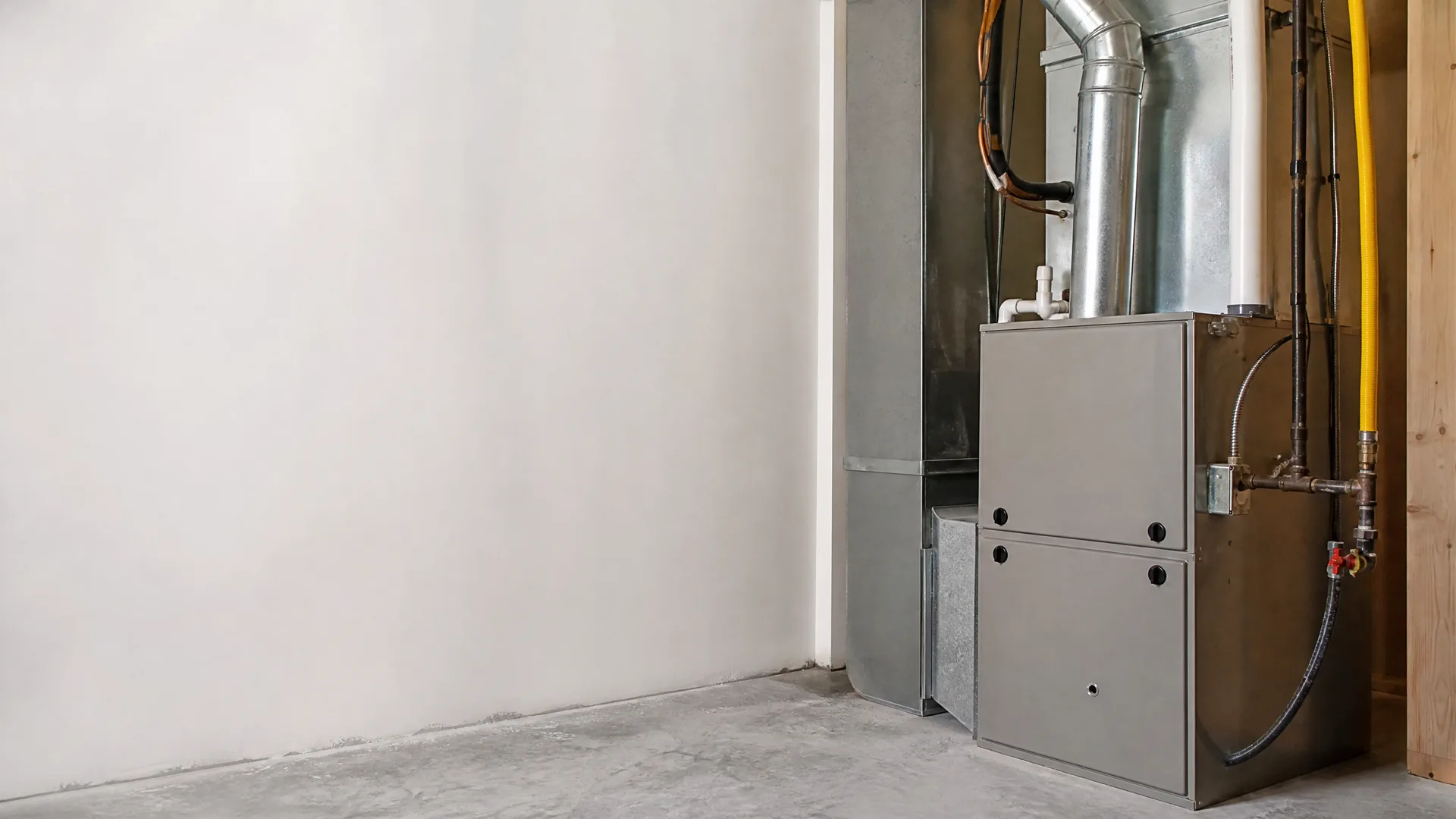
A gas furnace with metal ductwork, copper and yellow gas piping stands against a wall in an empty room with a bare concrete floor.

The burners and igniter get cleaned

Dust and lint settle on the burners over a summer of sitting unused. That buildup can make the flame burn uneven, which throws off how the furnace heats and can trip the flame sensor into shutting the burners down. Cleaning the burners and checking the igniter's connection is routine work, but skipping it is why some furnaces short-cycle or won't light at all on the first cold morning.

A closed silver laptop and a glazed ceramic mug on a wooden table, with a blurred kitchen counter, potted plant, cutting board and window in the background.

If your furnace waits until January to fail

A furnace that's been skipped over since last winter is the one most likely to quit on a night when it's below zero outside. That's usually the week every other furnace in your part of Colorado is doing the same thing, which means a longer wait for anyone to come look at it and a house losing heat the whole time. A tune-up before the cold sets in catches a weak part while it can still be scheduled instead of begged for.

There's also the air itself. A furnace that isn't drafting right or has a cracked heat exchanger can put exhaust into the air moving through your house, and you won't smell it. Checking that in October costs you an afternoon. Finding it out in February costs you a lot more. Send the form once and the search for who's available, who answers, who's licensed, and who can actually fit you in is off your plate. Someone qualified gets matched to you instead.

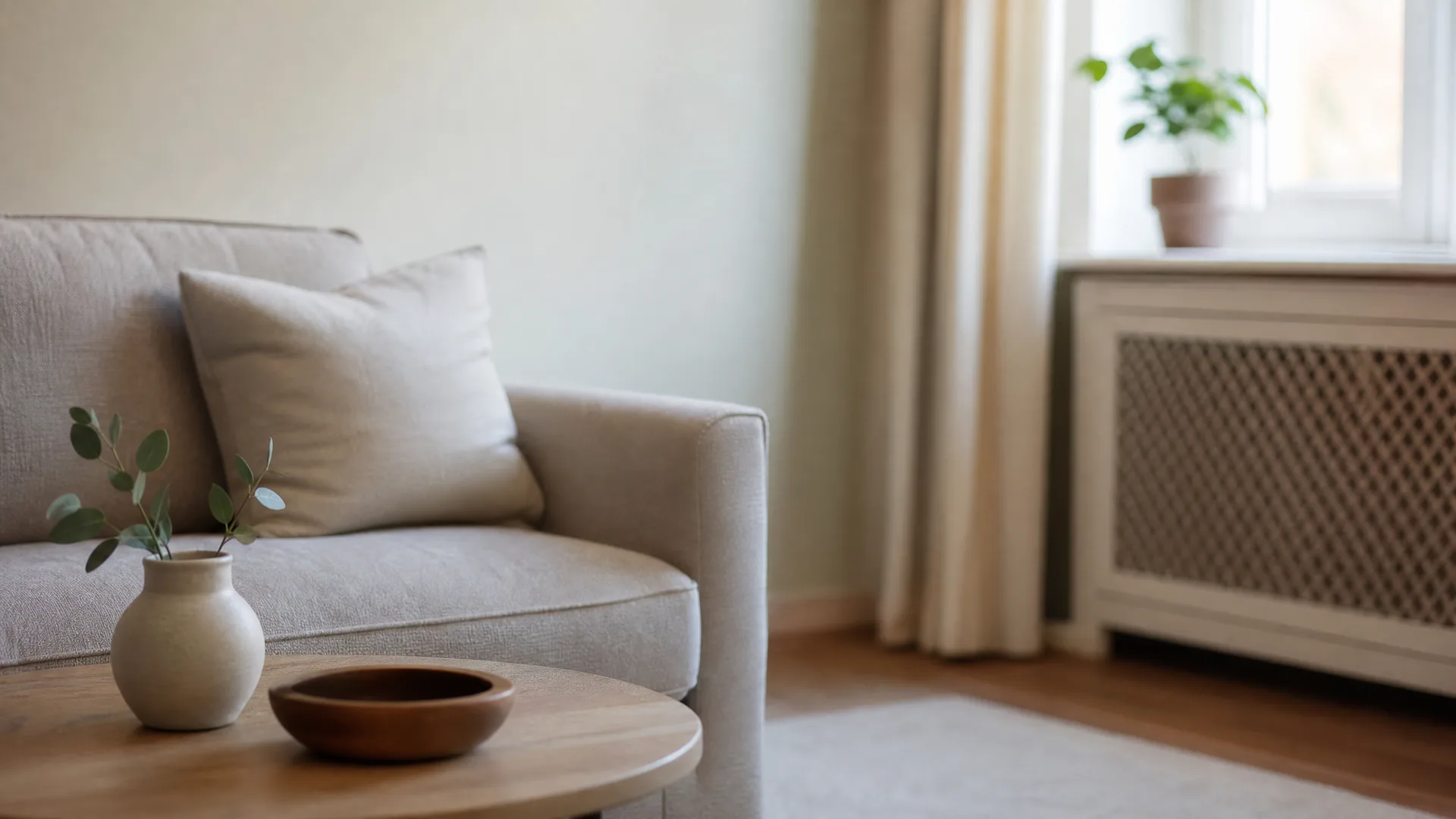
A living room corner with a beige sofa and cushion, a round wooden coffee table holding a pale ceramic vase of eucalyptus stems and a wooden bowl, and a curtained window with a potted plant above a latticed radiator cover in the background.
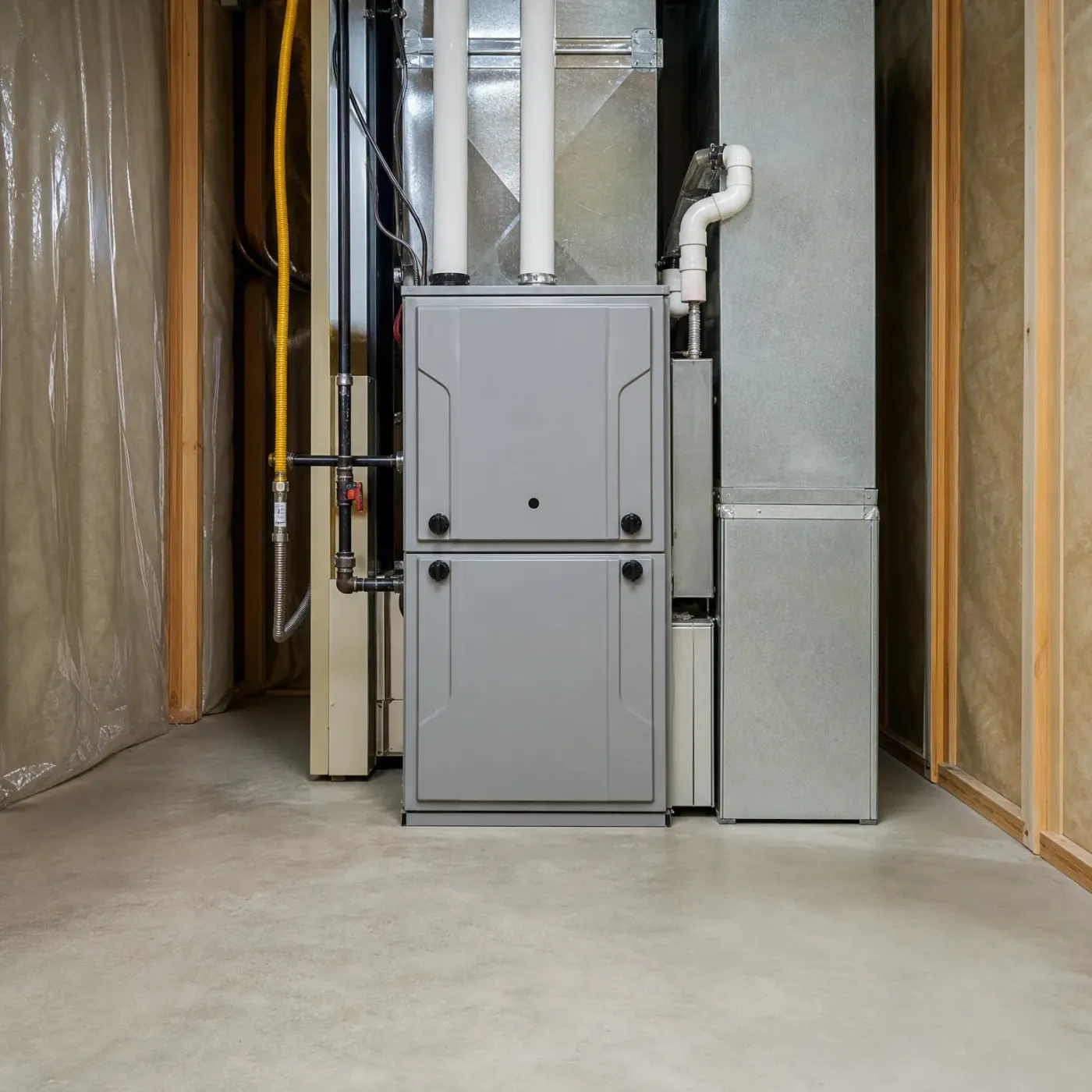
A gray high-efficiency furnace with white PVC vent pipes stands in an unfinished basement beside sheet-metal ductwork, gas piping, and insulated stud walls on a concrete floor.

Checked before the cold hits

This furnace is running the way it should. Its igniter lights the burners on the first try, the flame sensor confirms they're burning clean, and the condensate line drains the way it's supposed to. A tune-up catches a weak part here while it's still an easy fix.
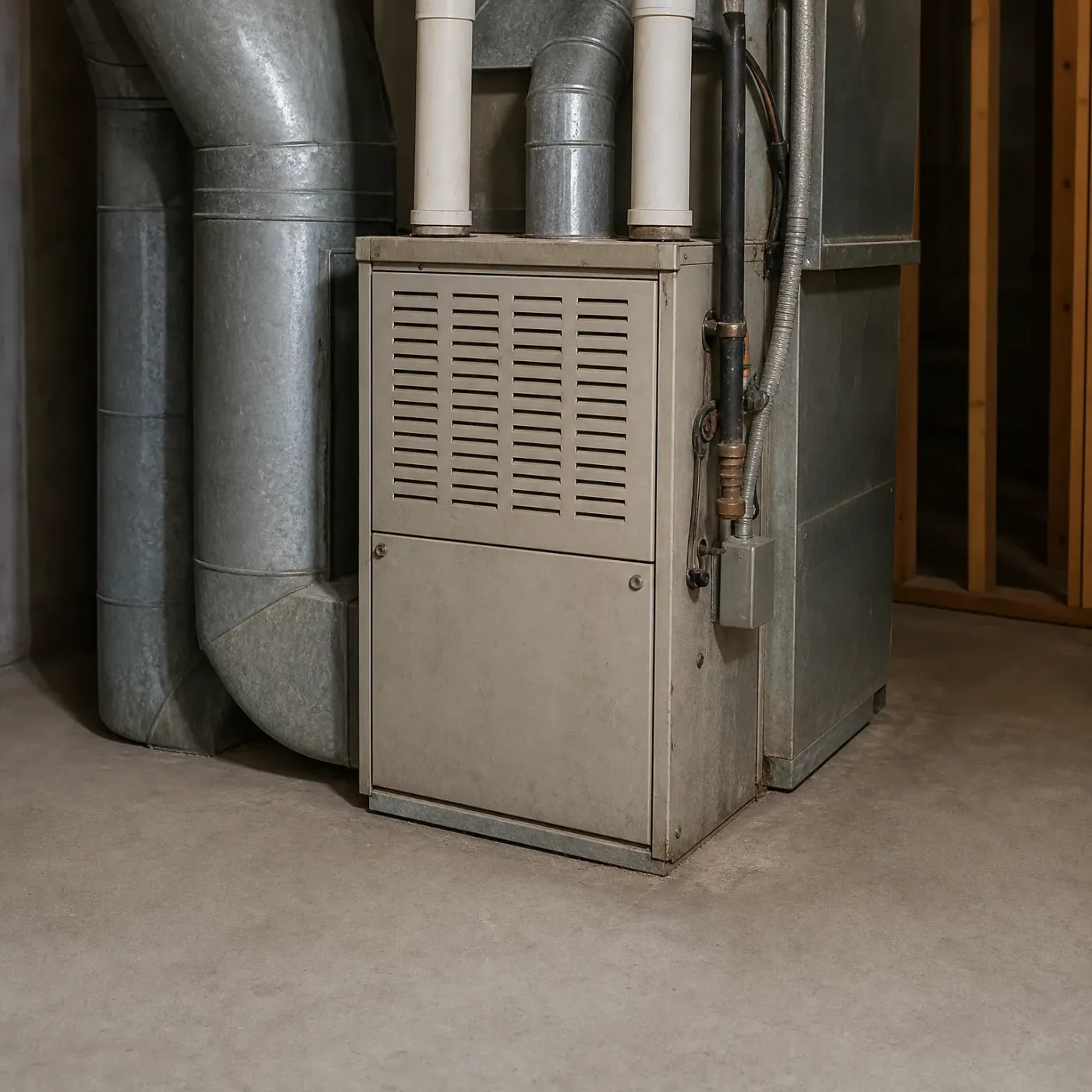
A beige sheet-metal furnace with a louvered upper panel stands on a concrete basement floor, connected to galvanized ductwork, white PVC vent pipes, and a metal gas line with an electrical box.

Left alone until it fails

This furnace was never looked at going into winter, and it shows. Rust on the cabinet, ductwork that's worked loose, a burner that's struggling to stay lit. By the time it quits, you're not calling around in October. You're doing it at ten below, same as everyone else on your street.

A man in a blue sweatshirt reclines with closed eyes in a brown leather armchair in a living room with a bookshelf, houseplant, sofa, window, and a side table holding newspapers and a dark mug.
A bearded man in a gray pullover reclines with closed eyes on a brown leather sofa in a sunlit room with a window, framed picture, potted plant, and a wooden cabinet holding papers and a dark mug.
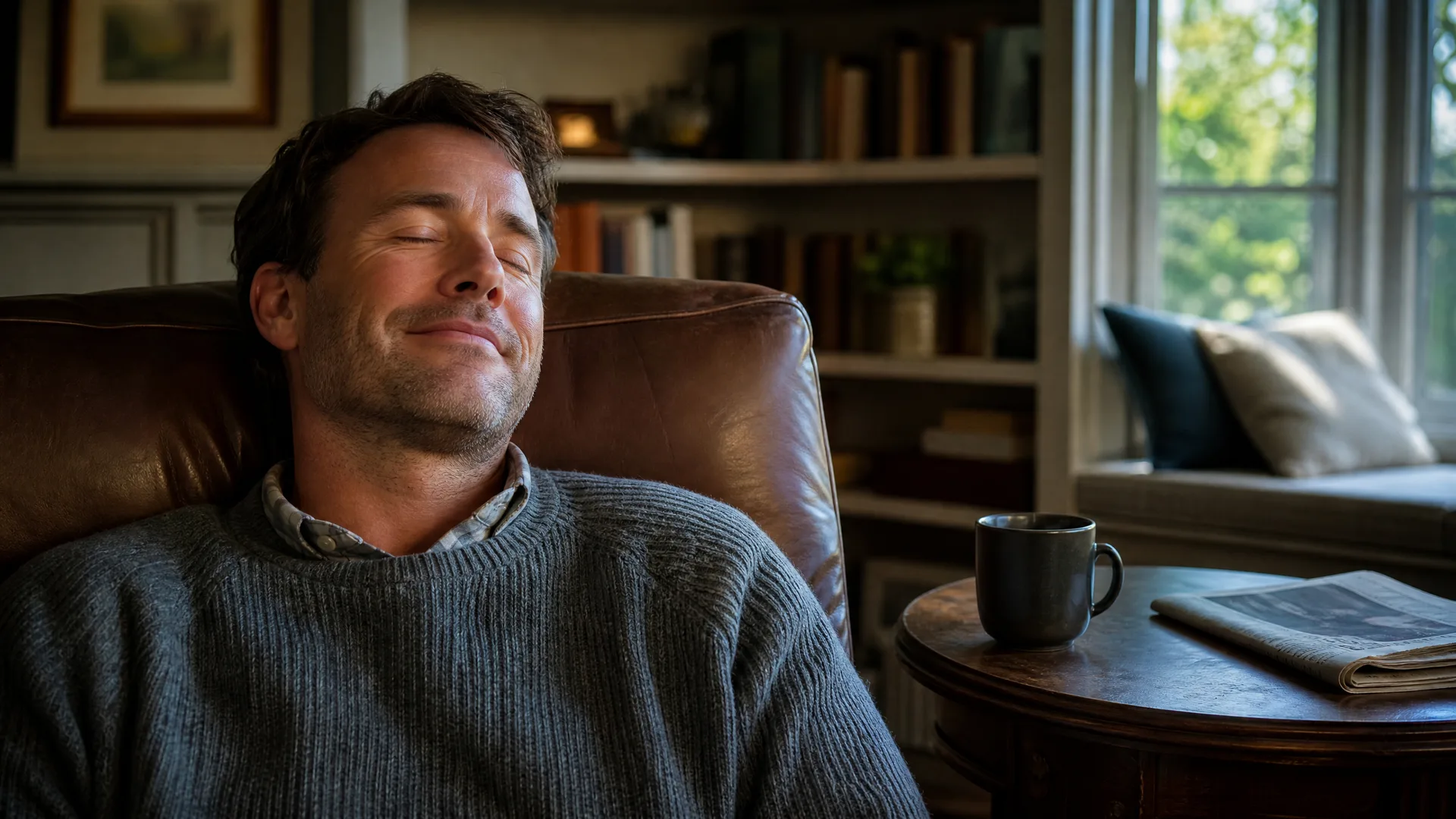
A man in a gray sweater leans back with closed eyes in a brown leather armchair beside a wooden side table holding a dark mug and a folded newspaper, with bookshelves and a window seat behind him.
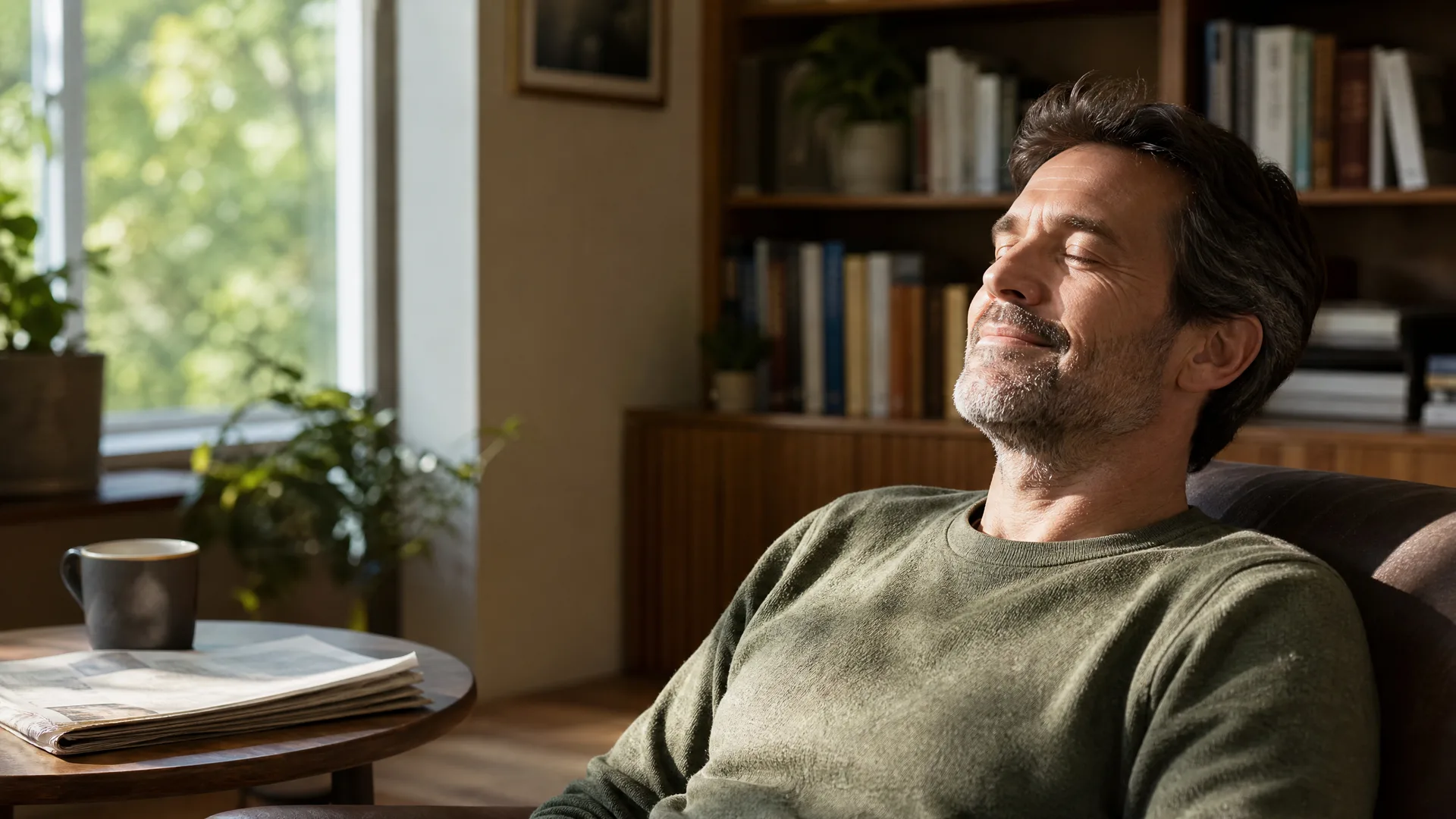
A man in a green sweater reclines in an armchair with his eyes closed and a slight smile, beside a window with plants, a small table holding a mug and folded newspaper, and bookshelves behind him.

Send one request and you're done looking

One form instead of hunting for a pro who does furnace tune-ups.

No fee to send it, and nothing to sign.

Book it now, before it's cold

Scheduling a tune-up while it's still mild out means you get a time that works for you. Nobody's in a hurry, the furnace is running fine, and a technician can go through it without rushing to get your heat back before dark. If something does turn up, like a cracked heat exchanger or a flame sensor that's wearing out, there's time to deal with it before you actually need the furnace running every day. You're not calling around while it's fifteen degrees outside and every other homeowner in your part of Colorado is doing the same thing.

Wait, and hope nothing's wrong

Skip the tune-up and the furnace runs anyway, right up until it doesn't. Most years it probably starts fine. But a furnace that hasn't been looked at since last winter is the one more likely to fail on a cold night, and when it does, you're searching for a contractor who has an opening, not the one you'd have picked with time to spare. You lose the choice of when the work gets done and who does it. The furnace itself doesn't care which way you go. The timing is the only thing that changes.

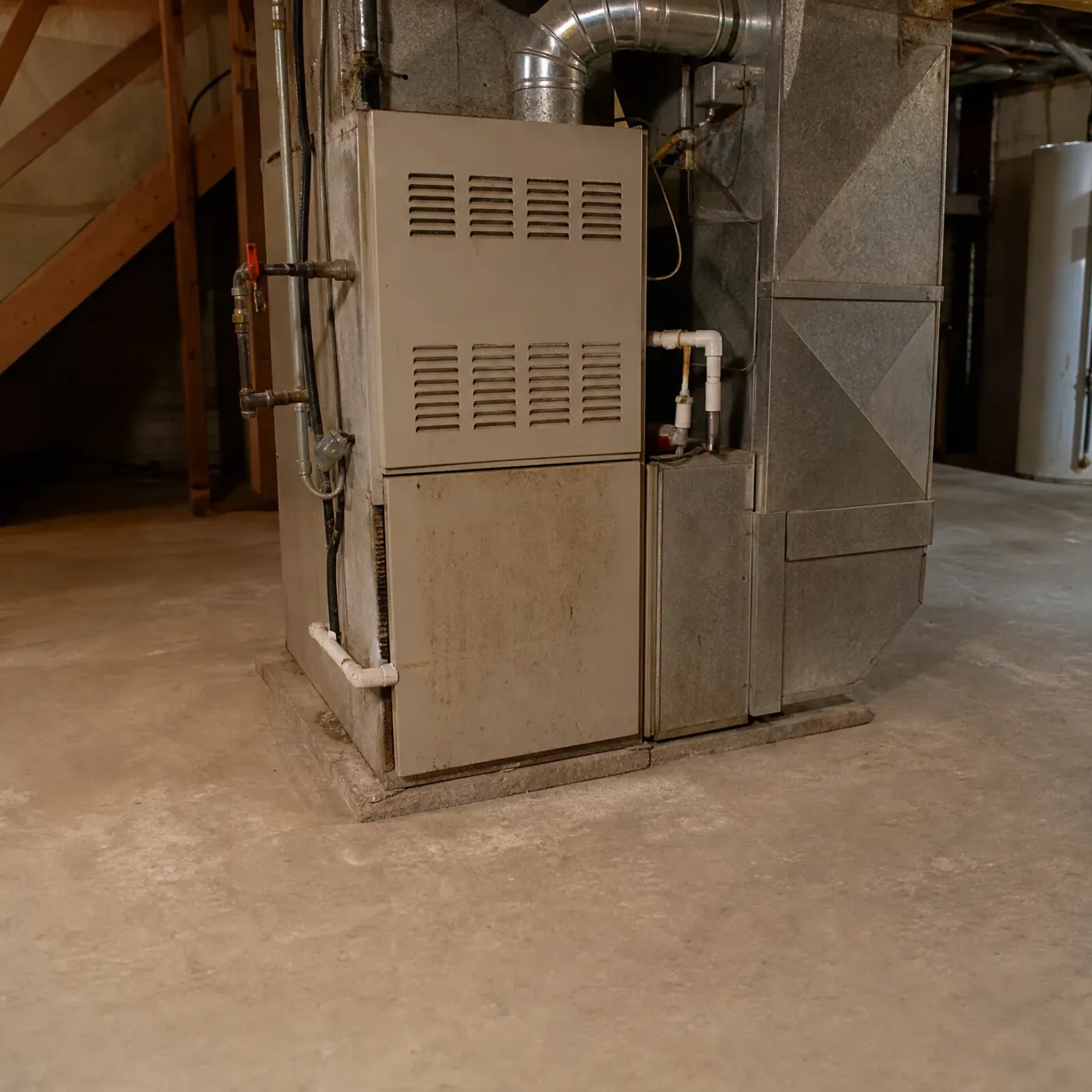
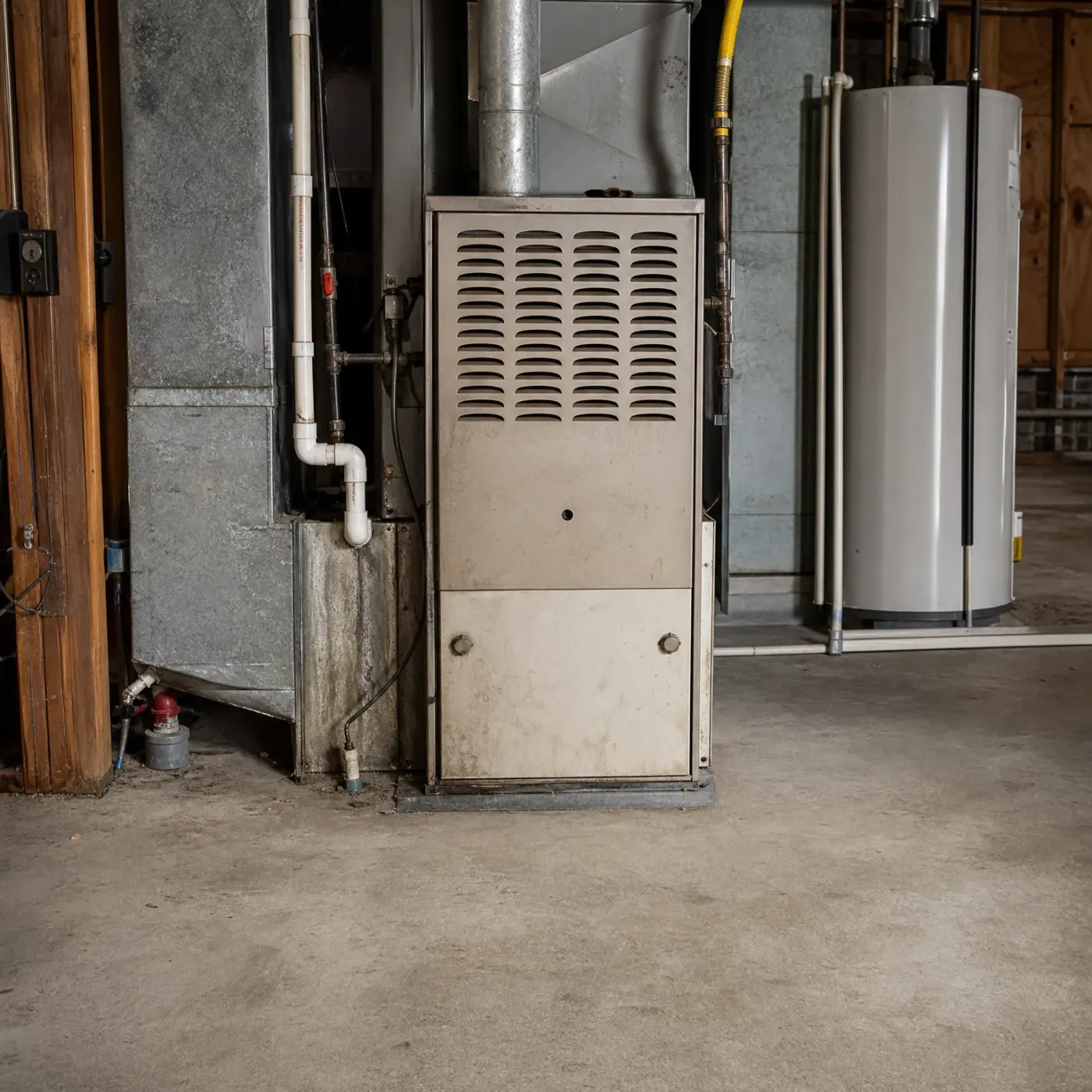
An older gas furnace with louvered panels sits on a concrete pad in a basement, connected to sheet-metal ductwork and PVC and metal pipes, with a water heater and wooden stair framing in the background.
Before you get your furnace maintenance
A gray high-efficiency furnace with white PVC vent pipes stands beside galvanized sheet-metal ductwork in a basement with a concrete floor, with a wooden staircase and railing at left.
After you get your furnace maintenance
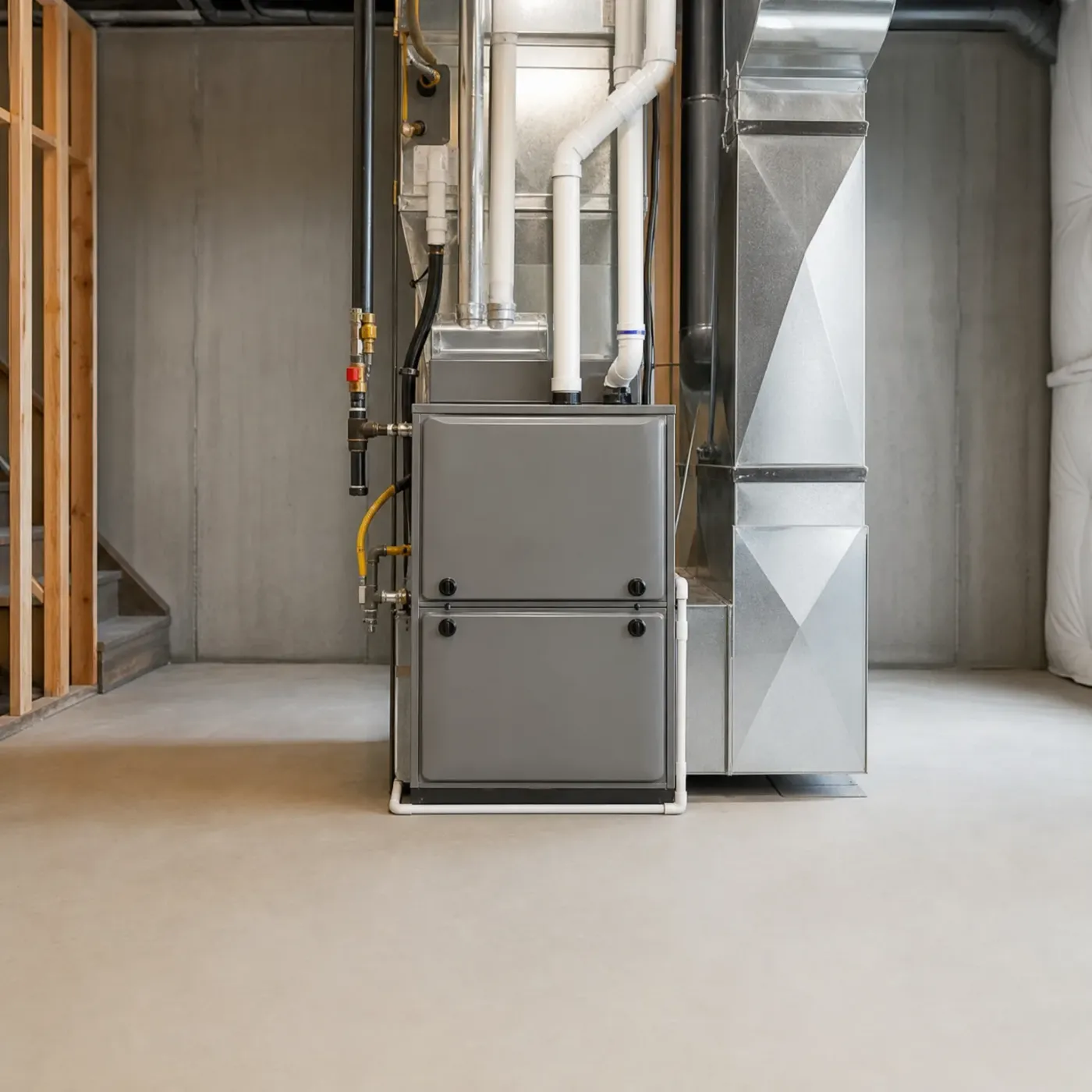
A gray furnace with sheet-metal ductwork, PVC vent pipes and a yellow gas line stands on a concrete basement floor beside wooden stair framing.

Running clean

This is a furnace that got looked at before the cold set in. The burners light on the first try, the flue pipe and gas line are both sound, and nothing is working harder than it has to. A technician already found the small stuff, so there isn't any.

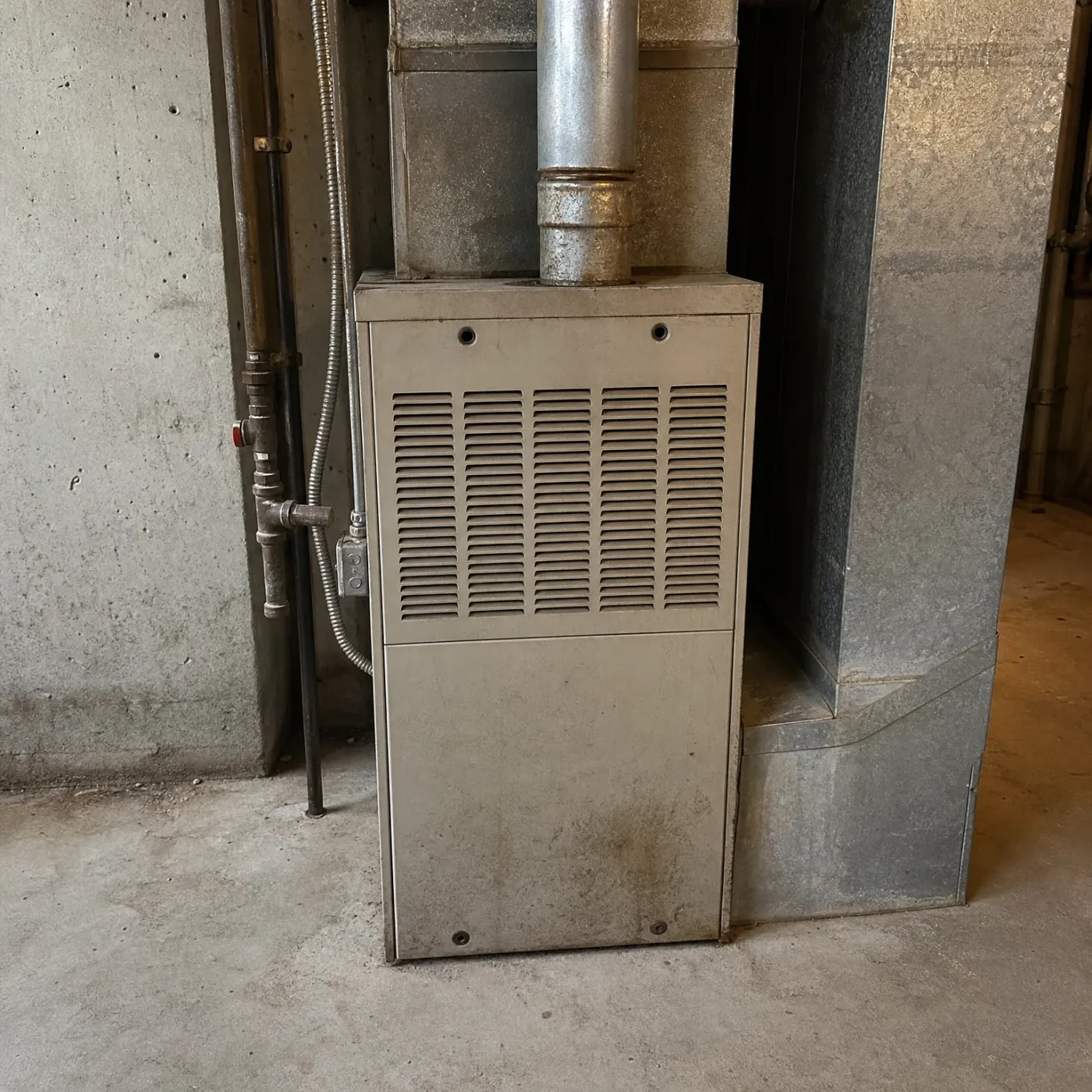
An older gas furnace with a louvered front panel stands on a concrete basement floor beside galvanized sheet-metal ductwork, a metal flue pipe, gas piping and a flexible conduit along a concrete wall.

Left to chance

This furnace hasn't been touched since last winter. The ductwork and gas piping are doing their job for now, but nobody's checked the burner, the exchanger or the flame sensor since the last cold snap. Whatever's quietly going wrong in there is still going wrong.

Winter nights average 16°F statewide

At 16 below to near zero most winter nights, your furnace can't cycle on and off a few times a day and call it done. It runs long stretches to hold the house warm, which is exactly when a weak igniter or a dirty flame sensor shows itself.

NOAA nClimDiv 1991-2020 county normals weighted by homes

A gray high-efficiency furnace in a basement with PVC venting pipes, a yellow gas line, metal ductwork, concrete walls and floor, and a wood-framed stairway at left.
A furnace like this fires on the first call for heat and runs clean through a stretch of single digits without quitting.
A beige furnace with a louvered front panel and metal ductwork stands on a concrete basement floor beside pipes and a white cylindrical water heater.
This one has louvered vents and a water heater crowding it, and nobody has opened it up since it last ran.

What a tune-up settles before winter

  • A tune-up checks the igniter, flame sensor, heat exchanger and condensate line before temperatures drop.
  • Furnaces skipped since last winter are the ones most likely to fail on a night near zero or below.
  • Scheduling while it's mild means a technician can work through the furnace without a rush to restore heat.
  • A clean, checked furnace fires on the first call for heat and holds up through long stretches of single digits.
  • Finding a contractor, comparing quotes and explaining the problem over and over is work this page takes off your plate.
  • Once the form goes in, locating someone to do the work stops being something you have to handle.

A furnace tune-up before winter comes down to a technician confirming the parts that matter are doing their job while there's still time to fix what isn't. The igniter has to light the burners on the first call for heat, not the third. The flame sensor has to confirm clean combustion so the furnace doesn't shut itself down mid-cycle. The heat exchanger has to be free of cracks, since that's what keeps exhaust out of the air moving through your house. The condensate line has to drain, not back up and trip the furnace off on a cold night. These are the same furnaces that will run for hours at a stretch once temperatures drop into the single digits or below, so a weak part that barely shows itself in October won't stay quiet in January.

Scheduling this while it's still mild means the work gets done without anyone racing the clock. Once the cold sets in, those same technicians are busy with furnaces that didn't get checked and are now failing on the coldest nights of the year, which is exactly when a house needs heat most.

Getting to that point usually means calling around, explaining the same problem to a few different contractors, and sitting on quotes trying to compare them. Sending this page's form skips that. The search for someone to do the work is no longer something you have to carry. A furnace checked now is one less thing to worry about once it's actually cold.

An older man with gray hair and a beard leans back on a beige sofa with his eyes closed, in a sunlit room with potted plants, a wicker chair and large windows behind him.
A woman in a cream knit sweater sits in an armchair with her eyes closed and a slight smile, beside an open window showing orange autumn foliage, with a mug, books and a lit candle on a small side table.

Furnace Maintenance

Finding a pro stops being your job

Fill out one form instead of calling around for a furnace tune-up.

A black-framed smartphone standing upright against a plain white background, its screen filled with solid green.
Step 1 of 3: Equipment