Is a high-efficiency gas furnace worth it in Colorado
Skip collecting and comparing quotes for the new furnace.
Your furnace runs for months at a time here, and Colorado winters put real hours on it. A high-efficiency furnace, one rated 90 percent or better, pulls more heat out of the same unit of gas than an older standard furnace does. That difference shows up every month the furnace runs, not just on the coldest days.
The trade-off is the install. A 90-plus furnace vents through PVC pipe instead of a metal flue, and it drains condensate, so a contractor may need to run new venting or add a condensate line depending on how your current system is set up. That is a real part of the job, and it is why the install matters as much as the furnace itself.
Whether it is worth it for your house depends on what you have now and what the switch involves. A furnace that already vents through PVC is a simpler swap than one that still uses a metal flue through the roof. Someone who works on furnaces in Colorado homes all winter can look at your setup and tell you straight whether the upgrade pays for itself in your case, and what the install actually involves before you commit to it.
Finding that person is usually the slow part. Most homeowners end up searching for furnace contractors, calling two or three, describing the same furnace and the same question each time, then waiting on quotes to compare line by line. This page skips that. You're matched with one licensed contractor local to Colorado who installs and services these furnaces regularly, so you're not fielding calls from a handful of companies trying to win the job. You explain your situation once, to someone who already knows what a Colorado install involves.
From there, the next step is just below.
Is a high-efficiency gas furnace worth it in Colorado
You're probably weighing the higher price tag of a high-efficiency furnace against what it actually saves you, before you commit to one for a Colorado winter. With a heating season that runs long here, the math is different than it would be somewhere milder, and you want to know if the extra cost pays you back or just sits there as a nicer number on a spec sheet.
Yes, if you're heating with gas through a Colorado winter
A furnace that runs from October into April puts a lot of hours on itself, and every one of those hours is where the efficiency difference adds up. A 95 percent furnace burns less gas than an 80 percent one to produce the same heat, and in a place where the furnace is working most of the year, that gap doesn't stay small. Where it matters less is a house that's only lightly heated or a furnace that runs a handful of weeks a year. For most homes here, the furnace is doing real work for a long stretch, and that's exactly the condition under which the higher-efficiency unit earns back the difference in what it burns.
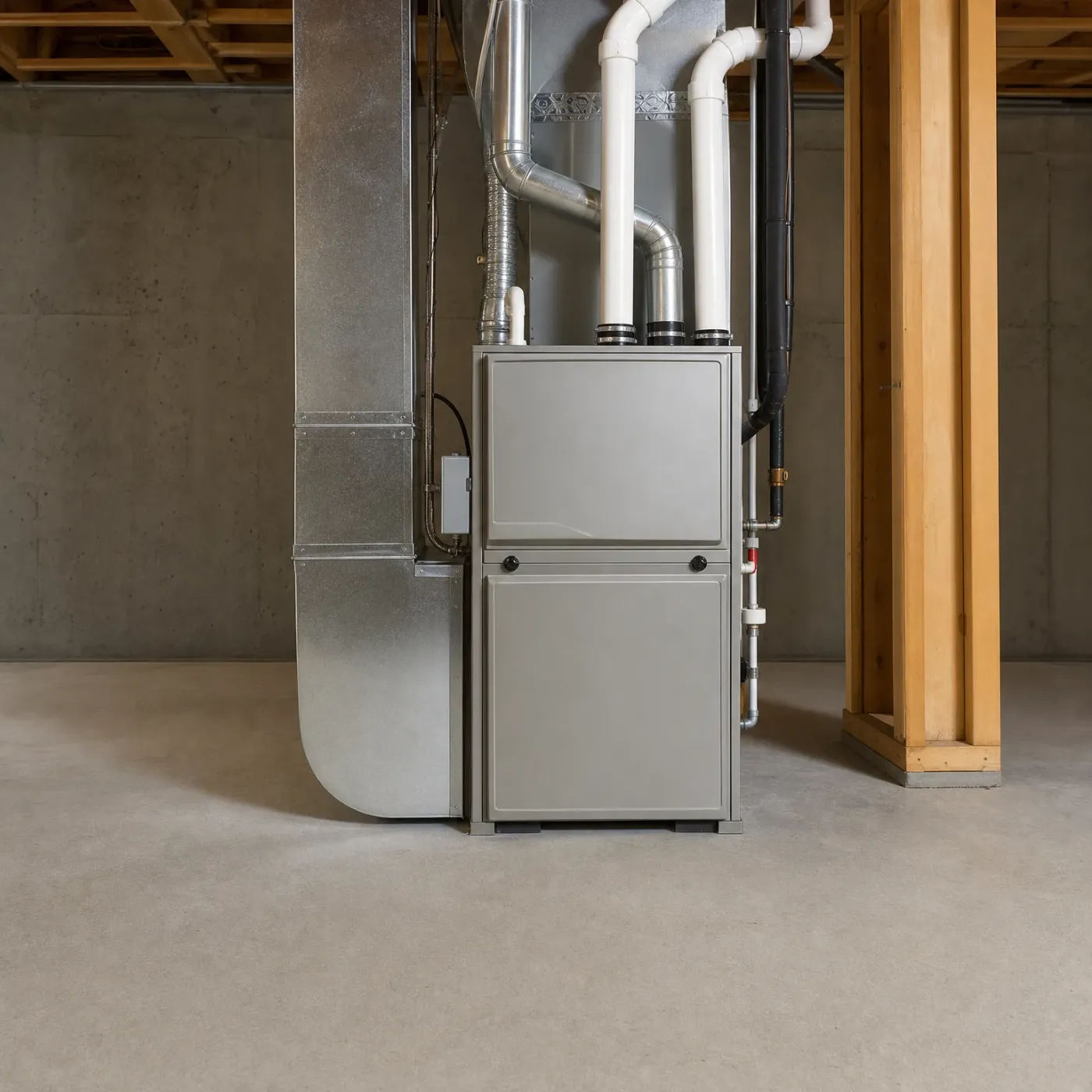
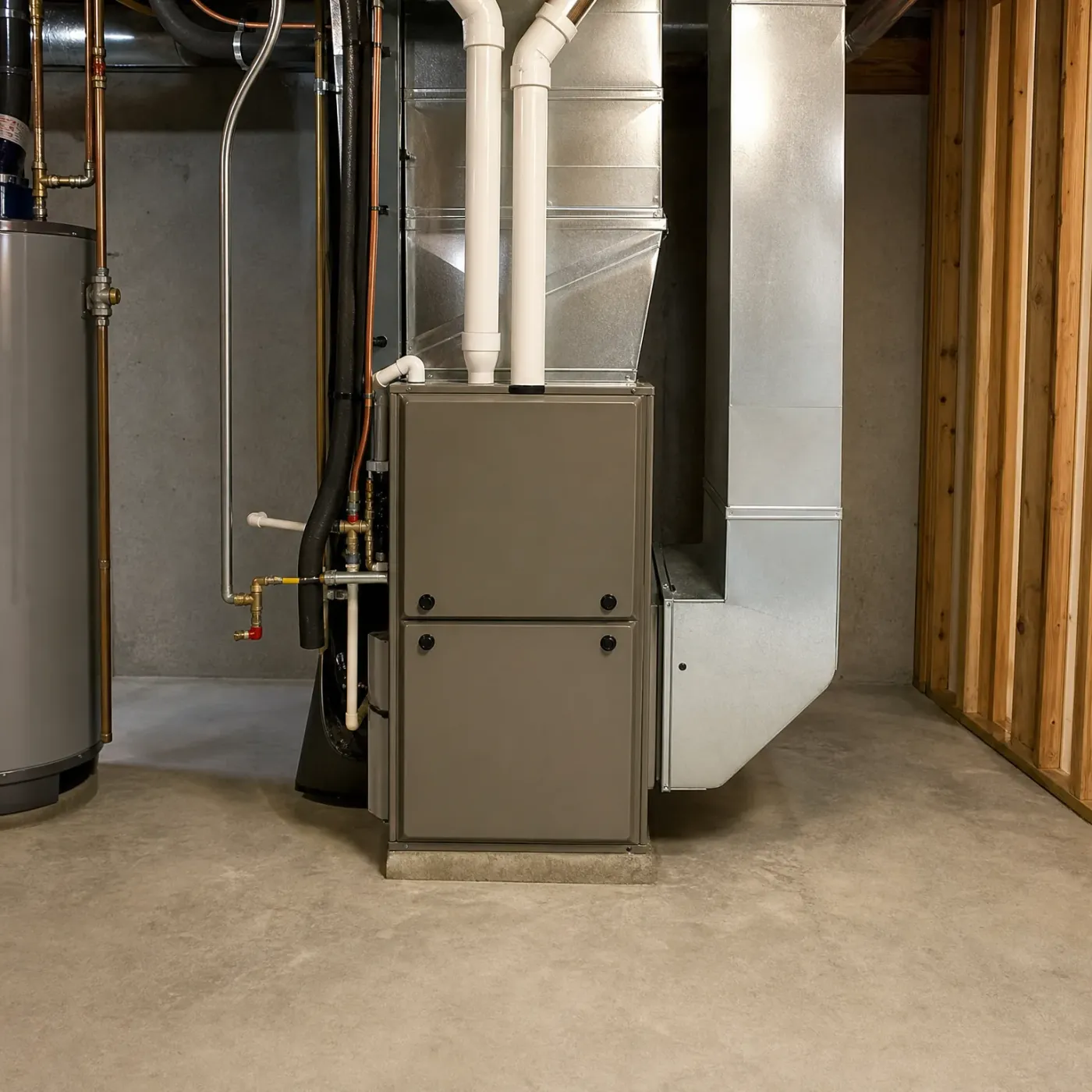
A high-efficiency furnace doing its job
That second heat exchanger and the PVC venting on top are what pull the extra heat out of the gas before it leaves the house. Condensate drains off through its own line instead of going straight up a flue. On a cold night this is the setup running steadily and quietly in the background.
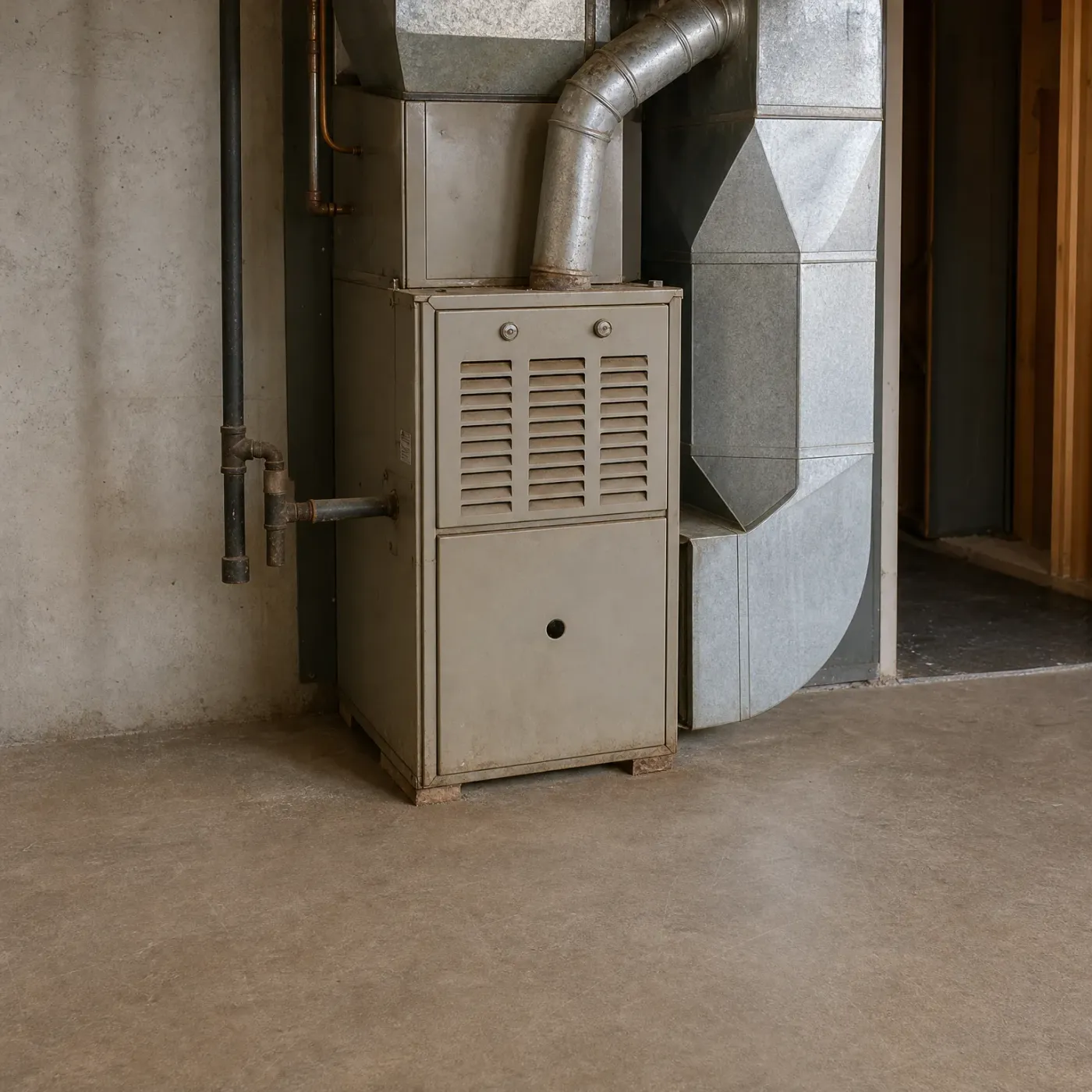
An older furnace losing ground
A round metal flue instead of PVC means the heat left unused is going straight outside. Black iron gas pipe and a single heat exchanger are typical of a standard furnace built before the 90 percent mark was common. It still heats the house, but it's working harder to do it.
Why does your heating bill feel so high every winter
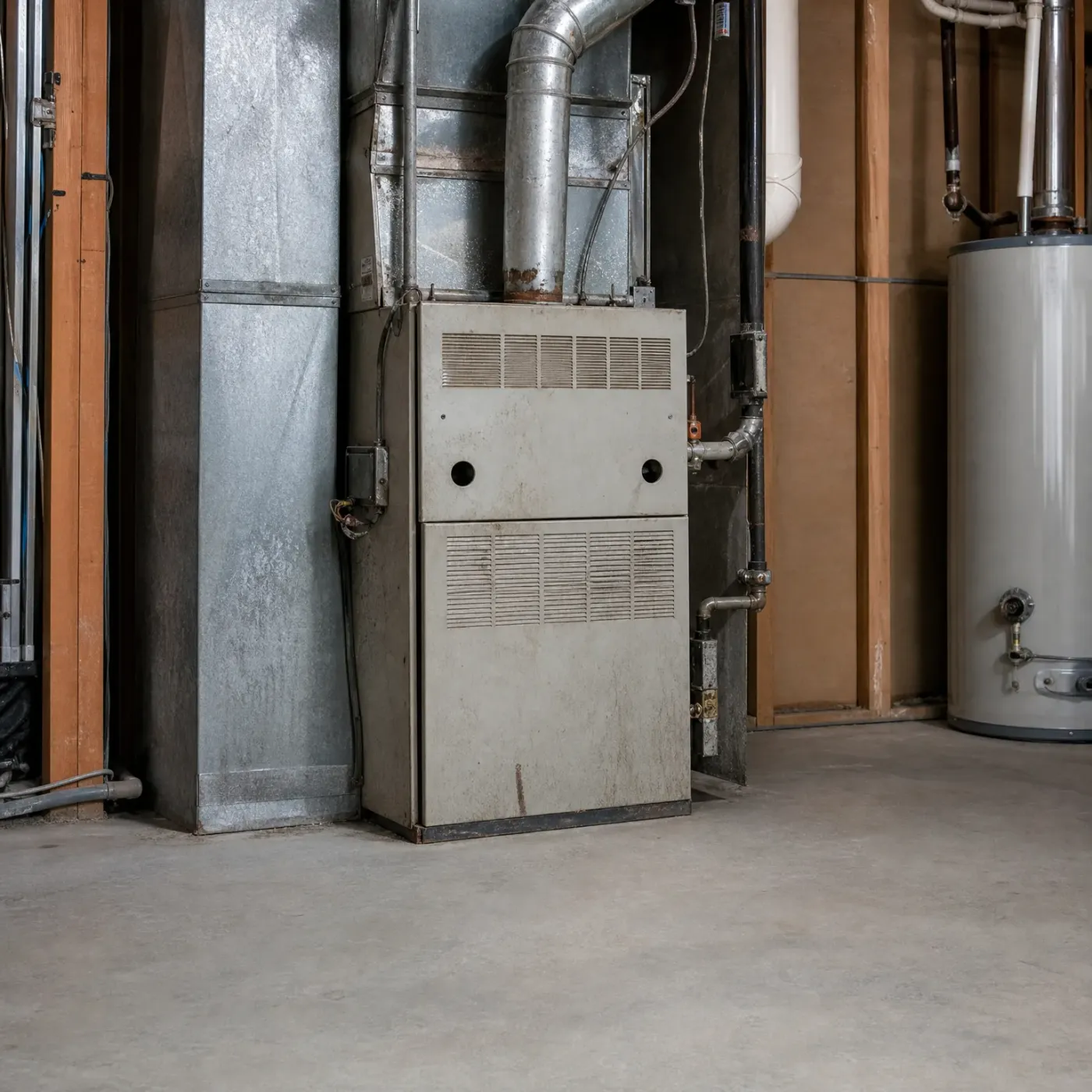
You notice it most in January and February, when the furnace seems to run nonstop and the bill still climbs. Maybe the air coming out of the vents feels lukewarm instead of hot, or one room stays cold no matter how long the system runs. Maybe you hear it cycling on and off more than it used to, or the flue on the roof has a thin trail of exhaust you never paid attention to before. If your furnace is old enough that nobody in the house remembers it being installed, it's likely burning more gas than it needs to just to keep up. Left alone, that gap between what you pay and what you get only grows as the unit ages.
One installer gets your project, so there's no bidding war over it.
It costs nothing to send, and you don't have to hire anyone.
What that AFUE number actually means
A furnace rated 95 percent AFUE turns 95 cents of every dollar of gas into heat for your house. The other 5 cents goes out the vent pipe. An older standard furnace, the kind with a metal flue running up through the roof, is often rated around 80 percent, so 20 cents of every dollar leaves the house unused. That gap doesn't change with the weather. It's built into the furnace itself, whether it's a mild November or a stretch of single digits in January. Over a full winter of burning gas to heat a Colorado home, that difference in AFUE is the clearest number you have to compare one furnace against another.
Why the furnace runs so many hours here
A furnace only burns gas at its rated efficiency while it's actually running, and in Colorado it runs a lot. Denver's heating degree days add up to one of the higher totals among major U.S. cities, which is just a way of measuring how much and how long a furnace has to work to keep a house at room temperature. More run hours means the AFUE gap between an 80 percent furnace and a 95 percent one gets multiplied over more gas burned, not less. That's the mechanical reason the efficiency rating matters more in a place with a long, cold winter than it would somewhere the furnace barely turns on.
Before you get your furnace installationAfter you get your furnace installation
80 percent AFUE
The standard furnace most Colorado homes already have. It vents through a metal flue and loses more heat out the house than a 90 percent or better model, straight through a long winter.
A high-efficiency furnace with a second heat exchanger and PVC venting. It pulls more heat from the same gas, month after month, through the whole run of a Colorado winter.
How a condensing furnace squeezes out that extra heat
A standard furnace burns gas, pulls heat off it once, and sends the leftover exhaust straight up a metal flue while it's still hot. That's why the old flue pipe is warm to the touch all winter. A condensing furnace runs the exhaust through a second heat exchanger first, wrings more heat out of it, and only then lets the gas go, cool enough now to vent through plain PVC pipe instead of metal. What's left over condenses into water, which is why these units need a condensate drain running to a floor drain or pump.
Finding a contractor who installs these correctly in Colorado, one who routes that PVC venting right and sets up the condensate line so it doesn't freeze or back up, usually means calling around, explaining your setup more than once, and sorting through quotes that aren't priced the same way. A local contractor who installs this equipment every winter here already knows where that drain line tends to give people trouble and how to vent it through a wall without the usual callbacks.
Winter nights average 16°F statewide
At 16°F, your furnace isn't cycling on and off overnight, it's running long stretches just to hold the house steady. Those are the hours where the gap between an 80 percent furnace and a 95 percent one adds up fastest.
NOAA nClimDiv 1991-2020 county normals weighted by homes
A high-efficiency furnace earns its keep in a house that sits through a long Colorado winter, and that's the house most people reading this already live in. The math runs in favor of the 95 percent furnace here in a way it wouldn't somewhere that only needs heat for a few weeks a year. Once you've decided that's the furnace going into your house, the part left is finding someone who installs them right, vents them correctly, and knows why the condensate line matters as much as the burner. That's a local contractor, licensed, who sees this exact furnace in this exact climate all winter and knows which installs hold up and which come back with problems. You get matched with one, not a list of five companies calling you the same afternoon. You already know whether this furnace makes sense for your house. What's left is getting it installed by someone who won't need it explained twice.