Tell us about the job
Takes about a minute. No obligation.
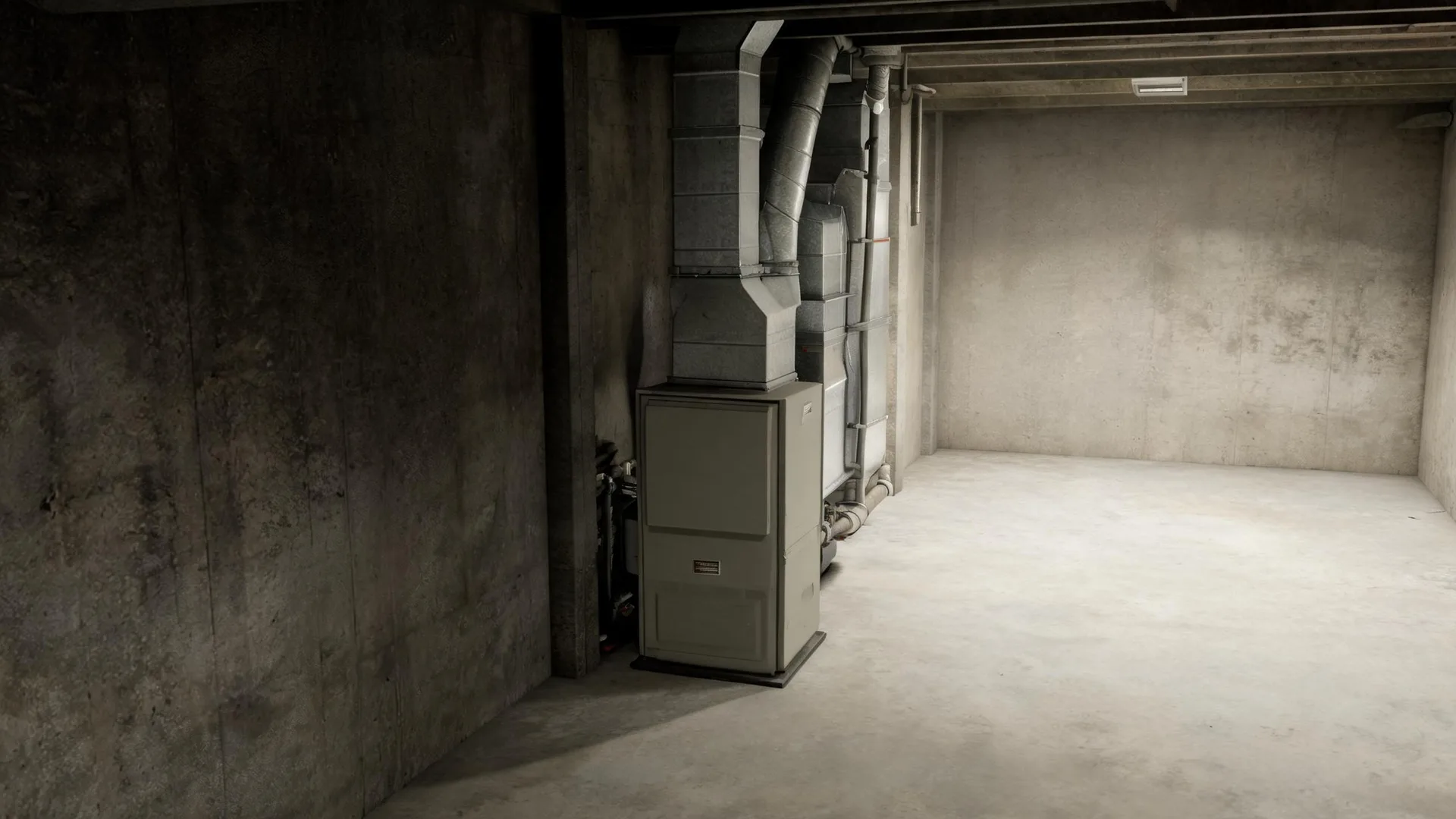
A contractor quoting furnace installation in Summit County has to get the sizing right before anything else, because the burner, heat exchanger, and ignition system here cycle without a meaningful break. Homes in Summit County, CO run heat in every month of the year. A furnace that is undersized for this load runs longer each cycle, stressing the heat exchanger at exactly the joints and welds that fatigue first. The igniter and flame sensor accumulate starts that a correctly sized unit, pulling a full call on each cycle, would not. A sloppy install has nowhere to hide.
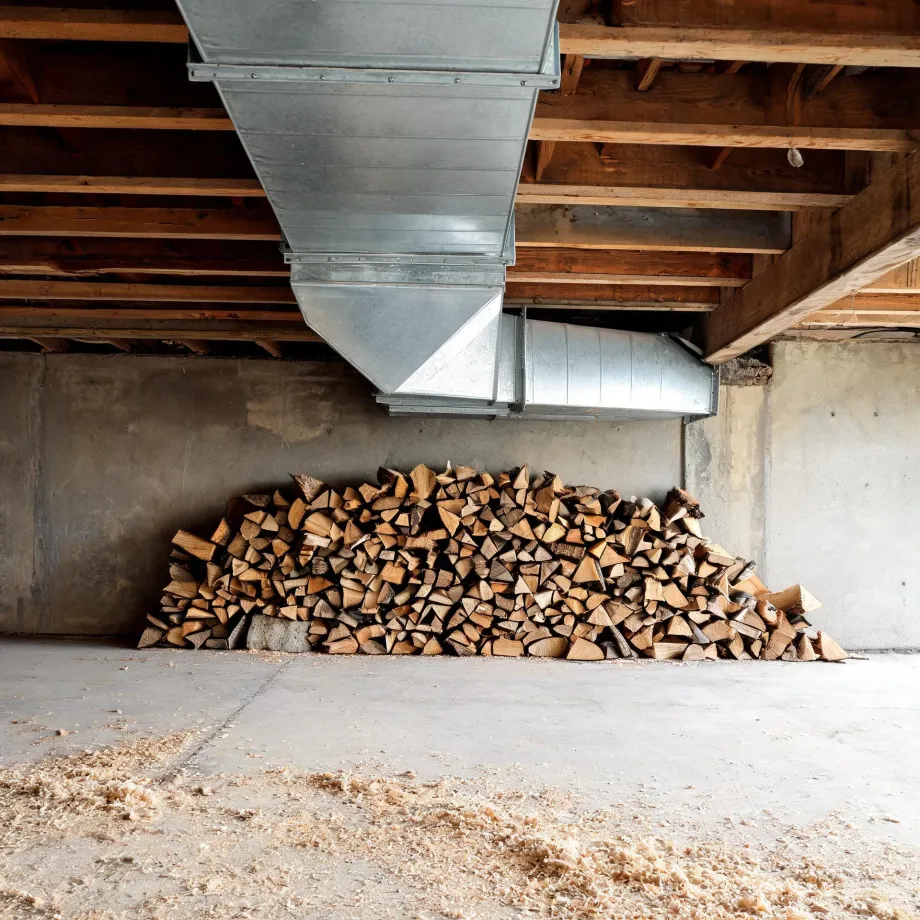
Ductwork sized for an older furnace does not automatically carry a new one. The airflow demands on a modern unit can run well outside what the existing trunk lines were built to move, and that gap is what a contractor has to measure before a new furnace can be priced or placed. Half the homes in Summit County, Colorado were built in 1989 or earlier (2020-2024 ACS 5-year). A house that old was ducted for whatever was standard at the time, and the electrical service that feeds the new equipment gets the same scrutiny. The installation answer comes from what is already in the walls, not from the equipment on the truck.
What Gets Installed With a New Furnace
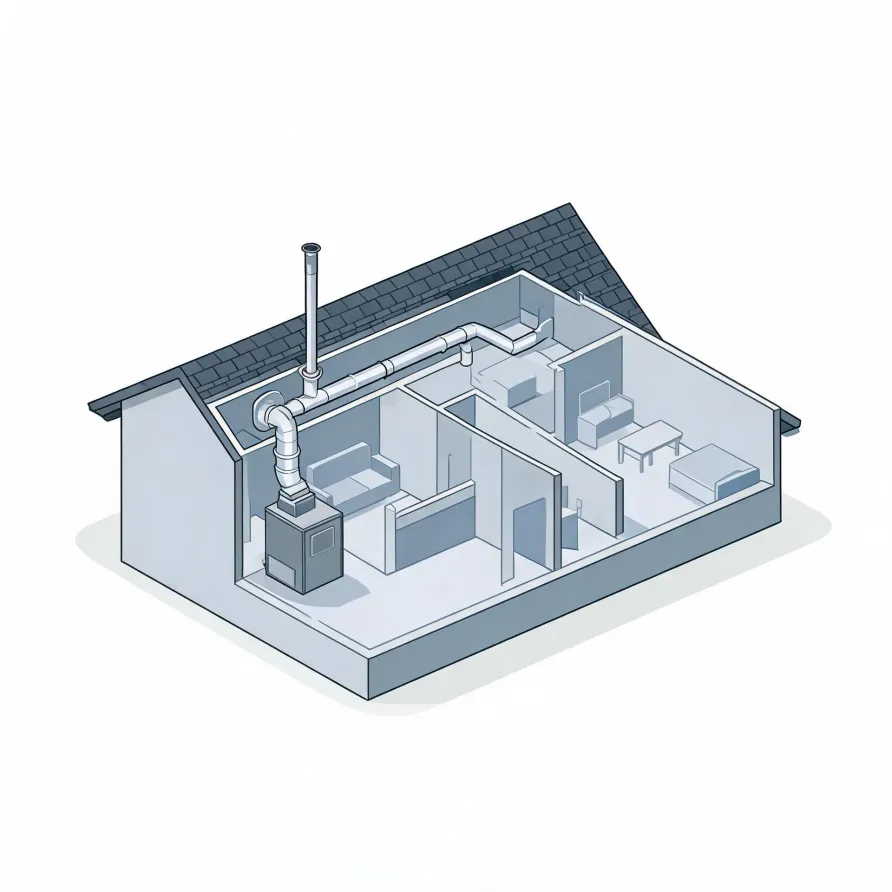
The furnace itself sits inside the house, almost always in a basement, utility closet, or dedicated mechanical room. It holds the burner assembly, the heat exchanger, and the blower in a single cabinet. That cabinet is the core of what a contractor brings in and sets into place.
The flue pipe runs from the furnace up and out of the house, carrying combustion gases away. Alongside that, a contractor installs the thermostat on an interior wall where it can read the home's actual air temperature and signal the furnace to fire.
The drawing beside this text shows a typical layout, and a licensed contractor determines exactly what applies to this house.
Get matched in Summit CountySummit County, by the numbers
89 severe weather events were recorded in Summit County, Colorado between 2015 and 2024.
NOAA National Centers for Environmental Information, Storm Events Database, bulk CSV export, events 2015-01-01 through 2024-12-31.Half the homes in Summit County, Colorado were built in 1989 or earlier (2020-2024 ACS 5-year).
U.S. Census Bureau, 2020-2024 American Community Survey 5-Year EstimatesSummit County, Colorado holds 32,251 housing units (2020-2024 ACS 5-year).
U.S. Census Bureau, 2020-2024 American Community Survey 5-Year EstimatesOwners occupy 72.1% of the occupied homes in Summit County, Colorado (2020-2024 ACS 5-year).
U.S. Census Bureau, 2020-2024 American Community Survey 5-Year EstimatesFurnace Installation Rules & Codes for Summit County, Colorado4 sourced standards and statutes
What the Installation Actually Looks Like
Non-weatherized gas furnaces manufactured on or after November 19, 2015 must reach 80.0 percent AFUE.
Non-weatherized oil-fired furnaces manufactured on or after November 19, 2015 must reach 83.0 percent AFUE.
Mobile home gas furnaces manufactured on or after November 19, 2015 must reach 80.0 percent AFUE.
Non-weatherized gas furnaces manufactured on or after December 18, 2028 must reach 95.0 percent AFUE, up from the 80.0 percent minimum that applies to units manufactured before that date.
Severe Weather Events in Summit County
Summit County's climate puts real demands on heating equipment, and those demands vary by how hard the weather actually hits in a given year. A furnace sized and installed for local conditions holds up better than one spec'd to a generic standard.
89 severe weather events, 2015–2024. Source: NOAA National Centers for Environmental Information, Storm Events Database.