Tell us about the job
Takes about a minute. No obligation.
Sizing a furnace for Elbert County means accounting for a burner and heat exchanger that cycle hard from early fall through late spring. Homes in Elbert County, CO run heat about nine months a year, from September through May. A contractor quoting a replacement here has to calculate the actual thermal load the structure puts on the equipment, because a unit that is marginal at installation will drive the ignition system and heat exchanger toward failure faster than the homeowner expects. The ductwork serving that furnace carries the same consequences: an undersized install pushes the blower harder and longer, and the distribution system shows it.
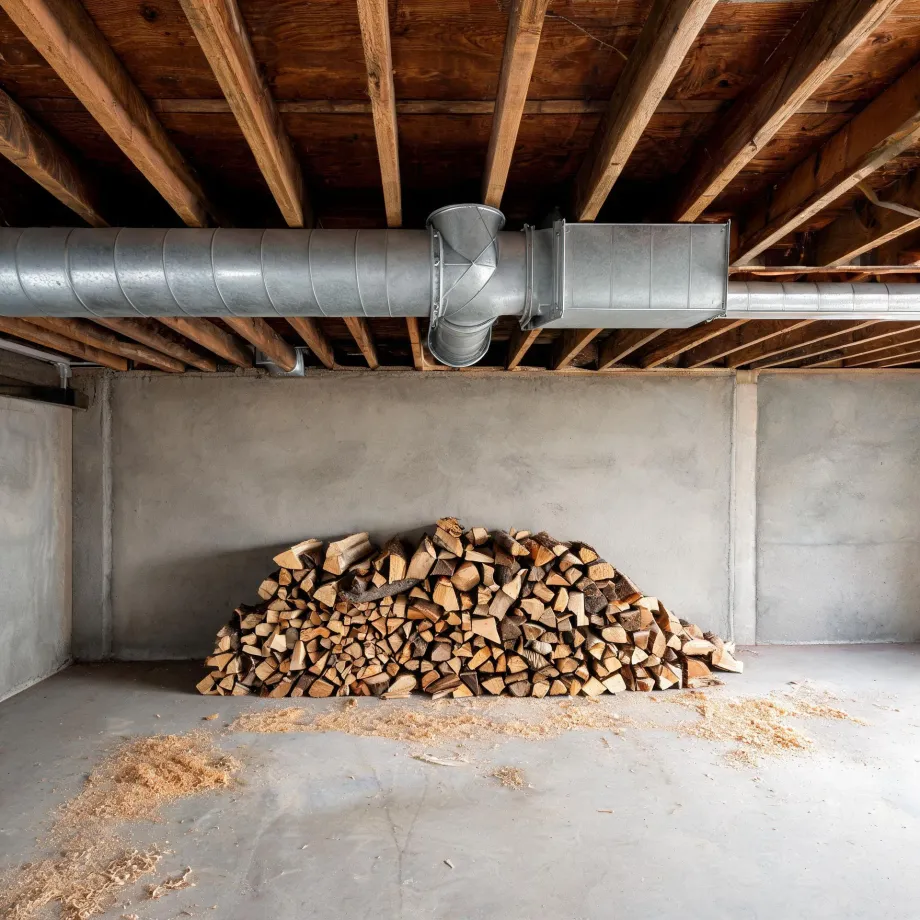
Existing ductwork is what a furnace installation turns on in Elbert County, and it is where contractors spend the most time before they can commit to a scope. Half the homes in Elbert County, Colorado were built in 1996 or earlier (2020-2024 ACS 5-year). Houses built by that point were ducted around equipment whose load profiles differ from what gets installed today, and a run that looked adequate for the old system may restrict airflow for the new one. A contractor has to trace the layout, measure the runs, and decide what carries and what gets replaced before the new unit goes in.
What Gets Installed With a New Furnace
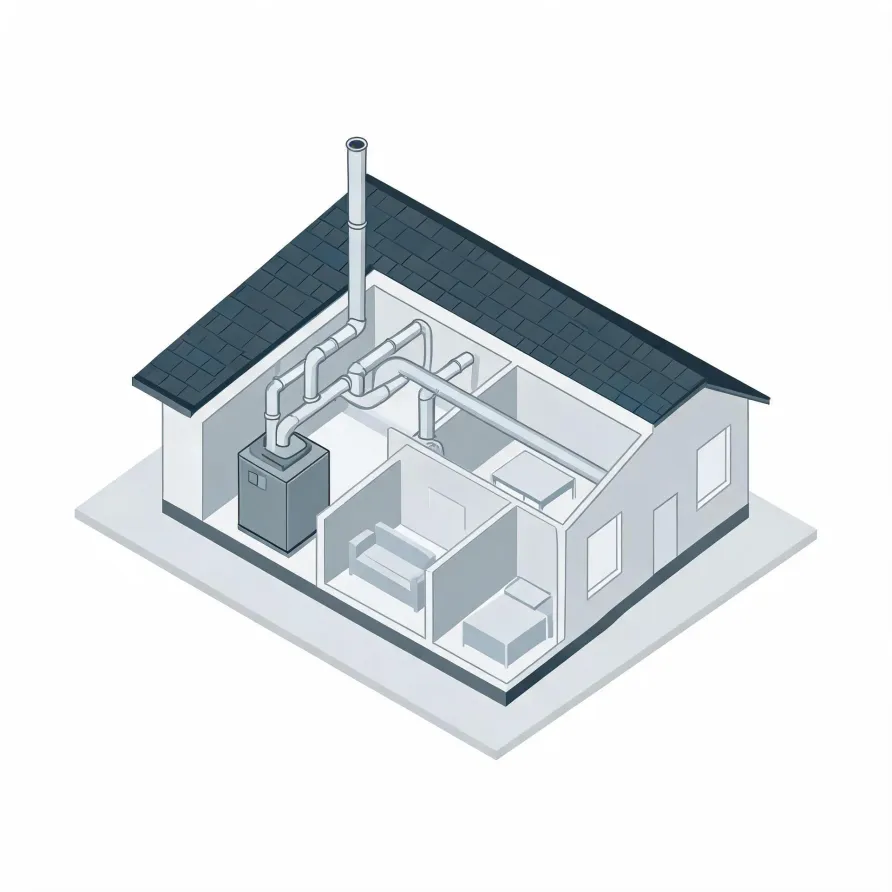
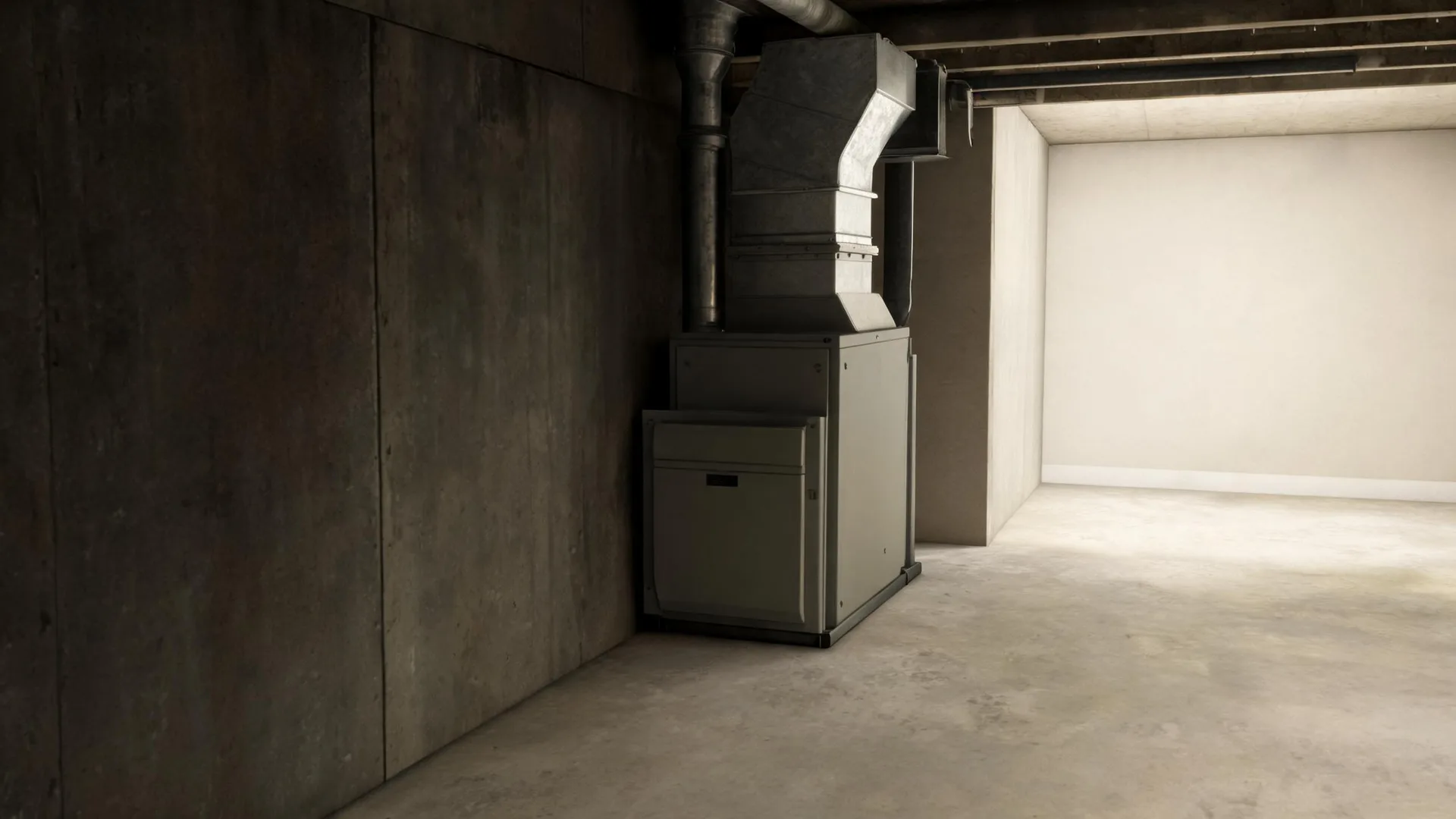
The furnace itself sits in a mechanical room, basement, or utility closet and is the core of what a contractor puts in. A new install also includes the flue or vent pipe that runs from the furnace to the outside of the house, carrying combustion gases out. The heat exchanger lives inside the furnace cabinet and is where heat passes into the air stream.
The blower motor and its housing sit inside the furnace as well, pushing conditioned air out through the supply side of the system. A new furnace also comes with a burner assembly, an ignition system, and a gas valve, all of which a contractor fits and connects as part of the install. The thermostat on the wall ties the whole system together and is replaced or rewired when the new unit calls for it.
The drawing shows a typical layout, and a licensed contractor determines exactly what applies to your house.
Get matched in Elbert CountyElbert County, by the numbers
319 severe weather events were recorded in Elbert County, Colorado between 2015 and 2024.
NOAA National Centers for Environmental Information, Storm Events Database, bulk CSV export, events 2015-01-01 through 2024-12-31.Half the homes in Elbert County, Colorado were built in 1996 or earlier (2020-2024 ACS 5-year).
U.S. Census Bureau, 2020-2024 American Community Survey 5-Year EstimatesElbert County, Colorado holds 10,510 housing units (2020-2024 ACS 5-year).
U.S. Census Bureau, 2020-2024 American Community Survey 5-Year EstimatesOwners occupy 95.0% of the occupied homes in Elbert County, Colorado (2020-2024 ACS 5-year).
U.S. Census Bureau, 2020-2024 American Community Survey 5-Year EstimatesCodes & Standards Governing Furnace Installation in Elbert County, Colorado4 sourced rules and standards
What the Installation Actually Looks Like
Non-weatherized gas furnaces manufactured on or after November 19, 2015 must reach 80.0 percent AFUE.
Non-weatherized oil-fired furnaces manufactured on or after November 19, 2015 must reach 83.0 percent AFUE.
Mobile home gas furnaces manufactured on or after November 19, 2015 must reach 80.0 percent AFUE.
Non-weatherized gas furnaces manufactured on or after December 18, 2028 must reach 95.0 percent AFUE, up from the 80.0 percent minimum that applies to units manufactured before that date.
Severe Weather History in Elbert County
Heating equipment in Elbert County works against whatever the climate throws at it, and that workload shapes what gets installed and how it gets sized. A furnace spec that ignores local conditions is a furnace that will underperform or wear out early.
319 severe weather events, 2015–2024. Source: NOAA National Centers for Environmental Information, Storm Events Database.